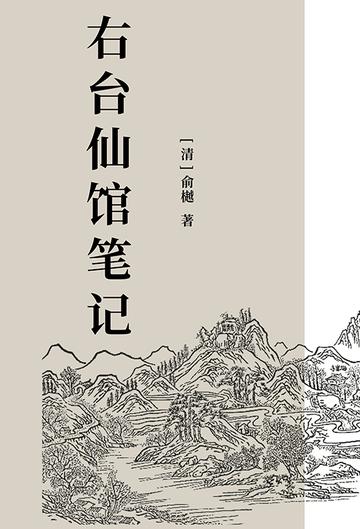
Yu Yue was a master of Confucian classics in the Qing Dynasty. In his later years, he kept filial piety for his wife and built a house to live on the right side of the cemetery. It was named "Youtai Immortal Pavilion", which is where the title of the book comes from.
This book is modeled after "Sou Shen Ji" and "Yuewei Thatched Cottage Notes" and other notes about ghosts and ghosts. It not only contains stories about ghosts and foxes, but also the market rumors at that time, showing the sufferings, nostalgia and folk customs of the people in the late Qing Dynasty. For example, "Xing Ajin" and "Wang Huifang" in the first volume reflect the cruelty to women in feudal society, and "Tusi Street" in the fourth volume exposes the crimes committed by the bully Yurouxiang. It is an outstanding work among the notebook novels of the late Qing Dynasty.
Reader comments
The story of this book is really wonderful! There are not only mysterious stories about ghosts and foxes, but also reflections on social reality, just like "Strange Stories from a Chinese Studio". The stories in it made me feel the suffering of the people in the late Qing Dynasty and the good and evil of people. I especially like the story "Filial Son Feng". His filial piety is touching. This reminds me of the stories in "Twenty-Four Filial Piety", which are so heart-warming. I think this book is well worth reading and will give us a deeper understanding of that era.



The story of this book is really wonderful! There are not only mysterious stories about ghosts and foxes, but also reflections on social reality, just like "Strange Stories from a Chinese Studio". The stories in it made me feel the suffering of the people in the late Qing Dynasty and the good and evil of people. I especially like the story "Filial Son Feng". His filial piety is touching. This reminds me of the stories in "Twenty-Four Filial Piety", which are so heart-warming. I think this book is well worth reading and will give us a deeper understanding of that era.