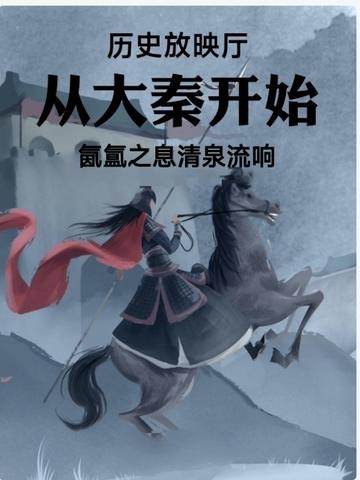
The History Screening Room: Starting with the Qin Dynasty
历史放映厅从大秦开始
- Status
- Completed
- Length
- 442k Words
- Genre
- Historical
- Subgenre
- Historical High-Concept
- Updated
- 2y ago
- Source
- Fanqie
Synopsis
211Chapters
9Reads
5.9Score
64.7kReads · all time
More by this author

In booklists 4
Looking for High-Quality Historical Recaps or Short Video Reactions
I'd like to read books similar to From the Start, Livestreaming the Terracotta Warriors to Qin Shi Huang. Something with a fresher premise, please. I don't want another listicle about dragons, phoenixes, and pigs. I've read so many of those that I could recite all the stories by heart. I'd also like something that's well-researched and doesn't distort history. I can't really put up with that, like on JJ.
350Books3.8MViews3dUpdated
High-Quality Quick Transmigration Stories Like The Female Side Character Doesn't Get Involved
The female lead has no fixed love interest!!!
394Books8.2MViews1moUpdated
Looking for Stories Where People Show Movies and TV Dramas to the Ancients
303Books15MViews1moUpdated
Looking for Historical Stories About People Watching History
Looking for books like Iconic Short-Video Moments: The Ancients Are Stunned. New books that are good, please!!!!
102Books158.4kViews1moUpdated
Reader comments 27
Translated by Google Translate
After reading three chapters and looking at the table of contents, I feel that the first eight chapters are unnecessary for popular science. Isn't this kind of writing just about looking at the reactions of ancient people after knowing about certain events and the lives of characters? The science popularization was too detailed and long-winded, especially when it was said that Ying Zheng took poisonous elixirs, and Ying Zheng's reaction was not about the elixirs, but the disrespect of future generations.
There are roughly two directions for this kind of writing. One is to simply copy and paste the contents of historical books and then look at the reactions of the parties involved. The other is to retell the history while adding your own understanding. It does not seek to be objective and fair, but it must be logical and self-consistent. But this book does neither.
It's okay. It's quite objective and doesn't over exaggerate and brag about Ying Zheng. I didn't do any unofficial history either. It's just that there are too few descriptions of historical figures in the book, and it's all about telling stories.
It's boring. When reading this kind of novel, isn't it just about reading the reaction of the characters after popular science? What's the point of being here to popularize science?
Tell me, have you seen the video of Bohai's little official?
On the surface, it sounds objective, but in fact it's all subjective. I can understand the criticism of Qin Shihuang, but it's rare for people to boast like this out of their minds. Are you sure you are praising Qin Shihuang? It's not flattery.
Most of them are the author's subjective intention, showing off the knowledge he is familiar with. When writing about Empress Lu, he only writes about his bad points and his poison, but not about other people's political achievements.
Generally speaking, you have misunderstood the concept of farmers in Qin and Han Dynasties, and they do not have as high a status as you said! In a word, do farmers in the late Qin Dynasty have surnames? Take a look at the unearthed bamboo slip family letters from the Qin Dynasty, Hei Fu, happy! Only a first name and no surname! Therefore, Chen Sheng and Wu Guang's classification as a peasant uprising is a bit far-fetched!
Objectively speaking, there is nothing wrong with this when evaluating Qin Shihuang.
Historical common sense is wrong. Song Huizong is the name of the temple, ancestor, ancestry. This is the name of the temple for worship. What kind of king or emperor is this posthumous title? It can be understood that before the Tang Dynasty, people were basically called by posthumous names. However, starting from the Tang Dynasty, posthumous names became longer, so they were all called by temple names.