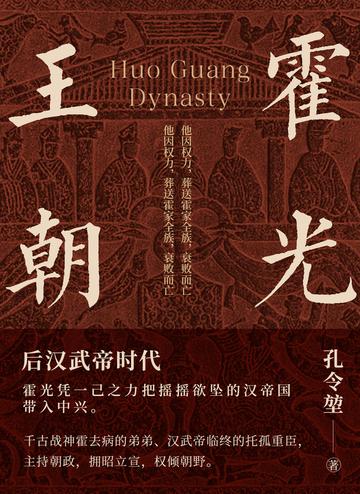
This article begins with Huo Guang assisting Emperor Zhao of the Han Dynasty to succeed to the throne, and tells the history of the period until the Huo family was eradicated by Emperor Xuan of the Han Dynasty.
It analyzes how Huo Guang single-handedly brought the crumbling Han Empire into resurgence during the era of Emperor Wu of the Later Han Dynasty when the Han Empire was withered. And it was during the process of Huo Guang bringing the Han Empire into the resurgence that he also caused trouble for himself because of his own limitations, which caused the entire Huo family to fall with the resurgence of the Han Empire.
Why can't Huo Guang's success and failure serve as a wake-up call for future generations?
Reader comments
Huo Guang is Huo Qubing's half-brother. Although his father never fulfilled his responsibilities to Huo Qubing, Huo Qubing still bought him good land and a beautiful house so that he could spend his old age peacefully. Later, he brought his younger brother Huo Guang into the court and carefully trained him so that he could become an excellent politician in the future. With such a brother, Huo Guang certainly had to work harder. Later, he became an auxiliary minister, and he dedicated himself to the monarch of the country and listed many good political regulations.
However, politics is complicated, and power will always change a person. Even the most kind-hearted person cannot be alone in the whirlpool of power. Because of this, he offended the interests of many people, and he fought many people down. Of course, Huo Guang was not a saint, and he also cultivated forces. He also had some shortcomings. Because of this, no matter how great his achievements were, he could not be immune. After his death, the Huo family was brutally liquidated. It makes sense, after all, no one wants a dictatorial minister.
This book is very interesting! Huo Guang was really a very powerful person. He assisted Emperor Zhao of the Han Dynasty when he was so young and managed the country very well. However, he also had his own limitations, which eventually got him into trouble. I think his story is like my uncle, he works very hard, but sometimes he makes mistakes for some things. Huo Guang's lessons of success and failure really inspired me a lot. We all have to learn from other people's experiences so that we can become smarter!
Some of the statements are quite novel and need to be verified.
For example, Emperor Xuan of the Han Dynasty was promoted through the operation of the Wei Prince Party (a group of scholar-bureaucrats?).
The following is a brief verification:
In the second year of Houyuan (87 BC), Emperor Wu of the Han Dynasty, Liu Bing was not yet five years old. The aspirants said that Chang'an Prison had the spirit of the emperor, and Bing Ji adopted and protected Liu Bingji (Huo Guangchao appointed Dr. Guanglu as the official).
In the second year of Emperor Wu's reign, Emperor Wu of the Han Dynasty issued an edict to adopt Liu Bing in Yeting. Later, Emperor Zhao of the Han Dynasty ordered Liu Bing to belong to Zongzheng (Yeting ordered Zhang He, the son of Zhang Tang, and his younger brother Zhang Anshi to worship the right general and Guang Luxun in Huo Guang Dynasty) (During this period, Zhang He wanted to marry his daughter to Liu Bing, but Zhang Anshi rebuked him).
In the fifth year of Emperor Zhao of the Han Dynasty (82 BC), Zhang Yannian pretended to be the prince of Wei, Liu Ju, and was later executed. (Some people say it was Huo Guang who did it)
In the third year of Emperor Zhao Yuanfeng (78 BC), the big stone at the southern foot of Mount Tai stood on its own, the dead trees in Changyi were revived, and the dead willows in Shanglin Garden were reborn to form the words "Gongsun Bing has been established". Suihong, the then emperor of Fujie, wrote a letter that Emperor Zhao of the Han Dynasty should abdicate and was executed. (The later son was recruited as a Langguan by Emperor Xuan of the Han Dynasty)
In the first year of Yuanping of Emperor Zhao (74 BC), Emperor Zhao died and the king of Changyi was established. Xia Housheng claimed that the king was a yin and yang disaster, and said that his subordinates had a conspiracy to abolish the throne. Huo Guang and Zhang Anshi were shocked and subsequently deposed the king of Changyi (when Xiahou was victorious, he was a doctor and Guanglu doctor, and later he was admonished doctor and gave Shizhong).
…………
If this is true, it means that the Wei Prince Party predicted in advance that Emperor Zhao of the Han Dynasty would die young and have no children. Then they were either good at fortune telling, or the death of Emperor Zhao of the Han Dynasty was closely related to them.
Judging from the author's Spring and Autumn writing style, it means that they can tell fortunes.
It is worth mentioning that Huo Guang's brother Huo Qubing was a princeling, or the Huo family was born a princeling (Prince Ruo was born to Wei Zifu).

Huo Guang is Huo Qubing's half-brother. Although his father never fulfilled his responsibilities to Huo Qubing, Huo Qubing still bought him good land and a beautiful house so that he could spend his old age peacefully. Later, he brought his younger brother Huo Guang into the court and carefully trained him so that he could become an excellent politician in the future. With such a brother, Huo Guang certainly had to work harder. Later, he became an auxiliary minister, and he dedicated himself to the monarch of the country and listed many good political regulations. However, politics is complicated, and power will always change a person. Even the most kind-hearted person cannot be alone in the whirlpool of power. Because of this, he offended the interests of many people, and he fought many people down. Of course, Huo Guang was not a saint, and he also cultivated forces. He also had some shortcomings. Because of this, no matter how great his achievements were, he could not be immune. After his death, the Huo family was brutally liquidated. It makes sense, after all, no one wants a dictatorial minister.
This book is very interesting! Huo Guang was really a very powerful person. He assisted Emperor Zhao of the Han Dynasty when he was so young and managed the country very well. However, he also had his own limitations, which eventually got him into trouble. I think his story is like my uncle, he works very hard, but sometimes he makes mistakes for some things. Huo Guang's lessons of success and failure really inspired me a lot. We all have to learn from other people's experiences so that we can become smarter!
Some of the statements are quite novel and need to be verified. For example, Emperor Xuan of the Han Dynasty was promoted through the operation of the Wei Prince Party (a group of scholar-bureaucrats?). The following is a brief verification: In the second year of Houyuan (87 BC), Emperor Wu of the Han Dynasty, Liu Bing was not yet five years old. The aspirants said that Chang'an Prison had the spirit of the emperor, and Bing Ji adopted and protected Liu Bingji (Huo Guangchao appointed Dr. Guanglu as the official). In the second year of Emperor Wu's reign, Emperor Wu of the Han Dynasty issued an edict to adopt Liu Bing in Yeting. Later, Emperor Zhao of the Han Dynasty ordered Liu Bing to belong to Zongzheng (Yeting ordered Zhang He, the son of Zhang Tang, and his younger brother Zhang Anshi to worship the right general and Guang Luxun in Huo Guang Dynasty) (During this period, Zhang He wanted to marry his daughter to Liu Bing, but Zhang Anshi rebuked him). In the fifth year of Emperor Zhao of the Han Dynasty (82 BC), Zhang Yannian pretended to be the prince of Wei, Liu Ju, and was later executed. (Some people say it was Huo Guang who did it) In the third year of Emperor Zhao Yuanfeng (78 BC), the big stone at the southern foot of Mount Tai stood on its own, the dead trees in Changyi were revived, and the dead willows in Shanglin Garden were reborn to form the words "Gongsun Bing has been established". Suihong, the then emperor of Fujie, wrote a letter that Emperor Zhao of the Han Dynasty should abdicate and was executed. (The later son was recruited as a Langguan by Emperor Xuan of the Han Dynasty) In the first year of Yuanping of Emperor Zhao (74 BC), Emperor Zhao died and the king of Changyi was established. Xia Housheng claimed that the king was a yin and yang disaster, and said that his subordinates had a conspiracy to abolish the throne. Huo Guang and Zhang Anshi were shocked and subsequently deposed the king of Changyi (when Xiahou was victorious, he was a doctor and Guanglu doctor, and later he was admonished doctor and gave Shizhong). ………… If this is true, it means that the Wei Prince Party predicted in advance that Emperor Zhao of the Han Dynasty would die young and have no children. Then they were either good at fortune telling, or the death of Emperor Zhao of the Han Dynasty was closely related to them. Judging from the author's Spring and Autumn writing style, it means that they can tell fortunes. It is worth mentioning that Huo Guang's brother Huo Qubing was a princeling, or the Huo family was born a princeling (Prince Ruo was born to Wei Zifu).
Pretty good, worth a look