Stats
Tags
Synopsis
Reader comments
In booklists 13
Nobel Prize for Literature, Mao Dun Literature Prize, Lu Xun Literature Prize and Other Literary Works
I want to read a book similar to "One Sentence is Worth Ten Thousand Sentences: Collector's Edition".
Why Can't I Find the Book I Listened to Yesterday?
Worth Reading Literary Works
Keep it for the record and look at it again when you have time.
I Want a Book with Frequent Golden Sentences
The author writes very well in this book, every sentence is full of copywriting
9.9 High Score! 2026 Explosive Fire Book!
I want to watch content similar to "Famine in the 1960s and Going to the Countryside in the 1970s". Various subject types
Literary Masterpieces, Good-Looking Literary Novels
9.9 High Score, a Must-See Masterpiece in 2026!
I want to watch content similar to "Wanwan is not Wanwan: Who still loves you after being reborn".
With a High Score of 9.9, It's Worth Staying up All Night to Catch up On! You Can't Stop at All!
I want to watch content similar to "Wanwan is not Wanwan: Who still loves you after being reborn".
More Than 10,000 Chapters
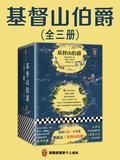
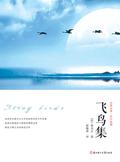
World Famous Books
🍅All the world famous books I can find are thrown at me, I can bear it
9.9 Points, Super Beautiful, Can't Stop Watching It
I want to watch content similar to "Wanwan is not Wanwan: Who still loves you after being reborn".
Literature Books, I Want Literature Books! ! !
Family members, I want to read literature books, books that can improve my writing skills or increase my knowledge. Beg on your knees!
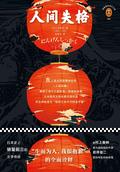
To be honest, I was completely stiff at first to understand the surface meaning of the text, but then I slowly entered the novel halfway through, and then I was already immersed in it, and I didn't want to come out for a long time! ! !
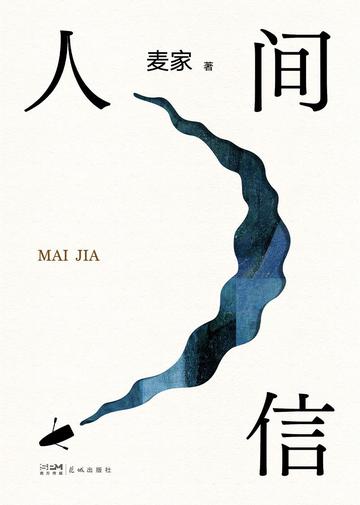
"Letters from the World" is an in-depth novel depicting human nature and life. The protagonist experienced a turning point in his life, and his beliefs and moral choices were deeply imprinted in his heart. First of all, the structure of this book is unique and powerful, which makes people feel the author's intention. The plot develops with twists and turns, which firmly attracted my attention from the beginning. The protagonist's outlook on life and values gradually became clear as the story progressed, and I was deeply moved by his emotional ups and downs. Through the experiences of the characters, the author expresses his deep thinking about human nature and his unique insights into life. This made me deeply realize that each of us faces various challenges and dilemmas. How to face and solve these problems is a question that each of us needs to think about. The characters in the book are very successful. They each have their own strengths and weaknesses, and their own dreams and pursuits. Their stories allowed me to see the complexity and diversity of human nature, and also gave me a deeper understanding of human nature. During the reading process, I was deeply moved by the theme of the book-faith and moral choices. These choices not only affect the fate of the individual, but also the people around them and society as a whole. This profound influence shocked me deeply. The author's language expression is fluent and vivid, allowing readers to fully feel the atmosphere and emotions of the story during the reading process. There are some wonderful passages in the book that I couldn't help but read over and over again, and it also gave me a deep respect for the author. Overall, "Letters from the World" is a good book worth reading. It not only gave me a deeper understanding of human nature, but also gave me a deeper thinking about life. I believe that this book will bring profound enlightenment and touching to many readers. Although some places in the book may be a bit heavy, I think this is exactly what the author wants to convey - life is a journey about choices and commitments. In this journey, we need to stick to our beliefs and stick to our moral bottom line in order to find our own path. If you are looking for a book that can make you think deeply, "Letters from the World" is definitely a good choice. I believe that as long as you read this book, you will be impressed by its depth and connotation. I strongly recommend everyone to read this book, I believe you will not be disappointed.
My personal reading experience. This book is not suitable for quick reading or fast food, as it will neither bite nor digest. The two books in the Mai family's "Life" series seem to tell the same story. "Sea of Life" is a popular, virtual, and easily digestible version of it; then "Letter of Life" is a refined, documentary, and diamond-bone version of it. I recommend "Letter of Life", which is more bitter, more original, more concentrated, and may have a higher reading threshold. It is a set of bitter medicines that can cure diseases and save lives, and it is also a scalpel made of gold. Its taste is bitter than sea water, and its smell is more pungent than garlic. If you have never experienced heartbreak, heart blockage, or you don't want to go through an operation to treat the disease, then please turn around immediately and stop looking, otherwise you will not be able to bear it! [It should be taken as a decoction and suitable for surgery]. In the end, I will definitely read it to my heart's content.
It has a similar emotional tone to "The Sea of Life", and has the same suffocating, uncomfortable and incredible aspect. The middle parts of the stories in these two books are about ups and downs of fate and challenges to human nature. Fortunately, the endings of the stories are friendly and satisfying.
Each era has its own theme, but people's inner desires and souls have not changed. People make many choices in their lives, some that others think are right and others that others think are wrong, but no matter whether it is right or not, as long as it is a choice you make, it at least proves that you have the freedom to choose. Whether it is wrong or not, it is a part of your unique life. The me and him in the article are often like this when we were growing up. We don't want to admit that he is me, or are afraid of becoming him or me, but time will eventually make you admit that all he is myself~
I finished reading Teacher Mai's new work intermittently, and while reading, I felt "my" helplessness towards my father. When I saw the part in the book where I reported my father, I put myself in his shoes and thought, what would I do if it were me? If you don't report, your father will be dragged down to the point where he can't see the future; if you report, you will ignore the love of your family. Moreover, in that era, people were not so forward-looking and accepted death as if he was your father and no matter how wrong he was, he was always right. These are vividly reflected in the description of the punishment of "me" by the mother's family laws from the back. After working as a security guard at school and being attacked, I exercised my body. That period was really sad. In order to kill the boredom, I fell in love with reading and reading newspapers, and thus developed my writing skills. So, it is a blessing and a curse. Fortunately, the ending is good. Look at the part where grandma is still alive. Her eyes are filled with tears. "I" am so happy. At the end, the little sister cries and complains that her brother-in-law made the same mistake that he would make if he was rich. So, human nature, we really can't jump to conclusions prematurely.
When reading this novel, I always feel like I am reading Mo Yan's book, which gives people a sense of realistic magic, but not too much. The whole book tells the fate of three generations of a family from the perspective of "I". It also directly cuts into the heart and nakedly faces the most fundamental problems in the family, the relationship between father and son, and the internal conflicts within the family. While watching it, I always recalled in my mind the trivial matters between my father and I, my mother and my father, and our family of three. Maybe at this age, I began to gradually understand the difficulty of my father, while my mother was always gentle and strict at the same time. Although my family does not have family laws, there is still discipline. If you do something wrong, you will inevitably get a physical and physical punishment, which is not comparable to the punishments in the book. It was so warm and happy to see that in the end, through the little sister's continuous efforts, the family reconciled and lived happily together. Along the way, he experienced a lot of sadness and grievances. His father's running away from home, his eldest sister's unfortunate marriage, and various experiences in special periods contributed to the final happy ending, forming a sharp contrast. This is the first time I have read a book by Mai Jia. The only stereotype I have of him is espionage. I didn't expect him to be able to write a work of this type. Although I have repeatedly emphasized that it is not an autobiography but a fictional work, everyone will feel more or less familiar with it while reading. Maybe this is the skill of successful writers. They are based on real life, but they must be higher than real life.
When I first read this book, I felt the epitome of rural life before the founding of the People's Republic of China, which reproduced people's struggle in poverty and anxiety, and their positive spirit of enjoying themselves in hardship.
Human Letter---- This autobiographical work sheds away the legend of the spy war narrative and touches directly on the hidden pain of the original family and the complexity of human nature. It also made me see the complexity of family love - it is both a shackles and the ultimate salvation. The so-called reconciliation is by no means easy forgiveness, but a compromise with the past self and imperfect loved ones. After closing the book, I know that life is about moving forward with scars, and those regrets of not being perfect will eventually become the key to understanding life when looking back. January 7, 2026, 3:20, Wednesday, the 19th day of the winter lunar month. The weather is fine, in Huangdao.
Realistic, full of emotions, clear narrative, it has nothing to do with anything, only the facts are known, no one is wrong and right, all living beings, regardless of morality, they are all driftwood of the times.
"Letters from the World", like "The Sea of Life", use the perspective of an observer to describe the people and things in life as calmly and objectively as possible, describing the extreme bitterness and occasional sweetness. After reading it, they are full of stamina. Perhaps this is what life is like. After suffering enough and long enough, you will get a small sweetness. This sweetness will be magnified and beautified into "hope" and "hope", and then you can continue to live on this. I regret that women from the old society like "my" mother have been dragged down by their ignorant and backward concepts and worldliness, and have harmed all the kind-hearted people around them. It is a pity and hateful!
The changes of the times have brought ups and downs to the family, and the pull of old and new ideas has also broken up the unbearable, painful, uneasy, and entangled things for people to see. The times have overestimated rational critics and overestimated the third-person perspective that seems to be able to empathize. Human nature is inherently mixed with conscience and corruption, stubbornness and advancement, timidity and radicality. I like the description of dismantling sweaters. Dismantling wool is not a way of dismantling and washing. It just allows people who are regretful, painful, but still have the residual warmth of traditional morality to dismantle their own gentleness and unbearableness again and again, just like the rupture, collapse and reconstruction of faith. For the eternal faith of life, there are always some things that change all the time, and there are always some things that never change. It is painful to take it apart and knit it, and to knit it and take it apart again. If one day no one touches that sweater again, will it mean that we have reached the deeper part of the pain or have the pain of relief gone away? I don't know which side is more serious, but it doesn't matter. Life is not a lawsuit all the time, where we have to argue about right and wrong. This is a naked human story, not the tears of the times, not the sorrow of the Fuchun River, but a small favor, a piece of dry land, and a poem drawn in white. In this era, I feel the unspoken words that people of that era will say, and feel the cracks in this society that are always so intertwined with the old and the new. I love your toned muscles Love your ugly scars more Because your muscles grow from scars Excerpt: My deepest memory of my mother when I was a child was her gritting her teeth and crying while taking apart my father's sweater: a piece of flesh-colored wool with two blue waistlines. When I was young, I didn't know why my mother did this. I thought it was a way of unpacking and washing the sweater, just like washing clothes. When I grew up, I realized that this was my mother's way of expressing hatred and despair towards my father, just like my grandma gave her father some instructions and hanged himself. Grandma vented her anger and taught her father a lesson by punishing her father, while mother punished herself, tearing it apart and weaving it, weaving it and tearing it apart again, like Sisyphus who was enslaved by a boulder all his life. A sweater can be re-knitted if it is dismantled, but it cannot be re-knitted if the liver is broken. From a slight break, to a crack, to two, three... To the entire collapse, this is an inevitable process. I listened over and over again, unstoppably thinking of my mother knitting my father's sweater under the dim kerosene lamp. The sweater can be taken apart again, and the mother can knit it again, over and over again. Is this a myth? That night, I heard the footsteps and heartbeats of this era from my younger sister's cries and curses. We began to chase the heat of gold and the softness of our bodies like I once chased a change of heart.
"Letters from the World" begins with my grandma, then my father, and then me. The three generations show the sorrow of that era. The "sister-in-law" is a victim of patriarchal preference, and the "father" is a burial object. Too much love makes him drown, so he becomes a notorious gangster who has nothing to do all day long and is lazy. , Although I later got married and had "I", I still couldn't change it. The struggle with "grandma" made the young "I" see it, and the death of "grandma" made "I" more and more dissatisfied. Then I broke up with the family and embarked on the journey of becoming a soldier. Unfortunately, blood is thicker than water, and family ties can never be cut off. . . The sorrow of this family is the epitome of thousands of families of that era. This is not their fault, but the fault of that era. A grain of sand in the era is a daunting mountain for a family. We want to be foolish old men, but we dare not take the first step. We can only think that we are smart and call ourselves wise old men to persuade those foolish old men to stop. . .
How can I put it? It's very true. The work is really good. I will only tell you my personal feelings. Many of the storylines clicked for me, and they made me very depressed and uncomfortable. Originally, I read novels to kill time, relax, read interesting articles, and feel better. Seeing works like this brings me back from wanting to escape from the real world. Let go of the pain of shielding. I can't read it anymore and want to cry. I read it over and over again, and when I feel uncomfortable, I put it down and read this enjoyable article. I got up and read a little more, but felt uncomfortable again. The reality was already very difficult, and I couldn't see hope. Just stay alive. Numbing myself every day
It is the protagonist's self-salvation, and also the Mai family's self-salvation.
After reading this book, I feel that the protagonist is very brave, daring to break through the shackles of family and find myself, but she also suffers from moral condemnation in her heart. The character of grandma is also very brave and dares to run away, so she can live to be over ninety years old. The most irritating and sad thing is that the mother My dear, I completely lost myself. I only longed for my husband to return to his prodigal state. I failed to understand that her husband's true nature was hard to change. I was so ignorant that I only focused on my husband. In the end, I ended up being abandoned. I died of liver qi stagnation in my sixties. In the final analysis, I was angry to death. It's very sad.
After reading this book, I deeply feel that the author's writing style is exquisite, and the descriptions of scenes and emotions are described to the extreme, allowing readers to enter the characters physically and mentally, sharing the joy and sorrow, and the ups and downs of their emotions. There are empathic love and hatred intertwined with his father and fellow villagers, as well as unwillingness and inexplicable luck in the environment of the great era. I feel deeply that in this life, in just a few decades, I have loved my family, been in good health, not involved in official affairs, not encountered mischief and bullying by villains, have regular work routines, and not have to work hard for life. This is a great blessing in life, and I am very grateful.
Teacher Mai's works are like a large tree with tangled branches, with a main trunk full of suspense and many unexpected side branches. The family relationship between "I", my grandmother, and my mother has never been severed, and it will always be affectionate and affectionate. The father's abomination is also consistent, "his genius in corruption is shocking and terrifying." This further highlights the greatness of "love". This is the backbone of the story. The death of my sister-in-law, the death of my grandfather, my father's bad gambling habit, my grandmother's whereabouts are unknown, "I" and my father "became enemies", my father "defected" overseas, "I" reunited with my family... Many side branches added color, light and shade to the story, making the whole story more full. In short, Mai's novels will never let you down!
After reading this book, I feel that people who have been through that special period can have a lot more empathy. It is really not easy for a child who was deeply hurt by his flirtatious father to go from struggling to escape, suffering in his heart, to reconciling with his mother. The reconciliation with his mother is actually not the reconciliation with the family. The process of growing up is painful and contradictory. Be kind to yourself, your loved ones, and everyone around us, reconcile with yourself, and let go of all the past.
After reading the "Human Letter", a disaster will appear in the family, which can harm three generations. Dad, a little gangster, selfish, disobedient, eats, drinks and plays, is lazy to eat, can't bear hardships, is slippery, does not do his job properly, is idle, gambler, has a weak temper, is heartless, has no sense of shame, has no sense of responsibility, has no ambition, has no ability to love, abandons his wife and children, is good for nothing, and is worse than trash. Fortunately, there is no mention of beating my wife at all. He is smart and can say that he is good at drawing and handsome. Mom, she is devoted, has no regrets, is submissive, has a good temper, and is a traditional feudal woman. Grandma was capable, decisive, independent-minded, able to endure hardships, had a capable and tough personality, but she was so worried and heartbroken for her son that she was forced to run away from home wanting to die. Did I do the right thing by reporting my father? Because of the harm his father had done to him, the harm to his grandmother, and the harm to the family, he made up his mind to break up with his father and report it. The whole thing was caused by my father. There was no right or wrong for you to do something like that at that time. You are motivated, capable, and the hope of the family. My father is not worthy of a son like you. The letter from the human world touched my heart. I also have a father who smokes and drinks. When he was young, he only came home after playing cards every night. Stubborn, doesn't listen to advice and can't communicate. He has been in a house, he was poor and had little money, but he has a bad temper. He can't cook or wash clothes. He needs someone to take care of his daily waste. He beats his wife. My grandma is used to it and my mother is used to it. They always do what they say and never give up. Now that I have lung cancer, I continue to torment my family. After I turned 35, I slowly sobered up. It makes me internally consumed every day, and I feel uncomfortable thinking about him every day. I still can't get out or get through.
It's been a long time since I've felt like reading a book in one sitting. The story of the Mai family is as good-looking and attractive as ever. Although the protagonist of the story is no longer the genius he always was in his books, the role of father is very distinctive, and I feel that there is indeed such a person in life - a poor man. Each character in the book has a distinct personality. It is also a novel suitable for being made into a film and television work. I look forward to it. After reading Southern Weekend's interview with the Mai family, the Mai family mentioned that they never describe their hometown in their works because of the estrangement from their hometown and the holidays with their father. I'm curious if there are any autobiographical elements in this book.
My own experience resonates with this book, the heavy history and the long narrative. Men's irresponsibility, the sorrow of women's lives, conflicts and estrangements with relatives, people are products of society, the influence of family on a person, the selfishness of human nature, and women's ignorance and tenacity. Love (when the male protagonist has an opinion about his wife, he will reflect on himself in time, calmly change his opinion, and continue to love his wife)
"Letters from the World" is set in Shuangjia Village on the Fuchun River and revolves around an ordinary family. The protagonist "I" - Jiang Fuchun, lives in a family full of contradictions and entanglements. His father, Jiang Degui, behaved absurdly and was accused of being a traitor. This suspicion brought shame to the family and became the source of conflicts and pain within the family. In that special era, family members struggled to move forward under shame and pressure, and their fate was rewritten as a result. Mai's writing skills are vividly displayed in "Letters from the World". He uses delicate brushwork to portray the inner world of the characters deeply. The book describes the complex emotions between "I" and my father, from the initial resentment and rebellion to the later understanding and reconciliation. Every emotional turn is natural and smooth, making people feel for it.
It is sad to have such a son, husband, and father, but the sadness also comes from their own indulgence. But how to break free, no one knows, what is right and what is wrong, how can it be so clear?
It is precisely because you feel pain that you can become a human being in the strict sense. Sometimes pain is not necessarily wrong. It can also be beautiful. It is a part of each of us. Let's face it and live in harmony.
To be honest, this book is not painful. I personally found it to be bloody and satisfying. (Spoilers included) Among them, I don't understand the male protagonist's mother the most, she is almost paranoid towards his father. The article said that the mother mistakenly thought that the money given by her grandmother was given by her father, so she always believed that her father was at fault, but it was not a serious crime. How can I get money if my father is in jail? So this is an excuse for the mother to give birth to herself. Later, the mother forced the male protagonist to punish him at home in front of his father's portrait, forcing the male protagonist to admit his mistake. In fact, I personally prefer the male protagonist to be completely separated from his family. When I see the male protagonist counting nails, I really get angry. But later when I saw the whole family counting nails together, I thought why should I let the death of this beast affect the emotions of others? Why use this to punish the male protagonist and his family? The image of mother is really difficult to understand. People tend to seek advantages and avoid disadvantages, but mother seems to have been bewitched by her father and has even lost her mind. He looked sad for him, worked hard for him, and stayed with him hard, and we will stay with him even after death. The hero's father was a very lucky man, but he had to work hard for eight years. Later, when he came to Japan, he was so happy that he took off (he died). All I can say is, damn, what a lucky life.
This is the second book written by Teacher Mai after "The Sea of Life". I understand that this book is a letter from the author to his own life. The letter writes about the past of his life, his grandmother, grandfather, grandmother, father, mother, sister, sister, classmates, and fellow villagers, etc. There are many chapters involving my father, which is one of the main reasons why I am who I am now. The so-called parents' love for their son is a far-reaching plan, but the father here is full of buffs, which may also be due to the environment in which he grew up. He could barely feel the slightest bit of fatherly love, let alone support, and each straw finally pushed the author to explode. In the article, the author's expressions from "I" to "him" and then to "I" may also indicate that he does not want to face those days directly. Standing as an outsider may be more objective and not arbitrary. But as a reader, you can think that if it weren't for this "he", there would be no "me" now. In the end, the family reunited (except for the poor father), which can be regarded as making up for the "me". Family members, blood is thicker than water, especially for mothers and children, this may be the last thing in the world that can be trusted.
One after another, dilapidated and flexible lives are ups and downs in the ups and downs of fate. They can't help but work hard and tenaciously to break free from the constraints! It's life, it's alive, alive!
The seemingly plain narrative contains ups and downs of emotions, filled with the characteristics of the times and the warmth and warmth of people in the countryside. As I read it, I can always think of the scenes in the village when I was a child!
Home, the further away you are, the more relevant everything here is to you. We spend our lives trying to get out of the haze of our original family, but deep down in our hearts we long for complete love from our family.