Stats
9.5Score
45Chapters
Tags
Synopsis
Reader comments
In booklists 3
Why Not Read Classics?
Recommend some good books that are meaningful, influential and well-written.
54.6MViews881Books13hUpdated


Xinjiang Text! ! I Haven't Seen This from Xinjiang Yet
If you have Tibet, give me some from Inner Mongolia, Xinjiang, and Northeast China, MMM! ! Tibet is also vast 🦀🦀! Hmonghhh
27.6MViews113Books1dUpdated
✨Book List: Improving Quality and Aesthetics Online!
I want to read a book like "Read Which Page the Wind Blows". ✨Improve quality and aesthetics online! After reading this, my whole person becomes clear and elegant🌹
3.3kViews23Books8moUpdated
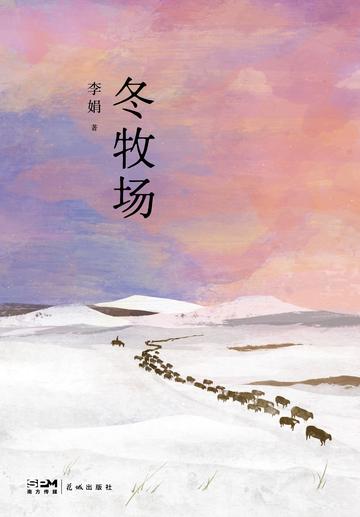
An excellent non-fiction work, 170,000 words describing a winter, a pasture, and a group of people. In the last chapter, I actually had the idea of not ending it, but I still finished reading it. I was brought into this environment. Li Juan left Winter Ranch. She took me to see Winter Ranch. I seemed to experience Winter Ranch myself. I was at Winter Ranch when I was reading. Goodbye "Winter Pasture", this is what a cultural worker should convey. Maybe we will never see the scene of Winter Pasture in the future, but this book left this trace and this cold world.
I was assigned to read Li Juan's "Winter Pasture", so I read it patiently. This is the first documentary literature I have read. (Perhaps I have read it before, but it was not very impressive.) It tells the story of Li Juan who followed the Kazakhs back to Xinjiang pastures to graze their animals. Cover relevant insights. Show the real three-dimensional scene there. There are places where I feel deeply: life is far more tenacious than imagined, and the wilderness will never end, just like the waves of life - one wave after another, never ending, the shepherd who is supported by the rotation of the four seasons in life, "he" is a shadow in "our" eyes, but it is all of himself... The narrative is relatively plain, telling stories about the inside and outside of the winter nest. Reading this work can enrich your knowledge, get in touch with the life of a shepherd, and understand the miracle of life. Definitely worth reading. Unfortunately, I only read half of the book, the first two chapters. Not finished reading. Because it is actually a bit different from the world famous books, philosophy, psychology, etc. That I usually read. I want to use this time to see that "people are reeds that can think", "persistence with sadness at the bottom is actually a kind of detachment", "cowardly people will be injured even when they touch cotton," read history, look at human nature, and learn philosophy. Therefore, I say sorry and goodbye to "Winter Pasture" for now. In the future, if I am interested and have free time, I will come back and walk the road that is more than 40 degrees below zero.
I always feel like there's something missing in Li Juan's literature? It feels like she is an observer, recorder, and even sketcher of life. It always feels like it lacks a deep understanding and even some historical weight. So it's always a pleasure to read Li Juan's works. She wrote so much and we learned so much! But what is gained, there is always a sense of loss. I always ask, is life in Dongwozi difficult? Is it warm? Is it a life of necessity in that land? Need to change? Or does it require people to do something? There is always an illusion that existence is reasonable.
Li Juan's writing makes people feel that she has penetrated deeply into the life of Dongwozi, because the descriptions of every person, every animal, and every thing are so vivid and detailed. However, if you think about it carefully, she was always cautious in her life in Dongwozi, avoiding interruption and watching from the sidelines. She was just observing and experiencing. Although I experience life with the purpose of writing, I am not anxious at all. This kind of relaxation is enviable. Perhaps it is this mentality that allows her to write relaxed and interesting words even in a difficult life.
Although it is the author's self-narration of his own experience, the combined words can bring me into those cold weather, busy and heavy work, and those warm and joyful moments. In that place, as the author said, survival is the most important thing at the moment.
It's weird, I haven't finished it yet, let me comment ʕ⊝ᴥ⊝ʔ Then I will comment that after reading the book, I feel quite calm and peaceful, and I will think of my ordinary life, a small but beautiful life. It mainly talks about the author Li Juan's winter pasture at Juma's house and her interactions with the Hulmasi family. Loneliness is the most prominent feature of this article, as is family harmony. In addition to the physical suffering of having to herd sheep in the cold winter, the cattle and sheep herders also suffer mentally. There is no signal and they cannot use their mobile phones. The pasture is too big and there is no one to talk to. But whether you are exhausted physically or mentally, you can always be healed when you return home.
It is well written, and the ordinary details of life are described so movingly, including both beauty and sadness, hope and despair. Seeing the life of a shepherd, we also see the life of all living beings. In fact, we are all the same, we are all passers-by of fate, and no one has escaped the twists and turns of fate.
It's so interesting, the poor and ordinary life is written in a warm and heart-warming way. Life is full of beauty. Looking at the last picture, those sheep, horses, dogs, and camels, I think of those times living with small animals, as if I am participating in them.
This is the first time I read Teacher Li Juan's book and I really like it. The plain narrative contains great power and emotion, and the text description is also very her own style. After reading it, I can actually understand some of Teacher Li Juan's feelings. The previous content is all about recording everything in Winter Ranch very seriously and professionally, and recording while feeling it. But as the time begins to count down, sooner or later leaving will become a reality, but the emotions generated during the relationship cannot be let go instantly. I always believe that a writer must have a delicate and emotional side, and the prerequisite for being able to write about that kind of emotion must be that they have experienced and felt it deeply, so for Li Juan, everything was not easy. I could feel her hidden contradictions and sadness after reading it, but this journey came to an abrupt end, and some emotions can only be digested and reviewed afterwards. What I like most about this book are the illustrations at the back. Teacher Li Juan brought a camera, which was a very wise move. The words can sometimes really make people immerse themselves in the situation, making it feel like everything is still in front of their eyes. But after reading and seeing the photos, I was even more surprised and moved. Everything is so real, and there seems to be no barrier or gap between the words and reality.
There are desolate and cold patches of white wilderness in the winter pasture, with lonely figures and people struggling to survive in this wilderness. Perhaps the occasional happy gathering is the driving force for survival; in fact, it is not easy for everyone!
A young heart combined with creative ambition, came up with Winter Pasture, which is a path to open memories. Rather than experiencing it, it is better to wait for the day it ends. Even reading the words makes me feel sad about the winter pasture. It's not easy to persevere. The growth and death of all things are the rules of nature. The reason why herdsmen can endure the cold, pain, and loneliness is that "everything will pass" and they can live with hope. Little Baby Kalahassee is a bright little patch of winter pasture. Because the utilitarianism is not as pure as before, the author makes up for this only regret with sincere self-analysis and detailed life observation.
When you feel irritable and inexplicably uneasy, this book is a good choice. Perseverance in extremes, beauty in the cold, communication in conflicts, compliance with and confrontation with nature... The wildness between the vast world is a magnetic field that can calm the mind.
The first time I learned about ranch life was the TV series "My Altay" not long ago. It was very interesting and matched all my fantasies about the northwest and beyond the Great Wall. Later, I started looking for Li Juan's books and imagining the life scenes of people in places I had never been to. The panda dog looks gentler and cuter than I expected, while the plum cat turns out to be more like a calico cat. I prefer the mornings in Dongwozi, which are quiet and beautiful. See you in the next book!
This "Winter Pasture" conceived in a winter nest is as easy to feed as a panda dog born in extremely cold weather. I also feel sorry for the person who gave birth to him in a difficult environment. This is no easier than giving birth to a child. When you read, the world is right in front of you. In a corner of the world where we have not yet set foot, this story unfolds. Li Juan takes you into the winter pasture to see the life of the nomadic people who live in pursuit of water and grass.
I like this kind of life that I have never experienced before, it brings me a lot of imagination. Just looking at it makes the herdsmen feel tired. I also really like the Kazakh culture where host and guest are equal, and everyone is comfortable. So natural and real. The relationship between local anesthesia and my sister-in-law also makes me envious.
This book is very real and allowed me to understand the life of herders. Li Juan's words are simple but powerful. She expresses her feelings clearly. I loved how she described the characters' actions and felt like I was in that winter pasture. But she was too slow to understand Juma's hint! If it were me, I would definitely be able to help Gama. Overall, this book is well worth reading.
Based on true writing, it is real and touching, and it is worth reading carefully. Through Li Juan's words, we can understand the exotic customs, understand the power of life as weak as stars in the vast and lonely winter wilderness, and understand the character formation of ethnic minorities...
I didn't give it five stars because the overall structure is a bit messy, but it's certainly worth reading. Li Juan's works are sincere and simple, like a sister chatting with you. After reading it, I really want to visit Northern Xinjiang.
It took me a week to read Teacher Li Juan's "Winter Pasture". Although it is prose, it shows the imprint of this nation everywhere. It is rare to understand a nation in the form of prose. Maybe this is what attracted me to this book... There are many scenes in the article that are similar to the time I passed. The unique words of human beings remember the similar emotions!
As a southerner, I really can't imagine how I would live in a place where the temperature is 40 to 50 degrees below zero. The life of herdsmen is lonely, boring and monotonous. It is not easy to make a living in the harsh climate of nature. Even in such a difficult environment, they still maintained many beautiful qualities and maintained a spirit of awe of suffering but never surrender. This book took me to know the lives of herdsmen and see their spiritual world from a distance.
The lives of the herdsmen in far northern Xinjiang touch my heart. Their hard work, tenacity, kindness and mutual help fill me with respect. Thank you Li Juan for introducing them to us. I hope such kind people can live a safe life!
Starting from my Altay, Teacher Li Juan's writing has always been thick and gentle. From her articles, I can feel the rolling wheels of history and the strong humanistic care. The teacher said that reading is to understand other people's lives and live a different life. After reading Teacher Li Juan's book, I seemed to have followed her footsteps and relived the Altay Road.
Although it is extremely difficult, it is extremely cute and humorous in the author's writing. It's just that as the world, civilization, and technology progress, nomadism will eventually disappear into settlements, making it difficult to reverse.
I took a break to read it while I was busy at work, and I really couldn't stop reading it. Li Juan's words are like a ray of warm sunshine in winter. Although it is not blazing, it can warm people's hearts. Every word and every sentence allowed me to truly experience the Dongwozi lifestyle. It also let me know that even if we are in trouble, as long as we have hope, we can bloom gorgeous flowers in the desolation.
It is really a free, simple, yet lonely and desolate wilderness. It vividly reflects the ruthless majesty of nature, but it is actually affected by the insignificant power of man. Even if it is extremely cold, the sincerity and simplicity between people is the most comforting warmth. Life is hard and numb, how can we move forward without singing and dancing? Happiness and hope always exist in our attitude towards life.
The writing is delicate, the description is vivid, and the experience is profound, presenting us with the strange and touching living conditions of winter pasture herdsmen.
The silence of winter pasture is awe-inspiring
After reading this book, combined with the photos taken by Teacher Li Juan, I felt as if I was actually living in a winter nest, which gave me a different life experience [laugh][laugh][laugh][laugh][laugh][laugh]
It was a very hard and experiential winter pasture life, and I learned about the hardships of herdsmen's life. Especially when Juma and her sister-in-law took amoxicillin as a painkiller. Compared with the joy of several other ranches, the story of Winter Ranch has a touch of sadness. Although it has been beautified with relaxed and interesting words, it tells the life style and family situation of Juma's family and other herdsmen in Winter Ranch. I still feel the "difficulty" of poverty, illness, and development. I really like the preface of this article and the illustrations at the back of the book, which are the same as the physical book.
Through her words, it seems that you can feel the loneliness and silence. I have traveled to many places, experienced the winter of -40 degrees below zero in the Greater Khingan Mountains, and driven through deserted, icy and snowy roads. I thought I had a certain sense of coldness, desolation, and loneliness, until I read this book, which opened a door that I had never imagined before and took me into a different world.