Stats
Synopsis
Reader comments
In booklists 18

The Only 9.9-Rated Novel in Tomato
I want to read a book similar to "The End of Ten Days".
Masterpiece! ! ! a Chinese and Foreign Classic Book! ! !
Are There Any Books Comparable to "Picking up Leaks"?
Are there any books comparable to "Picking Up Leaks"?
Historical Military Novel
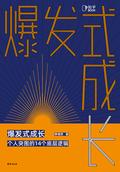
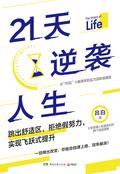
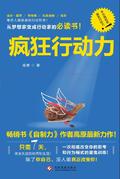
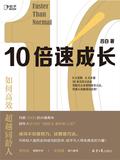
Learning Books
If you are tired of reading romance, just read it to learn. Everything is OK. Focus on learning! ! !
China's True History
I want to read a book similar to "Five Thousand Years of China". This is not a fictional historical novel, but a true story that is supported by factual evidence.
Looking for Rigorous Historical Texts
It seems hard to find, give it a try
Are There Any Novels About the Eastern Jin, Southern and Northern Dynasties?
The Novels Written by Newcomers Are Really Good Now, and There Are Some Historical Novels That I Really Like!
I want to see content similar to "The Millennium Family Exposed: Only the World Will Know When They Entered the Tian Family by Mistake".
Books on Professional Knowledge
Can you guys recommend some books about depression and Chinese medicine treatment? Thank you 🙏
A Book Describing the Life and Family Development of Nobles During the Eastern Jin Dynasty or Southern Dynasties
I want to read a book like "About the Prince of the Southern Dynasties I Impersonated". Representatives include "High Grade Hanshi" and "Dai Jin"...
Novels About Hegemony Similar to Jin, Five Hus and Sixteen Kingdoms, Southern and Northern Dynasties Period
I want to read books similar to "Dai Jin". You don't need a system, gold fingers or the like, you can have firearms
The 5,000-Year History of China Is Addictive Once You Read It.
I want to read a book similar to "The Romance of the Eastern Han Dynasty". Taking history as a mirror, we can know the ups and downs. Use copper as a mirror to straighten your clothes. Use people as a mirror to know the gains and losses!
I Want to Read a History Book, so Historical! ! ! No Wild Histories or Novels! !
I want to read a book similar to "Starting from the Qin Dynasty to the End of the Qing Dynasty (four volumes)". I don't want novels, for example, if someone travels to the past, I don't want it. I want real history! ! ! Please (●'◡'●)
History, Real History! According to History, Don't Come.
I want to read a book like "Official history is more wild than unofficial history, Li Shimin collapsed". @Trainee001 This way!
Historical Fiction
I want to read a book similar to "The Sui and Tang Trilogy (three volumes)". Strict and thick
Looking for Some Good Ideas!
I want to read a book similar to "Escape in a Day". I don't have any specific requirements. I just like the subject of modern imagination. I hope everyone can recommend it.
Qiu Gaomou Ancient War Literature
I want to watch something similar to "Global War of Nations: Poor Taoist Zhang Jiao invites you to die!" Book.
Reading history really makes people feel insignificant.
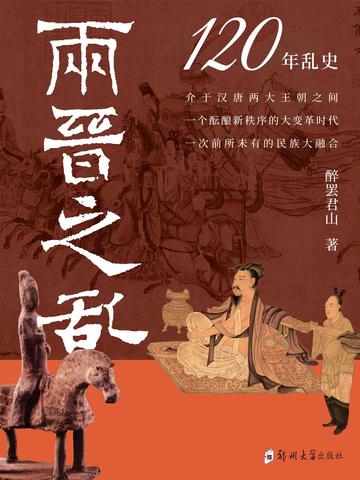
It is crisp, clear, and engaging, allowing one to read the chaos of the two Jin Dynasties and the Sixteen Kingdoms for more than 150 years in one go. I think back then, when we were strong and strong, we could swallow thousands of miles like a tiger. Thousands of years later, how many things will rise and fall? The Yangtze River is endless.
This book objectively describes the rise and fall of the regimes of the Sixteen Kingdoms of the Western Jin Dynasty, and has a deeper understanding of the establishment of the Eastern Jin Dynasty after the fall of the Western Jin Dynasty, and the confrontation between the north and the south.
Good book, I feel like my taste has improved after reading this kind of book
It is very well written. During the Jin, Five, Hu and Sixteen Kingdoms periods, regimes changed frequently and they attacked each other. There were heroes who rose up; there were also heroes who indulged in pleasure in their old age, were arrogant and dissolute, and ignored government affairs; careerists were jealous of the wise and capable, and conspired to kill each other, which fully explained the principle of "a soldier is a king" in troubled times.
A very good book that helped me understand that chaotic history
It's very beautiful, and it writes the complicated Eight Kings Rebellion and Five Husbands Rebellion very clearly.
I am a history buff and have dabbled in the history of many dynasties. The one I least understand is the Wei, Jin, Southern and Northern Dynasties. For a while, I deliberately searched for related works on Tomato, and found that some were written very loosely, and some were rigid and difficult to understand. There are many distinctive characters in the Northern and Southern Dynasties, but in some works the characters are not introduced clearly, and it will make you sleepy if you continue reading. Your work makes up for all their shortcomings and has made me unable to put it down since I first saw it. The characters introduced have distinct personalities, the context of historical events is clear, and the changes in dynasties and countries are also clear. Thumbs up for you👍🏻
The most representative troubled times in Chinese history, the Confucian laws of benevolence, righteousness and morality have been betrayed by people. The popular greed behind the Eight Kings Rebellion is also constantly being staged, and various ethnic groups have taken over the Central Plains. Troubled times also breed heroes - Shi Le and Fu Jian. How high-spirited was Shi Le when he pointed his sword at the world? But as time goes by, he died with ambition and watched his nephew take away the country. Fu Jian and Wang Meng unified the north. At this time, only the Eastern Jin and Pre-Qin empires remained in the Central Plains! Fu Jian was one step away from unifying the world, but he was defeated by the Eastern Jin Dynasty due to a lack of luck in the Battle of Feishui. At this point, Fu Jian was betrayed by his relatives and was killed by Yao Chang. His death continued China's troubled times for more than a hundred years...
The characters are easy to understand, and the lessons from the past can be used to understand the present. Life and death, rise and fall, are all suffering for the common people. The characters are complex and difficult to grasp and change randomly. A comprehensive performance of the weaknesses of human nature, good, evil, and selfishness, cultivating the mind and opening up the mind to improve the level of understanding of human affairs.
"The Rebellion of the Two Jin Dynasties" is a good general history book, which outlines the historical features of the Two Jin Dynasties, especially the Sixteen Kingdoms period of the Eastern Jin Dynasty. I remember that the first time I learned about the history of the Two Jin Dynasty was in "The Great History of China" written by Mr. Ren Deshan and Mr. Mao Shuangmin. The details are in the fourth volume "Three Kingdoms, Two Jins, and Southern and Northern Dynasties". At that time, I drew the timeline of the Sixteen Kingdoms based on the content. This drawing lasted about a week (when I was a sophomore in high school). The history of the Jin Dynasty is very strange. It was extremely chaotic, with more than 20 regimes ups and downs over more than a hundred years, and this book explains the historical context of this period very well. Structurally, the author's summary of various historical lines is very reasonable. For example, before the Battle of Feishui, there is sufficient preparation for the decisive battle; and in Chapter 66, he calmly and leisurely describes the process of the three kingdoms' attacks on Southern Liang, Northern Liang, and Western Qin. What I like most is the "End" part, which smoothly realizes the transition to the Northern and Southern Dynasties period. At the same time, the book's individual historical comments are compelling. Most of the comments are in line with the impression I established when reading "Chinese History", such as Shi Le and Fu Jian who were highlighted. The discussion on benevolence and righteousness at the beginning of Chapter 65 and the overview of the history of the two Jin Dynasties at the end of Chapter 68 impressed me the most. Although some of the reviews are biased, overall I am very satisfied. In addition, the history of Xiliang is too little written. In the past few months of reading this book, I looked up relevant historical books with great interest, which are: "Zi Zhi Tong Jian", "Jin Shu", "Wei Shu" and "Song Shu". Among them, "Book of Jin" is the main axis of historical events, "Book of Zizhi" provides the timeline and details, and "Book of Wei" and "Book of Song" partially provide discussion materials. During this period, I searched the 30 volumes of "Book of Jin" countless times and gained a lot. (On the contrary, I found out that the sixteen kingdoms described in "Records" are actually only fourteen. The part about Qianliang is in "Volume 86·Biography 56", and the part about Xiliang is in "Volume 87·Biography 57".) While reading, I wrote down three lines on my own, one is "The highlights of the Sixteen Kingdoms before the Battle of Feishui", the second is "The highlights of the Sixteen Kingdoms after the Battle of Feishui", and the third is "Compilation of the Sixteen Kingdoms". The first two completely follow the narrative order of this book and summarize the highlights of each chapter; the latter one lists the lineage of monarchs in each country according to the "order of destruction" of the countries described in this book. I highly recommend this book and the related content in the fourth volume of "Chinese History"!
I especially like the description of war in the book, it's wonderful! Moreover, the book's analysis of the state of the world and people's hearts is also very good. However, what I like most are the characters struggling in troubled times. Their stories touch me very much. All in all, this is a great book worth reading!
Five-star recommendation for "The Rebellion of the Two Jin Dynasties"! The author has sorted out the extremely chaotic history of the two Jin Dynasties in a clear and coherent manner. In 400,000 words, from the Rebellion of the Eight Kings to the Rebellion of the Five Husbands, from the disputes among the clans to the Battle of Feishui, every key node is explained thoroughly and vividly. There is no boring accumulation of historical materials at all. It is better to read than a novel! As a novice in history, I was originally afraid that there were many characters and complicated contexts in the two Jin Dynasties that I would not be able to understand. I did not expect that this book uses popular and humorous language to vividly describe the rise and fall of the Sima family and the game of heroes from all walks of life. It has both the rigor of historical facts and the interest of the story. After reading it, I will fully understand this period of history. It must be five stars! This is the most understandable book about the Two Jin Dynasties that I have ever read! The author is not limited to simply talking about events, but also digs into the cultural roots behind the troubled times, from the hidden dangers planted by Emperor Wu of the Jin Dynasty to the custom of chatting among the nobles. The lines are full of thoughts on history, which can not only increase knowledge but also arouse resonance. The five-star praise is well deserved!
Very well written. Not only writes history but also writes about various characters
It's well written. I just finished watching Empire of Han. I've watched Romance of the Three Kingdoms before, and now I'm watching Jin. Let's look at the great Chinese history from Nuwa patching up the sky to the present. [Like] How lucky I am in this life [Like]
This history is well written. After reading it, I can fully understand the ins and outs of the Eight Kings Rebellion in the Jin Dynasty. It also gives future generations a warning to find the way of thinking for today's survival from the logic of history.
As a junior high school student, I fall asleep listening to this every day, gaining both knowledge and sleep😆
Most historians are unwilling to write about the history of the Jin Dynasty. There were too many events, incompetent rulers, warlords, regime changes, and the ups and downs of more than 20 regimes in one hundred and fifty years. Being able to reflect all these events in words shows that a lot of effort has been put into this history. Big thanks to the author
I read another book about the Two Jin Dynasties on Tomato, which seemed to be called "The Two Jin Dynasties Are Actually Very Interesting", but I gave up halfway through. In comparison, this book is a good book. It does not just tell the events like a running list, but also includes character analysis, comparison of the correlation of events, etc. It is written clearly, comprehensively, thoughtfully, and in-depth.
The content is clear, the lines are clear, and the description is transparent. It is a good book.
It is a good book that systematically sorts out more than 150 years of history. This period is the most confusing to sort out. The author describes both the north and the south in chronological order. The evaluation of the characters is also quite objective. It is the best choice for those who want to understand the two Jin Dynasties. It is said that the heroes of the Three Kingdoms are gone and the rats of the two Jin Dynasties emerge in large numbers. In fact, heroes of the two Jin Dynasties still emerge in large numbers. Don't be misled.
It is well written, with a clear historical narrative and the author's own insights, which are deeply inspiring.
The content is authentic and credible. The author presents the tumultuous history of the two Jin Dynasties in detail so that readers can understand that China has not come easily. We learn from history, cherish today's peaceful era, and hope to see reunification in our lifetime!
This book begins with the story of the Three-Part Reunion and the Unification of the Two Jin Dynasties. It also highlights the word "chaos" with a detailed description of the Eight Kings' Rebellion (internal troubles) and the Five Husbands' chaos in China (foreign troubles). The book closely follows history, has a clear timeline, unique insights, and insightful insights. Reading it will neither feel boring nor empty.
It is very well written, and together with the book Three Kingdoms, it is a rare masterpiece.
The context is clear and eloquent, worth a read.
For popular history books, this level of writing is already very good. The content is based on historical facts and the writing is fluent. Although this period of history is very complicated and there are many characters and plots, the author has organized it in an orderly manner, and the article arrangement is scientific, logical and highly readable. In addition, the text and language are also easy to understand, and it feels a bit like those in the Ming Dynasty. It is very friendly to readers who want to understand this period of history. Worthy of five-star recommendation.
I still read this book carefully. In fact, my purpose was to prepare for the next book. If I don't read this book and read the Northern and Southern Dynasties directly, I will lose the previous part. I always jump to the scene when watching Two Jins. I think of Jins divided into three families. I also saw the part where Chong'er wanders around. I haven't finished it yet, so I'll go back and pick it up after a full circle, haha. I knew Yu Wentai a few years ago when I watched a documentary on Tencent, but only a little bit. I hope to learn more about this part of history.
During the two Jin Dynasties for more than 150 years, there were many political powers and dynasty changes. This was probably due to the weakness of the Jin rulers, who were mostly mediocre people. The battles between various political powers have no regard for benevolence, justice and morality, and there are many cruel and cold-blooded people who treat the common people like nothing. Looking at it now, we know that peace is hard-won, and we should cherish the current peaceful era.
The author can basically achieve a flat narrative, has his own detailed choices in the selection of historical materials, and the narrative structure is relatively clear. The history of the Sixteen Kingdoms of the Two Jin Dynasties and the changes in power were relatively chaotic, with heroes rising and falling, especially around the Taiyuan period of the Jin Dynasty. After reading several chronological histories of this era, I basically established a relatively complete concept. I plan to read a few more books in the future to learn more about the characteristics of the two Jin Dynasties and where we came from and where we are going.