There were partisan disputes among civil servants internally, and the rise of heroes without military attachés externally. It coincided with the chaos of the war, and the political system was internally constrained and exhausted, and external forces could not be used. The roots of the Nanming Incident can be traced back.
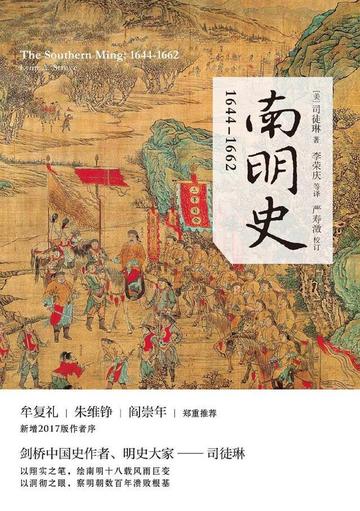
The purpose of "History of the Southern Ming Dynasty: 1644-1662" is to answer the question "Why did the Ming Dynasty perish?" Starting from this, the author Situ Lin discusses the root causes of the defeat reflected in the 18-year historical process after the fall of the hereditary monarchy in the Ming Dynasty. Through combing through a large number of historical materials, the book mainly attributes the reason why the Ming Dynasty changed from strength to weakness as "the inability to achieve unity and coordination between civil and military affairs" and "the ministers were in a dilemma on how to serve as the emperor's assistants." The author also notes that the above two points were not the only two reasons that led to the demise of the Ming Dynasty. Modern economic changes were also one of the reasons. However, the failure to resist external forces caused by internal conflicts in the court was still the main reason for the demise of the Ming Dynasty. The root of this internal conflict was laid by Emperor Zhu Yuanzhang when he designed the bureaucracy from the beginning. As time goes by, partisan disputes within the civil service, the combat effectiveness of foreign military attachés become mediocre, internal and external troubles, and the building will collapse.