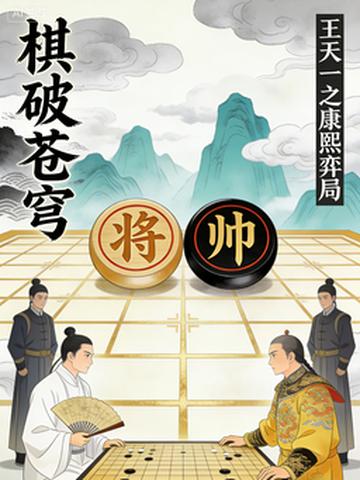
When Wang Tian opened his eyes again, what lingered on his nose was no longer the musty smell of the detention center, but the unfamiliar smell of dust, horse manure and cooking smoke. He was lying on a hard bed, with a rough straw mat beneath him. What rang in my ears was a Beijing movie with a well-spoken accent but an ancient rhyme: "Hey, this silly boy hasn't woken up yet? He lost Master E's money for a bowl of porridge in vain."
He sat up and saw through the dilapidated window lattice the rolling gray roof ridges under the clear blue sky, and the faint ringing of the camel team's bells could be heard in the distance. Several people wearing long robes and mandarin jackets with pigtails hanging on the back of their heads were gathered under the locust tree on the street, arguing over a wooden chessboard.
Wang Tianyi's eyes were instantly locked on the thirty-two chess pieces on the chessboard. In the realm of Chu River and Han Dynasty, there are chariots, horses and artillery soldiers. A shiver of absurdity and heat rose up his spine. He lost reality, but seemed to be thrown back to another starting point about chess by fate.