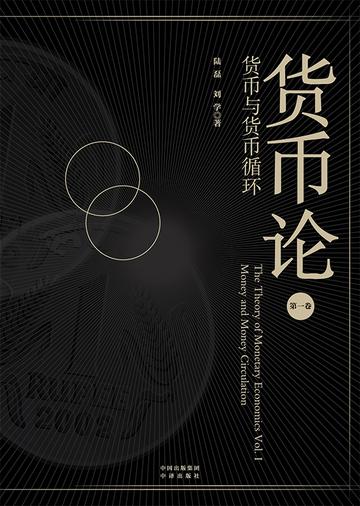
Based on the actual operation of the monetary economy, this book proposes: The essence of money is a right, that is, holding money means obtaining the "right to claim future utility"; currency transactions are "pure" currency transactions between the public and the central bank as currency suppliers, and financial intermediaries as currency demanders. Based on the redefinition of currency and currency transactions, this book builds the micro-foundation of the money demand theory of banks (financial intermediaries), analyzes the superposition of currency neutrality and non-neutrality; derives two theorems of excess currency demand, and proves that the independence of bank credit and the formation of mortgage and pledge financing mechanisms will drive banks' excess currency demand for the household sector, thus forming cyclical economic-financial phenomena of over-investment and credit contraction; and finally, the existence of excess currency demand in the real monetary economy.
Conducted an in-depth analysis of two currency cycles - the "output-currency cycle" and the "asset-currency cycle" - and demonstrated how the mortgage financing mechanism drives asset bubbles and asset price inflation, as well as the "boosting" role of loose monetary policy in this process.
Reader comments
This book gave me a deeper understanding of money and monetary cycles. It mentioned that the essence of money is a right, which I deeply resonate with. In marriage, money also represents a right and responsibility. Moreover, the analysis of the currency cycle in the book also reminded me of the management of family finances. We need to plan our income and expenditure reasonably to avoid over-investment and credit risks. This book not only has theoretical depth, but also inspires us to think about real life.
This book gave me a deeper understanding of money and monetary cycles. It mentioned that the essence of money is a right, which I deeply resonate with. In marriage, money also represents a right and responsibility. Moreover, the analysis of the currency cycle in the book also reminded me of the management of family finances. We need to plan our income and expenditure reasonably to avoid over-investment and credit risks. This book not only has theoretical depth, but also inspires us to think about real life.