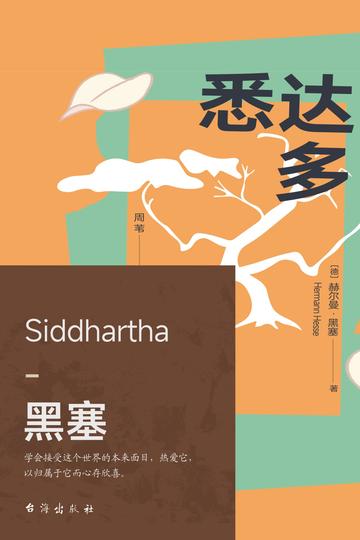
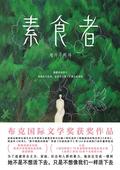
Siddhartha, a young Brahmin from ancient India, embarked on a long road of asceticism.
He left the privileged aristocratic home alone, went from conscious abstinence to self-exile and sensual enjoyment, and finally achieved inner peace.
He left the past behind all the way, and after realizing that the world is a grassroots team and the meaninglessness of life, he went to live a positive life.
Reader comments
Loving everything, listening to everything, pursuing the true self is the same as everyone else, that is, after suffering, seeing one's own filth, and falling into the world, one still praises them - it is a part of me, that's it, still calm, loving life
After reading this book, can I say that I am Siddhartha, but I am more like Siddhartha in his youth. When I was young, I was always full of confusion and always wanted to find the true meaning of life through some means. A teacher, a book or somewhere. I had many teachers. They taught me a lot of knowledge and helped me get into high school and college. But they never told me how to find my true self. I have read many books, professional books and amateur books, and I have never understood the true meaning of life. Siddhartha also believes that any kind of teaching will not give people the ability to achieve perfection, only themselves. To experience, to realize, to feel the pain and beauty, to experience gains and losses. Only this kind of real experience can allow us to understand ourselves and understand ourselves. The detours we should take will not be less. After reading Siddhartha's experience, I gained some experience. Yes, but as Siddhartha said, words have no power, teachings will not allow people to escape reincarnation, and these experiences are only the experiences of others. So who can tell me the answer to life, a flower, a tree, a river, or myself.
What we have to do is to learn to love this world. Love is not good. There is no right or wrong, good or evil, and life has no real meaning. There is no time, no past and no future. The present is eternity. So, please enjoy this world. It may not be beautiful, but it is absolutely wonderful.
It can only be understood but cannot be expressed in words. After reading this book, it actually tells me that there are no absolute things in the world. Everything is harmonious and unified. There is no absolute good or evil or good or bad. What is there is experience. What others see as smart is wisdom, but in your eyes, it is stupid. Therefore, some wisdom is stupid and some are good or evil. There is no right or wrong, only experience. Only when you experience it can you understand the meaning. In fact, it is also teaching you to control your emotions. Everyone's experience depends on his emotions. When you are sad, you will see things pessimistically, and your experience will also be pessimistic. However, as long as you are in a unified and harmonious state, without any changes in emotions, the things you see are the things themselves, which is the true self. Everything can only be understood but cannot be expressed in words. It is impossible to understand without experience. This is my one-sided view.
Everyone has his or her own path, and there is a lot of fog and there is no shortcut. All the sorrow and joy in the world, separation and separation, desire and loneliness, good and evil, are all integrated into one body and perfectly integrated. Don't be obsessed with appearances, ask for the truest voice in your heart, listen, wait, love, think, be quiet and peaceful.
It is a story written by Hesse based on his understanding of Buddhist teachings. Siddhartha, this name is wonderful. The end point of Siddhartha's practice is probably the state reached by Buddha Gautama Siddhartha's practice, no desire, no attachment, ultimate peace, joy and freedom. Many of the views were touching to read, such as being tolerant of the stupid things you have done and making mistakes, and looking back at the past after you wake up and change it, as another kind of practice in this world. This is important for those of us who have had a bumpy road, the need to do good in the world and the need to heal ourselves. Also, great wisdom is difficult to spread through words. Wisdom and kindness rely on actions and practice rather than words.
To be honest, the beginning really attracted me (Teacher Jiang's translation), from the Brahmin at the beginning to the changes in different roles, and in the end, I no longer pursue anything, but look at everything calmly. Maybe I don't understand it very deeply, but I feel that the meaning is almost the same as saying to be good. Okay, don't be obsessed, it's also an empty expression. It does add some elements of meditation, because someone recommended reading Hesse's book, and then I read Siddhartha. How can I put it, it felt like reading a person's story with a peaceful ending.
It is a very sacred book. In fact, the protagonist has experienced three self-awakenings, and the last time he has truly reached perfection and completeness. It is a state of selflessness. I believe there are practitioners who understand this "unnameable" state in the book.
We have read many history books since we were young and have known many celebrities. We may also take many celebrities as our role models to learn from. But just like Siddhartha in this article, what we really want to understand is ourselves. We understand those celebrities beyond understanding ourselves. The real path in life may not be to follow the teachings of saints, but may be to follow the guidance of one's own heart.
I feel like I can only watch if I have peace of mind.
This book should teach us to pursue inner peace, face the problems we face, and then think, accept, and make changes.
At the beginning of reading, the expression of this book is still very subtle. As I read to the end, I couldn't help but summarize in my mind how Siddhartha and other ferrymen truly empathized with everything in the world. I read that a ferryman's pain was profound but he still maintained curiosity and respect for the world.
Promote anti-terrorists and those who lack love to read this
In this society with more wolves and less meat, we should have the mentality of ferrymen such as Siddhartha.
The person who could write this book is really a genius. I started not understanding it after the death of the first ferryman. But it is also the same as Siddhartha said, wisdom cannot be taught, we can only master it by discovering and exploring it ourselves. The translation of this book is really good, and I really feel the charm of the text.
Siddhartha, the son of a noble Brahmin, left home to seek the true meaning of his heart and practiced asceticism, but found that suppressing himself was only a temporary anesthesia; so he fell into the world of mortals, sinking in love and wealth until his soul was exhausted, and he realized by the river of despair that time did not exist and that everything was harmonious and unified. In the end, he became a boatman and learned to accept the world as it is while listening to the river. He spent his life proving that wisdom cannot be taught through words, but can only be realized through personal experience. The real liberation lies in loving everything in this world.
When I read the penultimate chapter, I was shocked and excited. I alternated between tears and inhibition. After reading the last chapter, I became calm.
A very good classic that can enlighten the mind.
Many of the descriptions inside are very touching. I have seen the formless thing that could not be seen clearly and gathered in the sky in a dream. I have never seen it and cannot describe it, but I can understand it as soon as I see it. Thoughts. The world's fanatical absorption is like being possessed, and painfully seeking relief but never finding it. When I was doing art, I asked myself countless times what art is, who I am, and what I want to do. I gave my own answer at the time, but then overturned it. Many times, like Siddhartha, he says things that his future self would say. It's so funny, time doesn't exist, everything is in the present.
"Siddhartha"
Throw away those religious ideas,
It is like a comprehensive manual for the human mind.
Many times I felt that I resonated with the author, but many of them felt very close and far away from me. As mentioned in the last chapters of the first and second parts, there are some things that people can better understand only after they have experienced them.
Go watch it, if you don't understand it, wait until you grow up to watch it.
🙌 The biggest gain after reading this is to learn to accept your complete self. We all have moments of struggle and confusion, don't resist, that's part of growing up. Just like Siddhartha, after going through thousands of sails, he realized that inner peace is his destination.
This book is suitable to be read when you are confused. It will be like a wise man, leading you to find inner peace.
When I read this book, I thought of "The Moon and Sixpence", but in this materialistic society, under the pressure of responsibility and pressure, how many people will stop and listen to their inner voices...
When we feel suffocated in the flow of materialistic desires and lose our way in the explosion of information, perhaps we should be like the ferryman who let go of his obsessions and find answers in the flow of life itself. After all, true wisdom is never the Holy Grail that needs to be pursued hard, but the clear gaze that penetrates the surface of life. This may be the most precious revelation Hesse left for this impetuous era: awakening is not in ancient temples in the mountains, but in the fireworks world of buying food and cooking.
Shocking, I only read it once. The book describes Siddhartha's life, the experiences and events of becoming a wise man, the feelings of each event and the sublimation process of enlightenment. On the side is written the life of Govinda as a seeking monk. Time is vain, stones are the same as you and me, and there is no difference between everything in the world.
This is the first time I read a book of this type, including philosophy, literature, opinions, love, and desire... After reading it, I couldn't calm down for a long time.
It's a good book. She recommended it to me. I don't want to be an ascetic, and I don't plan to like her anymore.
I feel that the three states of this male protagonist: following the teachings, integrating into the world, and pursuing oneself are the states that modern people are constantly switching through in their lives.
After reading the book, I still haven't realized the realm. I still need to continue to cultivate my body and mind.
Everything in the world comes and goes, we must learn to find some peace in the irritable life
The translations of two people are read together, each has its own advantages.
All the past has become my present, experience every moment with your heart.
This book uses Siddhartha's ascetic experience as a clue to show us Siddhartha's growth, changes and insights during his ascetic practice. He pursued perfection from the beginning, but later realized that life was inherently imperfect. It embodies the change in people's perspective and attitude towards the world. From seeing the world from the Buddha's and outsider's perspective to joining the world, experiencing the torture of love, lust and wealth and awakening from it, truly realizing joining the world and transcending the world. The language of this book is philosophical and thought-provoking, and it is worth reading.
It can only be understood but cannot be expressed in words
Feel it, everything is love
The best thing is like water~water is good and benefits all things~


Loving everything, listening to everything, pursuing the true self is the same as everyone else, that is, after suffering, seeing one's own filth, and falling into the world, one still praises them - it is a part of me, that's it, still calm, loving life
After reading this book, can I say that I am Siddhartha, but I am more like Siddhartha in his youth. When I was young, I was always full of confusion and always wanted to find the true meaning of life through some means. A teacher, a book or somewhere. I had many teachers. They taught me a lot of knowledge and helped me get into high school and college. But they never told me how to find my true self. I have read many books, professional books and amateur books, and I have never understood the true meaning of life. Siddhartha also believes that any kind of teaching will not give people the ability to achieve perfection, only themselves. To experience, to realize, to feel the pain and beauty, to experience gains and losses. Only this kind of real experience can allow us to understand ourselves and understand ourselves. The detours we should take will not be less. After reading Siddhartha's experience, I gained some experience. Yes, but as Siddhartha said, words have no power, teachings will not allow people to escape reincarnation, and these experiences are only the experiences of others. So who can tell me the answer to life, a flower, a tree, a river, or myself. What we have to do is to learn to love this world. Love is not good. There is no right or wrong, good or evil, and life has no real meaning. There is no time, no past and no future. The present is eternity. So, please enjoy this world. It may not be beautiful, but it is absolutely wonderful.
It can only be understood but cannot be expressed in words. After reading this book, it actually tells me that there are no absolute things in the world. Everything is harmonious and unified. There is no absolute good or evil or good or bad. What is there is experience. What others see as smart is wisdom, but in your eyes, it is stupid. Therefore, some wisdom is stupid and some are good or evil. There is no right or wrong, only experience. Only when you experience it can you understand the meaning. In fact, it is also teaching you to control your emotions. Everyone's experience depends on his emotions. When you are sad, you will see things pessimistically, and your experience will also be pessimistic. However, as long as you are in a unified and harmonious state, without any changes in emotions, the things you see are the things themselves, which is the true self. Everything can only be understood but cannot be expressed in words. It is impossible to understand without experience. This is my one-sided view.
Everyone has his or her own path, and there is a lot of fog and there is no shortcut. All the sorrow and joy in the world, separation and separation, desire and loneliness, good and evil, are all integrated into one body and perfectly integrated. Don't be obsessed with appearances, ask for the truest voice in your heart, listen, wait, love, think, be quiet and peaceful.
It is a story written by Hesse based on his understanding of Buddhist teachings. Siddhartha, this name is wonderful. The end point of Siddhartha's practice is probably the state reached by Buddha Gautama Siddhartha's practice, no desire, no attachment, ultimate peace, joy and freedom. Many of the views were touching to read, such as being tolerant of the stupid things you have done and making mistakes, and looking back at the past after you wake up and change it, as another kind of practice in this world. This is important for those of us who have had a bumpy road, the need to do good in the world and the need to heal ourselves. Also, great wisdom is difficult to spread through words. Wisdom and kindness rely on actions and practice rather than words.
To be honest, the beginning really attracted me (Teacher Jiang's translation), from the Brahmin at the beginning to the changes in different roles, and in the end, I no longer pursue anything, but look at everything calmly. Maybe I don't understand it very deeply, but I feel that the meaning is almost the same as saying to be good. Okay, don't be obsessed, it's also an empty expression. It does add some elements of meditation, because someone recommended reading Hesse's book, and then I read Siddhartha. How can I put it, it felt like reading a person's story with a peaceful ending.
It is a very sacred book. In fact, the protagonist has experienced three self-awakenings, and the last time he has truly reached perfection and completeness. It is a state of selflessness. I believe there are practitioners who understand this "unnameable" state in the book.
We have read many history books since we were young and have known many celebrities. We may also take many celebrities as our role models to learn from. But just like Siddhartha in this article, what we really want to understand is ourselves. We understand those celebrities beyond understanding ourselves. The real path in life may not be to follow the teachings of saints, but may be to follow the guidance of one's own heart.
I feel like I can only watch if I have peace of mind. This book should teach us to pursue inner peace, face the problems we face, and then think, accept, and make changes.
At the beginning of reading, the expression of this book is still very subtle. As I read to the end, I couldn't help but summarize in my mind how Siddhartha and other ferrymen truly empathized with everything in the world. I read that a ferryman's pain was profound but he still maintained curiosity and respect for the world. Promote anti-terrorists and those who lack love to read this In this society with more wolves and less meat, we should have the mentality of ferrymen such as Siddhartha.
The person who could write this book is really a genius. I started not understanding it after the death of the first ferryman. But it is also the same as Siddhartha said, wisdom cannot be taught, we can only master it by discovering and exploring it ourselves. The translation of this book is really good, and I really feel the charm of the text.
Siddhartha, the son of a noble Brahmin, left home to seek the true meaning of his heart and practiced asceticism, but found that suppressing himself was only a temporary anesthesia; so he fell into the world of mortals, sinking in love and wealth until his soul was exhausted, and he realized by the river of despair that time did not exist and that everything was harmonious and unified. In the end, he became a boatman and learned to accept the world as it is while listening to the river. He spent his life proving that wisdom cannot be taught through words, but can only be realized through personal experience. The real liberation lies in loving everything in this world.
When I read the penultimate chapter, I was shocked and excited. I alternated between tears and inhibition. After reading the last chapter, I became calm. A very good classic that can enlighten the mind.
Many of the descriptions inside are very touching. I have seen the formless thing that could not be seen clearly and gathered in the sky in a dream. I have never seen it and cannot describe it, but I can understand it as soon as I see it. Thoughts. The world's fanatical absorption is like being possessed, and painfully seeking relief but never finding it. When I was doing art, I asked myself countless times what art is, who I am, and what I want to do. I gave my own answer at the time, but then overturned it. Many times, like Siddhartha, he says things that his future self would say. It's so funny, time doesn't exist, everything is in the present.
"Siddhartha" Throw away those religious ideas, It is like a comprehensive manual for the human mind. Many times I felt that I resonated with the author, but many of them felt very close and far away from me. As mentioned in the last chapters of the first and second parts, there are some things that people can better understand only after they have experienced them. Go watch it, if you don't understand it, wait until you grow up to watch it.
🙌 The biggest gain after reading this is to learn to accept your complete self. We all have moments of struggle and confusion, don't resist, that's part of growing up. Just like Siddhartha, after going through thousands of sails, he realized that inner peace is his destination. This book is suitable to be read when you are confused. It will be like a wise man, leading you to find inner peace.
When I read this book, I thought of "The Moon and Sixpence", but in this materialistic society, under the pressure of responsibility and pressure, how many people will stop and listen to their inner voices...
When we feel suffocated in the flow of materialistic desires and lose our way in the explosion of information, perhaps we should be like the ferryman who let go of his obsessions and find answers in the flow of life itself. After all, true wisdom is never the Holy Grail that needs to be pursued hard, but the clear gaze that penetrates the surface of life. This may be the most precious revelation Hesse left for this impetuous era: awakening is not in ancient temples in the mountains, but in the fireworks world of buying food and cooking.
Shocking, I only read it once. The book describes Siddhartha's life, the experiences and events of becoming a wise man, the feelings of each event and the sublimation process of enlightenment. On the side is written the life of Govinda as a seeking monk. Time is vain, stones are the same as you and me, and there is no difference between everything in the world.
This is the first time I read a book of this type, including philosophy, literature, opinions, love, and desire... After reading it, I couldn't calm down for a long time.
It's a good book. She recommended it to me. I don't want to be an ascetic, and I don't plan to like her anymore.
I feel that the three states of this male protagonist: following the teachings, integrating into the world, and pursuing oneself are the states that modern people are constantly switching through in their lives.
After reading the book, I still haven't realized the realm. I still need to continue to cultivate my body and mind.
Everything in the world comes and goes, we must learn to find some peace in the irritable life
The translations of two people are read together, each has its own advantages.
All the past has become my present, experience every moment with your heart.
This book uses Siddhartha's ascetic experience as a clue to show us Siddhartha's growth, changes and insights during his ascetic practice. He pursued perfection from the beginning, but later realized that life was inherently imperfect. It embodies the change in people's perspective and attitude towards the world. From seeing the world from the Buddha's and outsider's perspective to joining the world, experiencing the torture of love, lust and wealth and awakening from it, truly realizing joining the world and transcending the world. The language of this book is philosophical and thought-provoking, and it is worth reading.
It can only be understood but cannot be expressed in words
Feel it, everything is love
The best thing is like water~water is good and benefits all things~