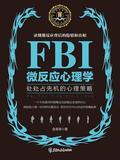
This book uses a brand-new perspective to interpret our common people and things, joys and sorrows, joys and sorrows, separations and separations. The author's more than thirty years of experience in psychotherapy and teaching are all condensed in this book, leaving you with endless aftertaste and lasting benefits.
The author uses alert and wise language to express psychological phenomena and life experiences. Like a fable, he vividly and vividly talks about psychological common sense from the shallower to the deeper, allowing you to see "what you don't know about yourself", and inadvertently helping you understand the limitations of your self-understanding.
Reader comments
Behind the emotions, behaviors, and relationships we take for granted, there is an unexplored self hidden behind it.
Just like the iceberg theory, consciousness is the tip of the iceberg, and the thoughts, emotions, and behaviors we can clearly perceive are only on the surface;
The subconscious under the iceberg hides childhood experiences, unmet needs, and repressed conflicts, which quietly affect every choice we make.
Self-exploration
What others want me to be is what society expects of me and what I think I am.
Self-exploration is a painful process. It requires letting go of external expectations, peeling off the shallow self that you think you have, and seeing your true feelings and needs.
This is not easy because our true selves, which may not be perfect, may make us feel vulnerable.
How to explore:
Observe your own behavioral patterns (certain behavioral habits) and emotional reactions (sudden episodes of anger, sadness, or fear).
Record these reactions, reflect on the source of the pattern, and keep asking yourself questions.
This is very effective, in my case.
I often subconsciously choose to give up or wait when I encounter certain difficulties.
I've had this habit for many years, but I've always treated it as something as natural as breathing.
It wasn't until I recorded it many times and discovered this behavior pattern that I started to reflect on it.
It turns out that I have a habit of waiting because I have encountered problems before. As long as I expose the problem and wait, I will receive help from the outside world.
It turns out that my habitual giving up was because I did not understand it deeply and was unwilling to fight for extra things (as the eldest brother, I was taught not to fight for it since I was a child).
How to improve it?
Tell yourself that you are already an adult and can work hard and solve problems independently. This is not easy, but failure will not matter;
Tell yourself, try first, get started first, don't give up easily or allow yourself to understand before giving up. It is not shameful to fight for opportunities.
I read five books in a row by teacher Zeng Qifeng: "Fantasy is Reality", "The Self You Don't Know", "Zeng Qifeng's Psychology Class", "Secret Personality - How Personality Determines Destiny", and "Moderate Defense: Establishing Nurturing Interpersonal Relationships". The mind is sometimes sober and sometimes confused; sometimes it is taken for granted and sometimes it is not taken for granted; and it feels that they have "over-interpretation", "improper interpretation" and "interpretation with opposites" of human nature; they even inexplicably experience a kind of "sophism" and "golden mean"... They , seems to be a kind of side martial arts... Perhaps, this is a unique "symptom" produced by taking psychology classes, understanding psychology, observing psychological (spiritual) analysis, and constantly conducting self-contemplation at the same time... Haha, in fact, it doesn't have to be like this at all! There is no need to practice this martial art! Isn't there something in the book that says, "One of the basic principles of psychoanalysis is to try not to analyze good things... We only analyze bad things. Because analysis has a deconstructive effect... And if it is something that is already good, we will not analyze it"! Therefore, it is good to listen to them broadly, understand them, and understand that there are many aspects of psychology (spirit)... But even so, I still feel that reading them has gained something in my heart: it is more relaxed, transparent, calm and calm.
Mental health is important. By reading this book, you can learn from it that the seemingly invisible mental state is very important for various influences in life. It breaks down the minutiae of things encountered in daily life and explains them clearly, and you can grow a little bit every day.
This book is like a key that opens the door to my understanding of myself and others. Teacher Zeng Qifeng's words explain things in a simple and profound way, which gave me a new understanding of various aspects of life. Just like the story in the book, we often don't know our true thoughts and emotions. This not only reminded me of my friends around me, but also made me think more about myself. It is like "Human Weaknesses", allowing us to find ourselves in relaxed reading. Recommended to everyone who desires to grow!
Interesting! I just have some doubts
It's interesting. Teacher Zeng gave a lot of reasonable suggestions.
Simple and easy to understand, combined with reality, and helpful to real life.
Popularizing psychological knowledge is beneficial to the public
Reading this book, I feel like I have cleared away the fog and suddenly become enlightened! Reading books of this type regularly will be beneficial to yourself and your family's mental health.
It's so beautiful, let's get to know ourselves and the world again
A very interesting collection of popular psychology articles. The author is talented and has broken through the rules and regulations of some textbooks!





Behind the emotions, behaviors, and relationships we take for granted, there is an unexplored self hidden behind it. Just like the iceberg theory, consciousness is the tip of the iceberg, and the thoughts, emotions, and behaviors we can clearly perceive are only on the surface; The subconscious under the iceberg hides childhood experiences, unmet needs, and repressed conflicts, which quietly affect every choice we make. Self-exploration What others want me to be is what society expects of me and what I think I am. Self-exploration is a painful process. It requires letting go of external expectations, peeling off the shallow self that you think you have, and seeing your true feelings and needs. This is not easy because our true selves, which may not be perfect, may make us feel vulnerable. How to explore: Observe your own behavioral patterns (certain behavioral habits) and emotional reactions (sudden episodes of anger, sadness, or fear). Record these reactions, reflect on the source of the pattern, and keep asking yourself questions. This is very effective, in my case. I often subconsciously choose to give up or wait when I encounter certain difficulties. I've had this habit for many years, but I've always treated it as something as natural as breathing. It wasn't until I recorded it many times and discovered this behavior pattern that I started to reflect on it. It turns out that I have a habit of waiting because I have encountered problems before. As long as I expose the problem and wait, I will receive help from the outside world. It turns out that my habitual giving up was because I did not understand it deeply and was unwilling to fight for extra things (as the eldest brother, I was taught not to fight for it since I was a child). How to improve it? Tell yourself that you are already an adult and can work hard and solve problems independently. This is not easy, but failure will not matter; Tell yourself, try first, get started first, don't give up easily or allow yourself to understand before giving up. It is not shameful to fight for opportunities.
I read five books in a row by teacher Zeng Qifeng: "Fantasy is Reality", "The Self You Don't Know", "Zeng Qifeng's Psychology Class", "Secret Personality - How Personality Determines Destiny", and "Moderate Defense: Establishing Nurturing Interpersonal Relationships". The mind is sometimes sober and sometimes confused; sometimes it is taken for granted and sometimes it is not taken for granted; and it feels that they have "over-interpretation", "improper interpretation" and "interpretation with opposites" of human nature; they even inexplicably experience a kind of "sophism" and "golden mean"... They , seems to be a kind of side martial arts... Perhaps, this is a unique "symptom" produced by taking psychology classes, understanding psychology, observing psychological (spiritual) analysis, and constantly conducting self-contemplation at the same time... Haha, in fact, it doesn't have to be like this at all! There is no need to practice this martial art! Isn't there something in the book that says, "One of the basic principles of psychoanalysis is to try not to analyze good things... We only analyze bad things. Because analysis has a deconstructive effect... And if it is something that is already good, we will not analyze it"! Therefore, it is good to listen to them broadly, understand them, and understand that there are many aspects of psychology (spirit)... But even so, I still feel that reading them has gained something in my heart: it is more relaxed, transparent, calm and calm.
Mental health is important. By reading this book, you can learn from it that the seemingly invisible mental state is very important for various influences in life. It breaks down the minutiae of things encountered in daily life and explains them clearly, and you can grow a little bit every day.
This book is like a key that opens the door to my understanding of myself and others. Teacher Zeng Qifeng's words explain things in a simple and profound way, which gave me a new understanding of various aspects of life. Just like the story in the book, we often don't know our true thoughts and emotions. This not only reminded me of my friends around me, but also made me think more about myself. It is like "Human Weaknesses", allowing us to find ourselves in relaxed reading. Recommended to everyone who desires to grow!
Interesting! I just have some doubts
It's interesting. Teacher Zeng gave a lot of reasonable suggestions.
Simple and easy to understand, combined with reality, and helpful to real life.
Popularizing psychological knowledge is beneficial to the public
Reading this book, I feel like I have cleared away the fog and suddenly become enlightened! Reading books of this type regularly will be beneficial to yourself and your family's mental health.
It's so beautiful, let's get to know ourselves and the world again
A very interesting collection of popular psychology articles. The author is talented and has broken through the rules and regulations of some textbooks!