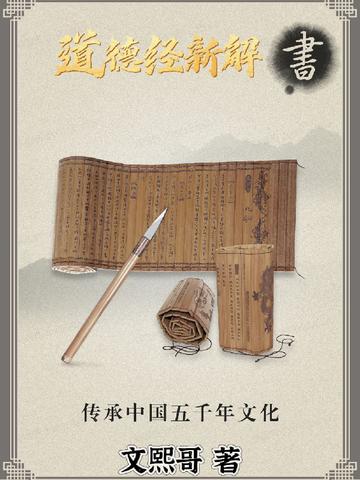
The Dao De Jing, also known as the True Classic of the Way and Its Virtue, Laozi, The Five Thousand Characters, and Laozi's Five Thousand Words, is a work from ancient China, written before the pre-Qin schools of thought had divided into their respective traditions. It was revered by the thinkers of its time and is a philosophical work by Laozi, also known as Li Er, who lived during the Spring and Autumn period. This extraordinary classic is hailed as the king of all scriptures and is one of the greatest works in Chinese history. Its contents span philosophy, ethics, politics, military science, and many other fields. Later generations revered it as a guide to governing the state, managing the family, cultivating oneself, and pursuing learning. Chapter One: The Way that can be spoken is not the constant Way. The name that can be named is not the constant name. The nameless is the beginning of Heaven and Earth; the named is the mother of the myriad things. Therefore, free from desire, one observes its mystery; filled with desire, one observes its manifestations. These two arise together, but differ in name. Together, they are called the Mysterious. The Mysterious beyond the Mysterious is the gateway to all wonders.