
Stats
9.4Score
9Chapters
Tags
Synopsis
Reader comments
In booklists 3




Psychology! ! I Really Like It, Please Read It! Girls Like Psychology
I want to read a book like "Murphy's Law: Learn a little bit of psychology every day". Please recommend some psychological articles. I really like them. I hope to recommend some psychological books. I really like to read them. Please, guys! ! !
70.8MViews482Books1dUpdated




Looking for High Quality Psychology Books
8.5MViews134Books1dUpdated

Recommended Introductory Books on Psychology
I want to read a book like "The Genius is on the Left and the Madman on the Right". Don't be super expository! ! !
6.5MViews284Books1moUpdated
I like this book very much. It tells us to dare to face our inner needs and find the real elephant behind our emotions. There are many inspirational sentences in it. For example, you can say to yourself now: "I used to be so helpless and dependent on others, but all that is in the past. Now, I am a mature, brave, and confident adult. I have the right to express my true feelings and needs!" I hope this book can also bring some comfort to you who are confused in front of the screen. I hope we can all become emotionally stable adults! Come on!
The "elephant in the room" is obvious but often overlooked. The "mosquito" here represents the seemingly insignificant and trivial things in life, such as being cut off by other cars while driving, being stepped on by someone while walking, and the other half of your life throwing things away, etc.; The "elephant" behind the mosquito represents the huge emotions hidden behind these small things, those feelings of being ignored, not respected, and insecure; These deep unmet psychological needs are obvious but are like the ignored elephant in the room, ignored by people. How to find elephants Pay attention to the little things in daily life that make you emotionally fluctuate, which are what the book calls "mosquito" incidents. For example, you may become extremely angry because of an unintentional criticism from others, or you may be extremely disappointed by your partner's small actions. There is often an "elephant" hidden behind these strong emotions. At this time, if you follow the emotions to trace the underlying reasons, you may find unmet needs and other situations. Or, pay attention to things that you always try to avoid, or that you are particularly sensitive to when touching. For example, some people are particularly afraid of being rejected in public. Behind this may be related to unmet needs for self-esteem and recognition from others, and the corresponding self-protective behavior can help us discover the hidden "elephant" in reverse. Understanding and Soothing Elephants First, determine what kind of unmet basic needs are hidden behind the emotion, such as belongingness needs, esteem needs, or self-actualization needs. Understanding its position in the hierarchy of needs can help to clearly analyze the root cause of the "elephant". Don't suppress or ignore the emotions caused by "elephant", but admit that you have such feelings, such as being sad because you are not taken seriously, and face the sadness calmly. Tell yourself that the emergence of this emotion is reasonable and is signaling inner needs, and begin to soothe yourself by accepting it. Try to stand from an objective perspective, analyze past experiences, personality traits and other factors, and think about how you formed your current strong desire and sensitivity to these needs. Understand that this is not an accident, and look at yourself and the "elephant" behind you with a more tolerant attitude, which can have a soothing effect. [Deconstruct or even eliminate the elephant] Replace self-protective behaviors that may have been avoidance or overreaction in the past with positive, effective solutions. If you always responded angrily to criticism in the past, you can now try to listen calmly, communicate rationally, break the old pattern, and resolve the negative impact caused by the "elephant". Examine deeply held beliefs that may not be reasonable, such as "I must be recognized by everyone to be successful." Change this kind of concept so that you are no longer bound by it, thereby reducing the psychological burden caused by the "elephant". If you find that your need for recognition is not being met, you can make a plan to improve the situation by participating in activities where you are good at showing yourself off and getting positive feedback. Gradually satisfy those unmet needs, slowly deconstruct and eliminate the "elephant", and finally regain inner balance. How do I practice I have a habit of recording my thoughts at certain special moments, trigger points of emotional ups and downs, things that I care about very much, etc. Every day, and then I will think about this week's records every week to see if I can find the "elephant" behind these "mosquitoes". Facts have proved that my 🐘 is often beyond my imagination. Sometimes the people I care about and the things I do seriously can greatly affect my decision-making, but I don't know it. I don't know myself as well as I thought; When I deconstructed my own 🐘, I found that I was a less lovable person, and I didn't like myself; Then I became more and more emotional about myself; Then, I told myself that no one will completely accept another person, even if that person is myself; Then, I told myself, you are still somewhat interesting, just leave the elephant there and not look at it; In the end, this is what it looks like at this moment: when I have no retreat, when I analyze and transmit myself at a certain moment, all I have left is to move forward, and the only choice I have is to accept it. Content Sharing 1. Maybe you have had this experience: being suddenly attacked by negative emotions, without any warning and without any good reason, just like "coming out of nothing". You may feel irritated or sad, become silent or angry, and wonder what is going on. You find no explanation for your mood swings when others ask. 2. If we turn a mosquito into an elephant, although we will feel emotional fluctuations, we will not know the underlying reasons for this emotion. Behind the seemingly insignificant things lie our inexplicable feelings, which are often considered inappropriate, inexplicable, or even crazy or pathological. 3. When you observe your elephant, you will find that in moments when basic needs are threatened, you suddenly feel more vulnerable and vulnerable than usual, while others appear more powerful and threatening. But if you realize your strengths, the situation is different. You will deal with threats calmly and calmly, and never doubt yourself. This distinction helps us understand that we are not monolithic and that how we see ourselves depends on our individual experiences and backgrounds.
It is very real. The analysis is in-depth and simple. It uses case analysis to describe several principles, allowing readers to gradually understand that every emotional outburst is not a simple matter-of-fact discussion, or someone's emotional outburst is not directed at himself, but there is an elephant behind a certain pain point.
The source of all emotions is your heart. Learn to express your inner emotions instead of expressing them with emotions.
This book is quite good. It allows us to recognize and understand the reason why we are very emotional when faced with trivial things - it may be that it touches the pain points left in our hearts in the past, and the pain points arise because our basic needs in childhood or adolescence were not met. These pain points may exist in our subconscious and are not easily noticed by us. Therefore, when we become emotional because of a trivial matter, we cannot explain the reason, but we feel discomfort, grievance, anger or fear... This is the "elephant behind the mosquito". The book also puts forward some methods to tell us how to discover the "elephant behind the mosquito" and how to better deal with the emergence of these "elephant". It also allows us to understand our own self-protection procedures. Although it can temporarily allow us to escape the current situation and avoid our true feelings, the problem is still there without any solution. Therefore, we should adopt a better way to deal with the emergence of the "elephant" and let it return to the "mosquito" itself, thereby achieving the need for psychological balance.
Really face your inner needs, affirm yourself, and then slowly balance it. It is important to re-heal your inner child. Every healing is a process of self-reconciliation. Although my mood is still not very stable, I have learned to shift my attention. Every time you are confused, you can find the answer by reading.
This is a very good reference book on psychological healing methodology. It provides specific self-healing methods and tools (evaluation forms, cases, theories, etc.), Which plays a very important role in self-healing and growth. However, after reading this book, I realized that I seemed to have passed the stage of discovering the "elephant hiding behind the mosquito". I was pleasantly surprised to find that I had already come a long way. If you are still in the stage where your emotional stability is affected by a small thing, but you cannot find the reason and cannot improve it, it is really worth reading this book. You should benefit a lot and suddenly become enlightened [Like]
A very helpful book. The author does not talk about false and empty theories, but directly teaches you how to analyze your own methods and provides solutions. It played an extremely important role in my understanding of myself. Although it only takes one or two days to read this book, as long as you fill out the forms carefully and make a series of plans for implementation, you will have a direction to improve yourself in the next few weeks. Many thanks to the author for writing this helpful book.
Through the views in the book, I can better analyze myself, find the pain points from the mosquito and finally find the elephant, find out which needs have not been met in the past, and whether the self-image and the image of others are accurate. But I have some reservations. If my basic needs are not satisfied, will my current emotions be dominant? This needs to be answered in individual practice in the future.
Reading this book, people can't help but feel the same. The cases in the book all seem to be about themselves in life, longing to be noticed, understood, and respected, but they always ignore the feelings of others and feel that they are the most aggrieved in the world. But after reading this book, I realize that those nameless fires are the result of long-term backlog. We just find an unlucky person to vent to, and this venting target is often the people around us.
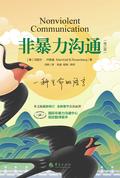
I don't know if the author read "Nonviolent Communication" before writing this book. This book has many points in common with "Nonviolent Communication", and the focus is on self-feeling and inner needs. The examples in this book are very specific and detailed. They are really the situations that people often encounter in life. The content in the book is step-by-step, leading readers step by step to understand their own emotions and inner needs, and find the elephant in their hearts. The whole reading process is easy to understand and full of rewards. I highly recommend everyone to read this book. I hope we can all become masters of our emotions, find our inner unmet needs, and understand ourselves better.
I learned to think positively about the emotions behind problems, treat my own emotions correctly, accept it, understand it, face it, and solve the needs behind the emotions.
The book is very detailed and includes specific implementation methods. According to Internet parlance, it is a nanny-level tutorial. It is very helpful to find out the real needs hidden behind "small things can bring out big emotions". It can also provide guidance on how to meet these needs. It is very practical.
When we learn to express our sensitivity and vulnerability frankly, the other party will have the opportunity to better understand us, and we can better understand the pain points of others. As long as we have a stable sense of self-worth, believe in our abilities, allow ourselves to express strong feelings, and dare to show weakness~
"The Elephant Hiding Behind the Mosquito" [Germany] Ernst Fried Hanig [Germany] Eva Wendler 1 note *Chapter 2 Search Object: Hidden Elephant* 2025/05/22 Add underline Try to learn to examine the emotional responses we take for granted so that our emotional responses become a guide to understanding our important needs.
This book is like a kind friend, using simple stories and warm language to help me understand that small things can also trigger huge emotions. The characters' experiences made me empathize with them, and they also taught me how to deal with emotions. The author's writing style is concise and clear, and the writing style is smooth and easy to read. After reading this book, I feel as if I have also gone through a healing journey and become more courageous to face the difficulties in life. Recommended to everyone!
I really regret not reading this book many years ago.
The elephant hiding behind the mosquito, interpreting one's true needs through negative emotions, and getting angry at the right person at the right time, in the right place, is not easy
It's very interesting, the content is not the same every time, and the emotions of the characters are also described very delicately.
Like it very much! ! Be sure of yourself! Pay attention to your own needs, I think we can all do that! !
Reconcile with my heart
I think it looks good
Masterpiece among masterpieces
After reading it, I gained a lot.
Practical, beautiful and logically clear
I shed tears while watching it, because I suddenly realized that I never got true love and a sense of belonging in my childhood. I feel sorry for myself and hope that I can grow a little after watching it.
I read the reviews of the book and recommended it to several friends with children.
So awesome👍👍👍I got a lot of energy. Thanks to the author.
Recognize yourself, understand yourself, and know what you need or what others and yourself need
Everyone doesn't want to be the elephant hiding behind the mosquitoes, but all the unsatisfactory experiences in life will eventually create the elephant they don't want to be.