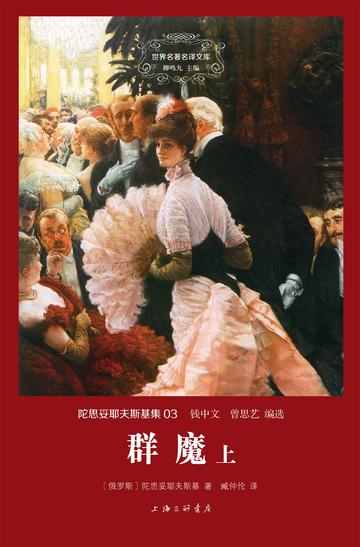
Demons (Set of Volumes 1 and 2) (World Famous Translation Library Dostoevsky Collection)
群魔(套装上下册)(世界名著名译文库 陀思妥耶夫斯基集)
- Status
- Completed
- Length
- 575k Words
- Updated
- 2y ago
- Source
- Fanqie
Stats
252Reads
9.2Score
109Shelves
32Chapters
22Listens
9.5kReads · all time

A great work that profoundly exposes the darkness and ugliness of human nature. No one, no so-called everyone's comments and interpretations can fully reflect the rich connotation of the work. You only need to read it yourself, because the length is indeed too long. The most profound thing I understand is that no matter how bad or ugly people are, they try their best to disguise and package themselves to make themselves look like good people. This shows that they have sufficient ability and clear standards to distinguish between beauty, ugliness, good and evil, but they still choose to do evil. Two hundred words are omitted here.
This is another masterpiece of Dosage's, a very thrilling novel. God dropped a spider's thread from the sky, but people thought the thread was too thin. The demons would rather gnash their teeth and howl in hell than believe that the spider silk can really take them to heaven.
It took 16 hours to finish watching Demons. The early preparations were long, and it was easy for people to think of giving up. Fortunately, I persevered. The series of events that occurred later are worthy of deep thought and introspection. When did you become a pig? When will it be a ghost again? What about becoming a human being? Is it necessary to believe in God to be a human being?
Idealism gone too far is more terrifying than evil - because it calls itself "good". Tuo Shi wrote every fanatical face, hypocrisy, selfishness, and self-impression, all mixed together. You won't feel comfortable after reading it, but you will be sober: Don't give up your soul to any beautiful slogan easily. It's a bit laborious, but it's not bad after reading it. I chose to skip reading. It's worth pondering deeply and reading it again and again. Nikolai Stavrogin, the focus of the whole book and the representative of nihilism, has always stuck with me. His indifference to everything is boring. He always gets a little satisfaction from trying new "crimes or mistakes (there are also good things)", and then he will look down on everything. His confession of more than a thousand words cast another veil over him, as if "when a person is about to die, his deeds are also good." He spent his life in nothingness and absurdity and ended his own life with his own hands. He had many feelings, but now his words cannot express his feelings and it is unforgettable.
Tuo Taihui wrote... Everyone has a hard life, no one can blame anyone...
Hui Ji hurts the body, the ending of nothingness is death, live well
I personally think it's not as good as "Crime and Punishment"