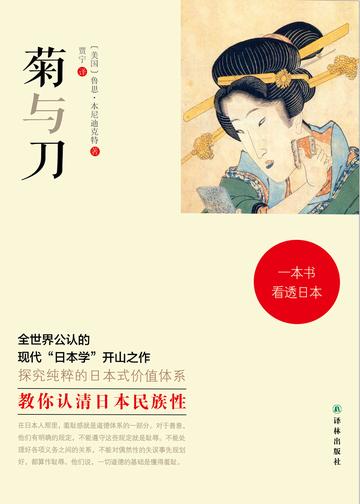
"The Chrysanthemum and the Knife" is an investigative and analytical report made by American anthropologist Ruth Benedict at the end of World War II on orders from the U. S. Government to analyze and study Japanese society and Japanese nationality, aiming to provide policy basis for the U. S. To control Japan after its defeat. In the book, the author goes deep into many aspects of Japanese life, not only showing the Japanese people's living habits and behavioral creeds, but also analyzing the deep cultural factors that formed these habits and creeds. Since its publication in 1946, it has aroused strong repercussions around the world, has become a must-read for studying Japanese nationality, and is considered an outstanding example of social science research being directly applied to political practice.
Reader comments
The biggest feature of a good book is that it can be read on (but due to cultural differences, first of all, this is a book that Americans studied Japanese and then translated it. It is impossible for every English word to correspond to Chinese one-to-one. In addition, the author's understanding is difficult to have accurate words to express the meaning in Japanese. After all, Japanese is too ambiguous.) But there is no doubt that this is a book that reveals Japanese behavior in detail.
Regarding this book "The Chrysanthemum and the Sword", reading it can not only understand Japanese culture, but also understand the thoughts of Americans and their views on Chinese culture.
It mostly uses examples and explanations. I recalled it and wrote it down briefly. If you want to know the following content, you can read this book. If there are any deficiencies, please add them.
1/The Japanese's belief in the emperor and their attitude towards prisoners of war, why they did not surrender during the war, and their defeat could be accepted with a friendly attitude.
2/Japanese people's views on filial piety and why they still follow the teachings of their elders even if their interests are damaged.
3/Why do Japanese people say, "I'm sorry, I'm indebted to you" for things that should express gratitude...
4/Why do Japanese people attach so much importance to not owing others favors?
5/Spirit of self-sacrifice. Unable to balance loyalty and justice, he committed suicide by caesarean section.
6/ Ways of pleasure, bathing, sleeping and openness to sex.
7/Shame and guilt.
8/Japan's understanding of religion and some living habits.
But no matter how you say it, I personally think that there are all kinds of people in a country, and what we study is the majority of the people in a country, or the national character, so don't solidify your thinking and think that all Japanese people are like that.
Moreover, book research is also time-sensitive. Maybe Japan was like that at that period, but now with the development of society, they will also change.
Get to know little Japan, a complex and ever-changing place where overt etiquette and hidden rituals are rampant
The author knows the Japanese very well, and also allows us to use a mirror to compare Asians and Chinese, and benefit from our Confucian culture-incorporated moral values, family values, and love and giving in life.
From the book, I learned about the development history of Japan, an island country, and it is worth reading.
Learn about Japan from multiple angles
Only by knowing yourself and the enemy can you be victorious in every battle
I have learned about a different Japanese. Only by understanding Japan can we defeat Japan and prevent history from repeating itself!
The basis of all morality is to understand shame.
Analyzing the Japanese nation from an American perspective, this book is worth reading
The writing is so comprehensive, it goes deep into the bones, and it is worth reading.
Classics don't need my evaluation
You can still see it
Take me a green hello russia
If you want to have a deeper understanding of Japan, this is a must-read book.
This book was recommended by my teacher. Through this book, I learned more about Japanese living habits and ways of thinking. It is easy to understand and well worth studying and reading.
It is worth seeing to truly understand the thoughts of the Japanese nation.




The biggest feature of a good book is that it can be read on (but due to cultural differences, first of all, this is a book that Americans studied Japanese and then translated it. It is impossible for every English word to correspond to Chinese one-to-one. In addition, the author's understanding is difficult to have accurate words to express the meaning in Japanese. After all, Japanese is too ambiguous.) But there is no doubt that this is a book that reveals Japanese behavior in detail. Regarding this book "The Chrysanthemum and the Sword", reading it can not only understand Japanese culture, but also understand the thoughts of Americans and their views on Chinese culture. It mostly uses examples and explanations. I recalled it and wrote it down briefly. If you want to know the following content, you can read this book. If there are any deficiencies, please add them. 1/The Japanese's belief in the emperor and their attitude towards prisoners of war, why they did not surrender during the war, and their defeat could be accepted with a friendly attitude. 2/Japanese people's views on filial piety and why they still follow the teachings of their elders even if their interests are damaged. 3/Why do Japanese people say, "I'm sorry, I'm indebted to you" for things that should express gratitude... 4/Why do Japanese people attach so much importance to not owing others favors? 5/Spirit of self-sacrifice. Unable to balance loyalty and justice, he committed suicide by caesarean section. 6/ Ways of pleasure, bathing, sleeping and openness to sex. 7/Shame and guilt. 8/Japan's understanding of religion and some living habits. But no matter how you say it, I personally think that there are all kinds of people in a country, and what we study is the majority of the people in a country, or the national character, so don't solidify your thinking and think that all Japanese people are like that. Moreover, book research is also time-sensitive. Maybe Japan was like that at that period, but now with the development of society, they will also change.
Get to know little Japan, a complex and ever-changing place where overt etiquette and hidden rituals are rampant
The author knows the Japanese very well, and also allows us to use a mirror to compare Asians and Chinese, and benefit from our Confucian culture-incorporated moral values, family values, and love and giving in life.
From the book, I learned about the development history of Japan, an island country, and it is worth reading.
Learn about Japan from multiple angles
Only by knowing yourself and the enemy can you be victorious in every battle
I have learned about a different Japanese. Only by understanding Japan can we defeat Japan and prevent history from repeating itself!
The basis of all morality is to understand shame.
Analyzing the Japanese nation from an American perspective, this book is worth reading
The writing is so comprehensive, it goes deep into the bones, and it is worth reading.
Classics don't need my evaluation
You can still see it
Take me a green hello russia
If you want to have a deeper understanding of Japan, this is a must-read book.
This book was recommended by my teacher. Through this book, I learned more about Japanese living habits and ways of thinking. It is easy to understand and well worth studying and reading.
It is worth seeing to truly understand the thoughts of the Japanese nation.