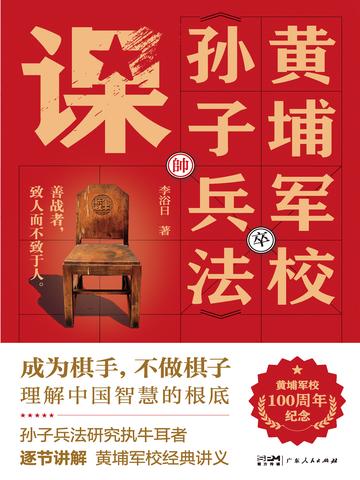
In the New Fourth Army Memorial Hall in Maoshan, Jiangsu, there is a display of "New Research on Sun Tzu" that the founding general Su Yu studied during his lifetime. This book is the basis of "Sun Tzu's Art of War Course at Huangpu Military Academy" by Li Yuri, a giant in modern Chinese military science.
Li Yuri studied "Sun Tzu's Art of War" throughout his life, not only to inherit the national wisdom, but also because of the urgency of the national crisis. During the Anti-Japanese War, Li Yuri taught "Sun Tzu's Art of War" at the Whampoa Military Academy and the Army University of the Republic of China. He made suggestions and gave speeches on the front lines of the Anti-Japanese War to inspire the courage and confidence of soldiers. Together with Zhejiang Jiang Baili and Yunnan Yang Jie, he was one of the three giants of military science. He was recognized as "the first person to study Sun Tzu's art of war" at that time, and he was the leader of the global study of Sun Tzu. Yu Youren praised him as "equally immortal with Sun Tzu."
"Sun Tzu's Art of War Class at Whampoa Military Academy" includes the original text of "Sun Tzu's Art of War" and the research results of modern Chinese military expert Li Yuri. It not only provides a sentence-by-sentence explanation of the original work, but also provides a comparative study of Chinese and foreign strategies. It clarifies the philosophical origins of Sun Wu's resourcefulness and analyzes the hidden wisdom and specific application methods of "Sun Tzu's Art of War".
Reader comments
This book is very interesting! It is not as rigid as ordinary annotations, but uses a flexible way to interpret "The Art of War". The book also mentions the strategic principles of "five things and seven strategies", which I feel are very practical. Sun Tzu said, "War is the most important thing for the country." Indeed, war requires careful consideration and cannot be acted upon impulsively. This book should be of great help to those who like to study military affairs.
This book is very interesting! It is not as rigid as ordinary annotations, but uses a flexible way to interpret "The Art of War". The book also mentions the strategic principles of "five things and seven strategies", which I feel are very practical. Sun Tzu said, "War is the most important thing for the country." Indeed, war requires careful consideration and cannot be acted upon impulsively. This book should be of great help to those who like to study military affairs.