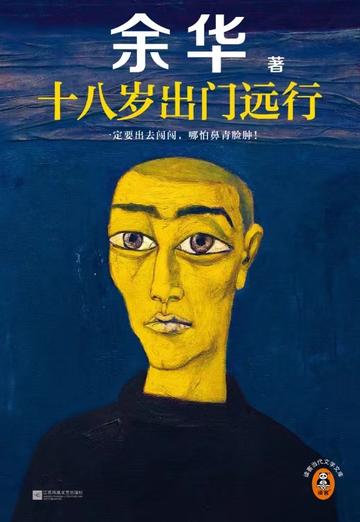
Going on a Long Journey at the Age of Eighteen
十八岁出门远行
- Status
- Completed
- Length
- 90k Words
- Updated
- 2y ago
- Source
- Fanqie
Stats
Tags
Synopsis
Reader comments
In booklists 34
Explore more →
Books That Students Should Read, In-Volume Essentials
Mathematics, Chinese, English, chemistry, physics, biology, geography, history, ancient poetry...
Nobel Prize for Literature, Mao Dun Literature Prize, Lu Xun Literature Prize and Other Literary Works
I want to read a book similar to "One Sentence is Worth Ten Thousand Sentences: Collector's Edition".
Masterpiece! ! ! a Chinese and Foreign Classic Book! ! !
Literary Masterpiece, (ㆁωㆁ)
I Beg You to Read Secretly During the Summer Vacation, and Book That Will Kill Your Classmates at the Beginning of the School Year.
I Read Secretly During the Holidays and Became Obsessed with My Classmates' Books.
I would like to read a book similar to "How to Read a Book".
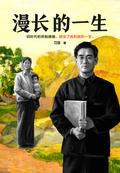
Why Not Read Classics?
Recommend some good books that are meaningful, influential and well-written.
Worth Reading Literary Works
Keep it for the record and look at it again when you have time.
Novels About Rural Miracle Doctors Are Also Good.
Looking for Literary Works That Can Improve My Writing Skills! ! !
Are There Any Teaching Aid Books?
I want to read a book similar to "Half-hour Comic History of China 5". For example, the above
Literary Masterpieces, Good-Looking Literary Novels
Like Literary Classics
I want to read a book similar to "La Traviata". I think this book is well written. I recommend it.
Books for College Students to Read
What books are worth reading for high school graduates?
Look for Classics
I'm tired of reading online novels, so I look for those classics that are very good and profound, and can inspire people a lot.
Books to Improve Your Sense of Chinese Language
I want to read books similar to "The Collection of Lu Xun (21 volumes in total)". I'm looking for books with stories that are more interesting and interesting.
Yu Hua's Book Recommendations
A Good Book That Can Really Change Your Life
Any type of book will do as long as it can help people learn useful knowledge.
A Must-Read for Chinese Language and Literature Majors
Are there any books that can actually help improve your writing and expression skills?
Does Anyone Like Literary Classics as Much as I Do?
I recommend twenty-three literary masterpieces to you

A Good Book That Can Improve Your Various Levels
I would like to read a book similar to "A Boy in Fresh Clothes and Angry Horses: Poems and Wine of Poets of the Tang and Song Dynasties". Read "Youth in Fresh Clothes and Angry Horses" to learn wisdom from the poetry and wine life of Tang and Song poets, learn to be open-minded, understand the pattern, and cultivate calmness, which will help you broaden your horizons and enrich your heart.
Masterpieces, History and Culture, World Masterpieces
.
Nice Masterpiece
It's not just foreign or Chinese, it doesn't matter, as long as it's beautiful and meaningful
Literature Books, I Want Literature Books! ! !
Family members, I want to read literature books, books that can improve my writing skills or increase my knowledge. Beg on your knees!
Form deviates from the order and logic provided to me by the current world, but it allows me to approach reality freely. Every chapter of this book seems to be divorced from reality, but there is truth between the lines. When everyone's story is amplified, we will find that the world is like this, incomprehensible and difficult to change.
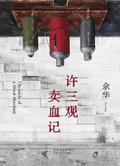
Teacher Yu Hua doesn't only have "Alive" worth watching. I feel that "Alive" has been praised too highly, but it is indeed a very good book! In my mind, Mr. Yu's books such as "Xu Sanguan Sells Blood", "Brothers", "Shouting in the Drizzle" and "Traveling at the Age of Eighteen" are more worth recommending to others. The first two books have strong storytelling, straightforward language and approachable stories. The latter two require more in-depth thinking. After reading "Hypocritical Works" (perhaps I didn't finish reading it at all, I just scanned all the words with my eyes and tried to understand what they left in my mind, but in the end to no avail), I understood a little bit about the writing method that Mr. Yu Hua wanted to express back then: a common-sense writing mode that breaks out of the inherent thinking and only writes about the things themselves, without necessarily expressing any themes or ideas. This is a simple understanding I gained from it. To be honest, my current text is also framed in a common pattern. I can only say that text (or writing) is indeed not easy.
It's too late to meet. It always reminds me of my eighteenth year old. Unfortunately, I didn't travel far that year, and never before, so it can be said that I still knew nothing about the world at that time, although I don't want to admit it. To this day, I am pretty much the same. After all, over the years, I feel like I have always lived in a closed self-world. Even if he occasionally gets a chance to get along with others, he only attaches importance to things and neglects people, maintaining his consistent rebellion against tradition. Maybe that's why people always feel that I am still very young.
There is irony in the absurdity, and profound meaning in the bizarreness. Yu Hua's writing never directly writes about a person's state and characteristics. Instead, I vaguely describe the scene from the perspective of others and God's perspective, allowing readers to judge the state and characteristics of the character at that time, thereby deepening the thickness of the text and the interpretation space of the article.
"Yes, you are already eighteen, you should get to know the outside world." From the young man who just came out of society to look for his own "hotel" full of hope, to the stubbornness of not hitting the wall and never looking back, even though he is bruised and bruised, he still insists on the justice in his heart. As soon as he appeared on the scene, he experienced the dangers of human nature, but he was still optimistic. He saw a sound heart under the bruised appearance of the car, just like himself, under the tired body there was a brave heart to start again. Ruan Haikuo's road to revenge in "Blood Plum Blossoms" is bumpy and bumpy, with mistakes missed and forgotten. Although he did not take revenge personally in the end and the plum blossoms were stained with blood, he secretly paved the way for revenge and achieved his final goal. When I read it in the middle, I felt it was very ironic, but at the end it felt like a compliment, which was confusing. In the end, it gave me more thoughts: life is long, and we may be confused on the road to pursuing our ideals, but we always maintain our good nature. Even if we occasionally get lost, I believe we will eventually find our own "hotel" This document uses the division, overlap and dislocation of time for the girl Yangliu to repeat the same thing, with different details each time. We are eager to find the truth of the story from the details, but it is also the details that make us more confused. The seemingly absurd form is closer to the inner reality.
I think "Going Away at the Age of Eighteen" is a kind of self-growth. From "going out" with a sincere heart, experiencing the warmth and warmth of people "outside the door", to being bruised and bruised, still sticking to the original intention. From the evil in the world to the most beautiful society, from the ignorant boy to the true and unswerving love. All these processes are indispensable. It also tells us that we should face the world "outside the door" with a positive attitude.
In fact, it seems that I don't understand it, but I vaguely feel that the reality reflected is very real. Teacher Yu Hua has always been humorous. In addition to the thought-provoking things in his stories, he also has humorous touches! Good books should be read several times. This collection of short stories from teacher Yu Hua's early novels has a very cold and sharp style. You should read more, read carefully, and read intensively.
Eighteen years old means maturity, growth, and lifting up the heavy responsibilities on the shoulders of parents. At this time, you should know how to help your parents do what you can to benefit your parents." This reminded me of the rites of passage in the folklore introduction course I had studied. "The rite of passage is a ceremony held to recognize that young people have the ability and qualifications to enter society. "Eighteen years old is the symbolic age when a person reaches adulthood, and it is also a person's precious green years.
I read it twice before and after, and I am confused and want to leave my own thoughts. Artists create for nothingness, and "nihility" always gives people a pessimistic and unpositive feeling. But the fact is that nothingness is the wildness of life. On the map of life, the unexplored gray area is called the "land of nothingness." The Golden House and Yan Ruyu may be waiting for you to meet in a corner of the void. Literary works are an opportunity for us to escape from "orbital life" and explore the "land of nothingness". Time is fair to everyone, but in novels it can be broken, reorganized, and even tampered with the memories we seem to have. When Teacher Yu talks about "structure," I understand it to mean "deconstruction." Think of the montage in the movie, breaking the conventional narrative pattern, which may seem rebellious, but in fact it liberates the imagination. Over the past year or so, I have also been shattering my own life to find myself. The interesting thing about literary works is to find yourself in the books. Just like an inadvertent encounter when you are walking on the road, good or bad, sadness or joy, success or failure are not important until the ending comes. The important thing is that you have another branch of the perspective of observing the world.
When I was studying the history of modern and contemporary literature, I got to know some of Yu Hua's works. I thought "Going Away at the Age of Eighteen" was about a young man who left his parents to pursue the life and ideals he wanted. It was a typical inspirational story, and it must be clear and easy to understand. However, reading it through once completely and absolutely destroyed the assumptions I had built in my mind. For me, "Going Away at the Age of Eighteen" is an obscure book. From it, I can see Yu Hua's very exquisite writing techniques, which seem to be mixed with conjecture, irony, and clever use of various techniques such as combining fiction and reality. Although I cannot fully understand the author's writing intention, what is clear is that this is indeed a classic literary work. Whether it is the refinement of the text, the conception of the full text, or even the genre and style of the article, it has a unique charm. I believe that when I hold this classic in my hands, I will have a different reading experience and pay tribute to the great writer.
When I was 18 years old, I left home and went on a long journey to find a hotel. I experienced this: I encountered a car but failed to get on it. After walking for a day, as evening approached, all I could think about was riding in a car. I managed to get in the car, but after the car broke down, I started thinking about the hotel again. Later, after being beaten by a group of people and having his backpack taken away, leaving only himself and the car covered in bruises, he discovered that the hotel he had been looking for was right next to him. The behavior of the driver while he was riding in the car left something to the imagination. When I asked the driver kindly, he pushed me away roughly. When I became tough, the driver looked at me friendly and asked me to take the car. When I tried to scold the person who stole the apple, the driver looked on and laughed at me. Through this series of actions, we can see that "I" is young and passionate, fighting against injustice, and taking responsibility for my impulsive actions. The driver symbolizes real life. After being tempered and beaten by reality, I finally lost my backpack, that is, the innocent heart and childhood of a young man, and truly entered the society.
This short story is Yu Hua's famous work in his early years. Different from Yu Hua's later realistic novels (such as "Alive" and "Brothers"), these short stories do not have much plot development, but they are full of absurd and bizarre descriptions and are highly metaphorical. This reflects the profound social nature that Yu Hua has given to his works. As he himself said, "When I discovered that my previous writing attitude of talking about things can only lead to superficial truth, I had to look for new ways of expression. The result of my search was that I was no longer loyal to the things I described. In the form of objects, I began to use a hypocritical form. This form deviated from the order and logic provided by the current world, but it allowed me to freely approach reality." In the social context of that time, he chose to express his thoughts in an abstract stream of consciousness style.
It's a very good read. I heard that Teacher Yu's book was published before and I really wanted to read it. It just so happened that I was lucky enough to read it today. The eighteen-year-old boy carries goodwill towards the world and loyalty to his friends. In the end, the world did not deceive him and taught the simple boy a lesson. Teenagers are pushed out of the house by their parents, just as we are pushed out of the school by our age. Even after being taught a lesson by reality, I can't help but lament that people's hearts are sinister, but the young man is afraid that he will fall into another pit🕳️. It doesn't matter whether he is passionate, brave and straightforward, or he doesn't have a long memory. This is the nature of youth, isn't it? People always miss such a warm and simple self, and miss friends who are like themselves, even if they stumble over one stone after another.
The first time I saw this writing method, I was confused. It wasn't until I saw the appendix and postscript that I understood the author's writing style and method. The imagination is simply terrifying, especially the piece "Dedicated to the Girl Willow", which vividly expresses the sense of confusion and overlapping of time and space. This method allows us to have a different dialogue and coexistence with people or things in the past. It is not a separation of the past and the present, but the past and the present can be carried out together. Just like the dialogue between the author and Fisher that transcends time and space at the end, it's amazing. It also reminds me of "China in Classics" hosted by Sa Beining, which is very similar to this way of expression.
It's very beautiful, it looks ordinary, but it embodies a lot of humanity!
Teacher Yu Hua's novel has reached a new level of depth. There are many parts that I don't quite understand, and I don't know what the article wants to tell me, like "The History of Two People", but most of it can still be understood, and it can also reflect the situation of most young people who are just starting out. In addition, the new writing method of "This document is for the girl Yangliu" is eye-catching!
Maybe people who think they can't understand have less understanding of themselves, so they can't resonate in their hearts, and they don't want to think deeply, so they are not aware of their deep inner feelings. I can only capture my sporadic feelings. What I like most is the last part of the dialogue between the two authors. As written in the book, after a collision of ideas and discussion, the author finally moved to the black and white world, and we moved to the color world. In fact, it is also because we are willing to go to this black and white world first, and then they also go to our colorful life at the same time.
I started reading this book because it was said on Xiaohongshu that it was a good anti-spiritual book, although I didn't feel it mattered after reading it. It is really not easy to read the whole book. You must understand it carefully. The story of one chapter can only be read consecutively, otherwise the next day will be confused. Without looking at other people's reading comprehension of this book, my current feeling is that Yu Hua is very good at writing about fate and making good use of time in this book. How to explain fate. In "Blood Plum Blossom", Ruan Haikuo searched for clues all the way to find the enemy who killed his father, but in the end he found himself helping Rouge Girl and the Black Needle Hero to ask Taoist Priest Qingyun and Bai Yuxiao about the whereabouts of the other two people. The last two people were the enemies who killed his father. The two people he helped also helped him avenge him early under the arrangement of fate. The Plum Blossom Sword only has 99 flowers. In "Death Narrative", in the early years, the person who hit and killed lived in peace after escaping, and now the person who hit and killed his conscience found redemption and was beaten to death in the end, which can be regarded as retribution in the dark, which is the arrangement of fate. In "The Past and Punishment", the punishment expert's final method of death was suicide, which he once thought was "wasted". "If you come back tomorrow, I will definitely die tomorrow." So committing suicide to fulfill one's "promise" is not considered fulfilled. Is the last cry heard in "Destined" coming from his own plea for help many years later? Yu Hua is good at writing destiny. He uses time to write destiny. Many chapters in this book use the methods of time splitting, time overlapping, and time dislocation. Let the selves in different time and space meet and experience the stories of different time and space. The old man is me, the stranger is me, and I am me. The significance of time is that it can restructure the world at any time, which means that the world will take on a new shape after every restructure of time. Therefore, using time and revealing time at the end gave me a sudden realization of the reverberation of my destiny. This book is too difficult to read. I can only express my feelings after seeing it in a superficial way. I really didn't understand "The Past and Punishment". I doubt my understanding of "The History of Two Persons" was too shallow. "Ancestors" was also difficult to understand. All in all, this book is worth taking a closer look at, but I don't think it has much to do with the treatment of mental internal friction mentioned on the Internet. Why can't I write such good words! Finally, I would like to share some of Yu Hua's words in the postscript. I feel like I have some resonance with him! But I can't write such good words. "In the human spiritual world, all the values provided by common sense begin to crumble, and all old things will acquire new meanings. There, the inherent meaning of time is cancelled. The past events of ten years ago can be arranged after the past events of five years ago, and then lead to the past events of six years ago. The same three past events, when recalled again in another environment and time, will be recombined to show their new meaning. The order of time changes at will in the tranquility. Life and death " "So what is the permanent relationship? Then I discovered the destiny that the world gives to people and nature. The destiny of people, the destiny of houses, streets, trees, and rivers. The laws of the world itself are reflected in this destiny, and the elusive part of the world begins to show its brilliance. I began to understand the structure of the world. This is how the structure of "Everything Is Like Smoke" came into being. In "Everything Is Like Smoke", the connections between people and people, people and things, things and things, plots and plots, details and details all seem to be vague and distant. I feel that this can reflect the power of fate, that is, the law of the world itself. " "A true novel should be permeated with symbols, symbols of the way we inhabit the world, the way we understand the world and deal with it."
This is the first time I read Yu Hua's book. I found it very interesting after just one chapter, and I like to keep reading. When I was eighteen years old, I went on a long journey. I didn't care about the east or the west, but only pursued my inner passion and yearning, so that my life would shine with brilliance during the journey.
Teacher Yu Hua's works are really suitable for reading comprehension, and there are many aspects that can be interpreted. What impressed me the most was the first story, written in a very relaxed style, but describing the experience of being deceived when I went on a long journey for the first time. "I" kept looking for a hotel while on the road, but in the end the dilapidated car became "my" hotel. The reading comprehension here is so strong that I can't help but want to analyze some of its profound meaning. But I have been away from school for many years and my brain is not very active, and I really can't think of anything.
Maybe I don't have enough experience. The first time I watched it, I barely understood it. I'll watch it again later.
The most impressive ones are "Eighteen Years Old and Going on a Far Journey" and "Hypocritical Works". The young man in "Going Away at the Age of Eighteen" embarks on a journey with a longing for the world, which is also the protagonist's journey of growth. In the process, he constantly encountered setbacks and confusions, and his understanding of the world gradually changed. From the initial curiosity and longing for the outside world, to the confusion and pain after experiencing a robbery and other incidents, to the final self-comfort and reflection in a broken car, the protagonist continues to grow through experience and gradually realizes the complexity of the world and the cruelty of reality. This kind of growth is not only an increase in age, but also a spiritual maturity and a new understanding of the world. "Hypocritical Works" is Yu Hua's important elaboration and reflection on his writing concepts and creative techniques. Yu Hua believes that people have been trapped by daily life experiences for a long time, forming a fixed thinking mode and understanding of reality. This experience makes people only responsible for actual and tangible things, and their judgments of things are always based on existing cognition and common sense, lacking imagination and exploration of spiritual essence. For example, people tend to only believe things they see with their own eyes, and they find it incredible and unbelievable for some phenomena that are beyond conventional experience, such as "seeing a desk moving around the house at night." This traditional view of reality has led to a misinterpretation of the true meaning, making literary works only stay at the description of superficial phenomena and unable to deeply explore the intrinsic broad meaning of things. What literature expresses is only some popular and outdated experiences, and lacks the display of personal unique experience and spiritual world. Life is complicated, and so is human nature. We cannot simply judge things in black and white, right or wrong. Life is often not as orderly as we expect. We should learn to accept the uncertainty of life and not always pursue absolute security and stability. At the same time, we must be more tolerant and open-minded to understand the behaviors and thoughts of others, and respect different values and lifestyles. Content Sharing 1. The asphalt road is constantly undulating, as if the road is sticking to the waves. As I walk on this mountain road, I feel like a boat. 2. I was thinking that if I knew as much truth as I do now, and knew that there were so many bad guys in the world, I would definitely keep more apples, preferably a full schoolbag. 3. Lying in the pit of my heart in the car, I remembered such a sunny and gentle noon, when the sunshine was very beautiful. I remember playing happily outside for a long time, and then I went home. Outside the window, I saw my father packing a red backpack in the house. I threw myself at the window and asked, "Dad, are you going out?" 4. In the human spiritual world, all the values provided by common sense begin to crumble, and all old things will acquire new meanings. 5. The ultimate goal of self-perception of the world is to disappear the self. Only when people enter the vast spiritual realm can they truly appreciate the boundlessness of the world. I do not deny that people can dissolve themselves in daily life. At that time, people's self will melt into the public and common sense. What this self-dissolution results in is likely to be a loss of individuality.
Although I don't understand many parts, fortunately, the good comment section can give us many answers. Love, death, and traveling at the age of eighteen all imply the hardships and transformations in our lives. We are inspired by them and how we should respond when faced with choices and reality. It not only arouses thinking, but also narrates it in the book. How do we view this This is a question. This is because our experiences and knowledge have different opinions. I hope we can protect ourselves in the face of setbacks and love, and choose the best route rationally. Mistakes are inevitable, and we have more courage to face them. Just like me now, I am under great pressure, but I still move forward, do it if I don't accept it, take action to break anxiety, and produce dopamine to maintain happiness.
It's a bit obscure, but the content is really novel.
2024.08.01 It's well written, but a lot of it is hard to understand. I hope I can gain more insights by reading it again in the future.
This collection of novels is an early work by Yu Hua. Although it is still early, there is no trace of immaturity. The stories in it are somewhat absurd, and some show the heaviness of fate. It is a good work.
In "Eighteen Years Old Travel", you can see the innocent and ignorant young shadow, curious, full of passion, full of trust in everyone, and no defensiveness; people grow and mature in the process of somersaults and pretending not to look back! Eighteen years old is just a symbolic number in a person's life!
I finished reading it without asking for any further explanation. I didn't have any big feelings after reading it, maybe I just couldn't understand the profound connotation. I just barely managed to get some meaning, and there was no disturbance in my heart. Record it and hope I can have a new experience next time I watch it.
Although the title refers to an eighteen-year-old, it is not something that an eighteen-year-old can understand. It is written for young people who have struggled in society. Encountering difficulties means that destiny is beckoning to you and leading you to a better place. Life is unreal. In fact, life is a mixture of true and false. When we face the world fiercely, we will find that the world suddenly becomes gentle.
When I just looked at the title, Traveling Away at the Age of Eighteen, I thought the teacher was just describing his life. Unexpectedly, the teacher was not simply describing this journey. This is the first time I read it carefully. The teacher did not write it directly, but a very symbolic description. Under a lot of fun, there is a huge philosophy of life hidden. It is not that in this era of information explosion, you can understand it quickly by browsing. If so, then you will lose the essence of this book. This teacher's book needs to be carefully read and read many times. It is said that a thousand readers have a thousand Hamlets. If you don't read it once, looking back, you will become the nth person reading it. The detailed descriptions in this book are very meticulous. Some seemingly ordinary and small things are used in the teacher's writing very skillfully without losing any sense of proportion. This is what the teacher said. His first writing was a bit obscure and timid, but it opened a different window.