This book is an innovative work in the field of Song and Yuan history research. The author takes the "Song and Yuan changes" as a perspective and looks at the fate of the scholar elites during the Song and Yuan Dynasties, showing that they had to face the "thousand-man race" and the difficult situation of official career promotion after being named to the gold list. In this context, many scholars who passed the imperial examinations experienced major changes in their mentality and career orientation. They switched from being an official to doing business, teaching, managing land, becoming a monk, etc., And their flow began to diversify. The book has vivid cases and detailed historical materials. The author combines macro outlines with case studies to show the various aspects of social transformation under the changes in the Song and Yuan Dynasties. He explores the basis for the formation of regional society and gentry society in the Ming and Qing dynasties. From a broad historical perspective, he connects the Tang and Song changes with the Song and Yuan changes up and down, and outlines the steps of Chinese society from the Southern Song and Yuan Dynasties, to the Ming and Qing dynasties, and into modern times.
Reader comments
From the perspective of the changes in the Song and Yuan Dynasties, this book explores the phenomenon of scholars becoming civil servants and its impact on social transformation. The content is novel and unique. Through detailed historical materials and cases, the author combined the macro and micro aspects of history, allowing me to have a deeper understanding of the society in the Song and Yuan Dynasties. Moreover, the author has his own unique academic insights and dares to challenge traditional theories. This kind of critical thinking is worth learning.
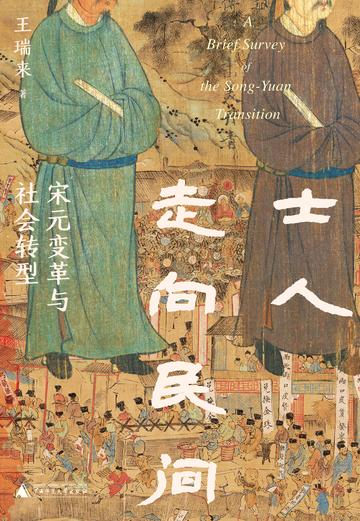
From the perspective of the changes in the Song and Yuan Dynasties, this book explores the phenomenon of scholars becoming civil servants and its impact on social transformation. The content is novel and unique. Through detailed historical materials and cases, the author combined the macro and micro aspects of history, allowing me to have a deeper understanding of the society in the Song and Yuan Dynasties. Moreover, the author has his own unique academic insights and dares to challenge traditional theories. This kind of critical thinking is worth learning.