Stats
Tags
Synopsis
Reader comments
In booklists 34
Explore more →
Increase Knowledge and Improve Your Own Books
Books about architecture, computers, etc., Don't be emotional.
Books That Students Should Read, In-Volume Essentials
Mathematics, Chinese, English, chemistry, physics, biology, geography, history, ancient poetry...
Study Books
Are there any books that are helpful for studying? Please recommend! ! ! ! ! !
Easy-To-Understand Learning Technology Books
I Beg You to Read Secretly During the Summer Vacation, and Book That Will Kill Your Classmates at the Beginning of the School Year.
Psychology! ! I Really Like It, Please Read It! Girls Like Psychology
I want to read a book like "Murphy's Law: Learn a little bit of psychology every day". Please recommend some psychological articles. I really like them. I hope to recommend some psychological books. I really like to read them. Please, guys! ! !
I Read Secretly During the Holidays and Became Obsessed with My Classmates' Books.
I would like to read a book similar to "How to Read a Book".
Why Not Read Classics?
Recommend some good books that are meaningful, influential and well-written.
A Book That Will Make Your Brain Faster After Reading It


A Book That Can Be Compared with Yu Buyu's Writing Style Needs to Be Completed.
Full of Useful Information: All-Round Learning Book
Learning Books
It's the kind that has depth and can be seen through.
Are There Any... Math Books, English Books, Chinese Books...🌚🌝
My parents always say that all my books are novels, and there are no novels about learning🌚🌝

I Want to Study (Internal Volume), Please Recommend a Book
Learning Books
If you are tired of reading romance, just read it to learn. Everything is OK. Focus on learning! ! !
Learning Books

Life Skills, Useful Books
I would like to read a book similar to "Survival and Life Skills to Master for a Lifetime".
Have You Ever Read a Book That Made You Want to Study Hard?
Save the children who don't want to study😭

Books Where You Can Learn Something
Don't be boring. I want a book that integrates knowledge into the storyline. Don't make it empty. The knowledge is real and effective.
Come in If You Want to Learn Real Skills.
I want to read a book similar to "The Art of Testing Chinese Characters". If you want to learn real skills, come in and you are guaranteed to learn something.
Pure Learning Book
They stayed up late looking at their mobile phones, and I stayed up late reading study books, which kept them busy! ! !
Books That Can Be Used in Real Life
It's not the kind of storyline that just tells discussions, or the kind of writing that's very good, like Das Kapital
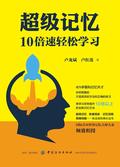

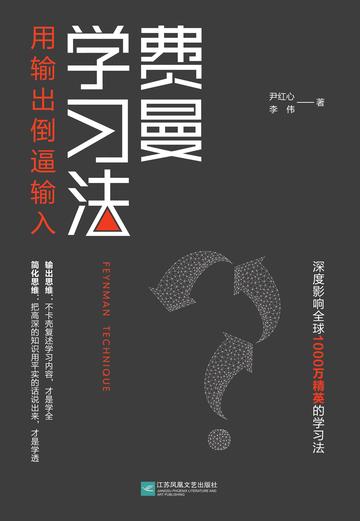
There's something about this book, really, not much. In one sentence, it is: use output to improve input. Teaching and learning.
Many learning methods, most of them talk about how you learn more, how to absorb more knowledge, and you need to be well-informed. When I was in school, the teacher often said that we should memorize words and read more questions after class. However, without proper rest and relaxation, the quality of our next class could not be guaranteed. It is undeniable that passive learning will have certain results. But regarding the ability to transfer and apply knowledge, we have no way to learn and apply it. It also develops a fixed way of thinking. I hope that when you study, you will find a method that suits you. I don't need to learn all their methods because others are good.
Superb! ! ! ! ! ! You can jump directly to the postscript, which is equivalent to a summary of all the previous key points. If you don't understand the key point, you can jump to the relevant page to see examples! !
The biggest gain for me is that it pointed out one of the biggest problems in my daily study. In daily life, whether it is listening to lectures, reading or acquiring other knowledge, it only stays at the level of acquisition. For example, when I saw a piece of news: There was a car accident on a certain road, and then what did I get after reading it? It was just about Regarding the information that something happened, this is true for both listening to lectures and reading. If you don't think about it, you will just stay at the acquisition of certain information. So what is an effective study? For example, if you see a piece of news: There was a car accident on a certain road, you need to explore what caused it? Is it because the driver failed to obey traffic rules? Or was it because the driver was not paying attention while driving and answered the phone? Or is it because of drinking? Or is it because of personal disputes? Or is it because of car equipment failure? So do I usually behave like this? What should I do if I engage in these behaviors? If I don't do these behaviors, how can I prevent others from doing them? What can I do? You can think deeply about this matter and tell your friends about it. I saw a piece of news today about what it was about and what caused it. I think I should be more careful when I go out in the future. I must pay attention to passing vehicles and especially stay away from large cars. My friend may say that you can buy insurance or pay close attention to the vehicles next to you and install an early warning system. I think what he said makes sense. In this way, I have formed a profound thinking about this matter and provided guidance for my daily life. Therefore, acquiring knowledge is also about obtaining a piece of information, exploring the causes and consequences, exploring the details, why it is like this, how it came to be like this, what will happen in the future, how it is related to my life, and how to guide my life. This is a complete acquisition of information.
After reading it, I found that my 12 years of study were all in vain. I did not have a deep understanding of knowledge, no knowledge system, and no goal. In other words, I was eliminated at the first point of this book. After reading in depth, I actually used this method for every deep memory I had. But I missed them all. I didn't realize that I missed the truth countless times, which made me feel that fate was laughing at me. But from now on, I can study from a broader perspective. I can only say that it is not as good as it comes. Fortunately, I saw this book at the most critical moment. Thank you very much🙏🏻.
The explanations are very direct, there is no falsehood, and they are all real methods. I feel a little anxious after reading them. I feel that my previous studies were fragmented and not complete and systematic. I feel like my knowledge is all parts, but I lack the ability to assemble it. Thanks to this book, I discovered the problems I had in my previous studies.
This book gives independent learners an oil lamp and a set of efficient learning methodologies to prevent learners from taking detours on the road to learning. Focus on input, digestion and output. The emphasis is on efficient learning through "teaching instead of learning".
A very good book that solved my reading anxiety problem. Some time ago, I read slowly, and I was worried that I had less or no coverage of other fields. What should I do? The book mentions the issue of knowledge conversion rate. Reading is not about reading too much, but about how to apply it to yourself quickly. Reading quickly can indeed absorb a lot of knowledge, but when you really feel enlightened, it is during the time of reading. How to integrate the knowledge in the book into yourself and apply it to your current life is the most important. This broke my previous idea of "reading more to pave the way for the future", which made me forget the book/knowledge after reading it. The "knowledge conversion rate" is not high and inefficient. Fortunately, I have read this book now, and it really helped me. The book also mentions a lot of other aspects of knowledge, such as "Learn to tell others about the content of the books you read" to test the results of your reading and at the same time deepen your impression of the book... I highly recommend this book to everyone. There is not much content, but it is the essence. It is worth reading carefully and reading again and again!
My feeling after reading this book is that it gave me a different learning perspective. In fact, it can be summed up in four points: "Learn, repeat, summarize, and simplify." The shortcomings are also obvious, and it is a bit too long to restate the views, but overall it is a good book.
I think this book is really good, but I couldn't stop reading it. [Pause face][Pause face] The middle part is quite dense with practical information. There are many useful things, such as correctly drawing a mind map, which is really effective. I am also very grateful that this book can enlighten me. I have basically finished reading it, and I will read it again according to the Feynman learning method [laughing]
This book: It tells about the essence of learning and its transformation and application. Mr. Feynman is really amazing. Of course, I would like to thank the author for his teaching. It is recommended that readers read it as a novel. When encountering the process of transformation of the essence of learning, just read it carefully and absorb it [Sending Hearts]
This book is about a learning method, but also a way of thinking. Describes how to study effectively? This book is divided into five parts to describe the Feynman learning method: determining the learning object-understanding the knowledge we want to learn-output-review and reflection-simplification and absorption. The Feynman learning method advocates learning by teaching instead of learning, so that output forces input. You have learned a piece of knowledge and you can tell it in straightforward and simple language so that a layman who is not a professional or even not involved in this field can understand it. Then you have truly mastered this knowledge. As Feynman said, if you love learning, you should make learning as simple as telling a story. The knowledge gap between people does not come from learning experience, age or even the number of experiments, but depends on the ability to reflect, summarize and sublimate knowledge. High-quality learning means that the knowledge you have read can have a content retention rate of more than 90% and can be transformed into your own knowledge. Take myself as an example. When I read a book, I will take notes and write down my favorite sentences. After reading it, I will just read it. When I have time, I will write down my reflections. I will not think deeply about what I can gain from it and how it will help me in my future life and work. In fact, I have always known that there is something wrong with my learning methods, but I have never made any real changes. Now that I think about it, it is just because I am lazy. Now, I have to change my thinking, reflect on the book after reading it, export it, and create my own knowledge system. The so-called master leads you in, and cultivation depends on the individual. Learning is your own business, no one can replace you.
To become proficient in a piece of knowledge or a skill, there are the following steps: 1. Establish clear goals. And you must first realize the necessity of learning it before you can generate motivation and concentration on it. 2. Enter. Start learning towards your goals. Identify which aspect you want to focus on and choose an appropriate method to learn it. (This process is only a temporary memory, and it will be completely forgotten soon without reinforcement) 3. Output. After you are basically familiar with the knowledge, in order to consolidate and internalize the knowledge, "speak" the knowledge you have learned fluently in popular language, even to the extent that children can understand it. In fact, doing questions is also output. Therefore, doing the questions while flipping through the book/reading the answers is actually a step back to the second step of the "input" process. (In fact, output is the ultimate goal of learning knowledge/skills) 4. Review. Through the output, check for leaks and fill in the gaps. When appropriate, go back to step 2 to relearn what you don't know, and then come to step 3 "output". 5. Internalize. After multiple inputs and outputs, try to connect the new knowledge with your old knowledge, so that you can truly incorporate the knowledge into your knowledge system.
I am a teacher and a parent. I not only tutor students but also my own children. I have always felt that both teachers and parents should maintain a continuous learning ability for their own financial future and the future of their children. In the Tomato novel software, I have always paid more attention to books with personal learning ability. Not only can I watch and learn more about other people's experiences and methods, but I can also teach some good methods to students and my children. I think this book is worth reading again and again. Many of my practical experiences are confirmed in it. I very much agree with a series of views in the book. There are many parents around me who generally feel anxious when it comes to their children's study and education or life education. However, I benefit from my teaching career and have a greater awareness than most people about educating children. If you have a big black hole in educating your children, I suggest you first learn more about learning methods from the perspective of a student or teacher. You must read this book carefully several times, you will gain a lot [blowing kiss]
The benefit of opening a book depends on you. If you can absorb and practice the content in the book, you will definitely gain a lot. It is worth reading. This is a good book that teaches methods. I personally feel that it is better to add appropriate examples, which can help readers understand, especially in the part of learning systematic classification. The author said that independent thinking is indeed necessary, but helping readers understand the content described in the book will help to better attract readers, especially people like me who are not particularly knowledgeable. In my humble opinion, I hope that I will comment. Thank you [laughs]
"Feynman Learning Method" describes a learning method with the same name as the book. The two core contents of Feynman Learning Method are the five-part learning method and the SMART principle. The first major chapter introduces and explains the two major contents, and then uses five major chapters to explain in detail the core ideas of the five-part learning method. Based on my current experience and knowledge, I think this book is a bit obscure and difficult to understand. You can read it in conjunction with the paragraph reviews of the book.
It's amazing. Before I clicked on this book, I thought it was just a way to improve memory through plural numbers. After clicking on it, I discovered that it is about learning about the whole life, allowing us to understand the learning process, correcting our inherent thoughts, and allowing us to discover new possibilities. Learning may not be interesting, but it can definitely be used by you. Unlike before, we learned and forgot about learning, and worked for a long time without any gain. Learning in his view is just a way to make it easier for himself to obtain information. Even if learning English is of no use now and you can no longer make money, you can still use it as another springboard for learning. For example, when you learn other languages in the future, you can use English methods to learn. The main point is. Learning is not for its knowledge, but for its principles, its methods, and its ideas to form its own inherent system. You can't just believe anyone's words, you have to think and verify it yourself or compare and time it, etc. Check to see if it is right for you. Not all correct suggestions will fit you. It is indeed a very good book. It has opened up my thinking and made me no longer limited to simply learning a piece of knowledge, reading more books and understanding more knowledge, but being able to understand something thoroughly. As Laozi said, Tao gives birth to one, two gives birth to three, and three gives birth to all things. In today's era when the quality of books varies greatly, I couldn't help recommending such a good book to everyone. The above words are my poor thoughts after reading this book. I recommend everyone to try it.
A very good book, the text is relatively easy to understand, and the examples are all problems that most people will have in real life. It is also very operable and implementable, allowing people to quickly make practical adjustments based on their actual situation. In fact, many netizens have mentioned the Feynman learning method many times before. I always thought that it only meant output. After reading the book completely today, I discovered that in addition to mid-term output, early goal setting and later simplification and absorption are also very important.
Title: Thoughts after reading "Feynman Learning Method" Learning purpose: Develop your own learning rules based on the methods in the book The purpose of this book: Feynman learning method is an efficient and scientific learning method, and it is a method that ordinary people should master. Text layout: The full text consists of six parts and twenty-four chapters. The first part focuses on the nature of learning and the value of Feynman's learning method. The remaining five parts respectively correspond to the five steps of Feynman's learning method: establishing goals, understanding goals, teaching instead of learning, reviewing and reflecting, simplifying and absorbing; and at the end of each part, a separate chapter is opened to summarize the entire part. Content layout is related to the total score. Narrative process: unfolding from point to point Text (experience): First of all, it is definitely beneficial to study the "Feynman Learning Method". Even now, the various views in the article are a bit confusing and forgotten. But because of my notes, I still got some clues about this book. After reading this book for the second time, I began to understand a little bit what the ancients said: the meaning will be apparent after reading it a hundred times. From the beginning, I understood that the essence of learning is problem solving, which was wrong. Later, I truly understood that the essence of learning is thinking. It suddenly dawned on me that I had confused knowledge and learning. The book mentions that learning is learning as a research object, which is a noun. And I understand it as a verb with a noun (knowledge) hidden behind it. Therefore, it should be stated that the "learning" we study as the research object is essentially the learning of thinking. The process of studying learning is the process of studying thinking. Secondly, I have only one purpose in studying this book: to use Feynman learning theory to guide my future study. Therefore, the real purpose of the Feynman Learning Method is to turn it into a methodology to guide learning based on your own results. And I did create a methodology to guide myself according to the content. After studying this book, you will find that you have many bad reading habits, such as not asking for a thorough understanding after reading for a while, reading too much instead of reading intensively, only paying attention to breadth but not enough depth, throwing it away after reading... It is difficult to enumerate all kinds of situations. But I am a person who is willing to accept changes. This may be because I also have dreams in my heart. Before reading a good book, I silently note: Why should I read this book? What can I get from the book in the end? How should I read? How does the author write a good book? How is the book structured? Etc. This is a change in my thinking, which is a good thing. I also found an interesting thing, which also discusses the SMART management by objectives rule. In the book "Minimalist Learning Method" written by Liao Heng, the five principles are described as: Specific/Measurable/Attainable/Relevant/Time-Bound. But the five principles mentioned in the book Feynman Learning Method are: Specific/Measurable/Achievable/Rewarding/Time-Bound. It is not difficult to see that there are differences even among references to the same theory. This makes me understand the truth even more: sometimes knowledge is not reliable. How to avoid this difference, I think the best way is to find the source of things. Read the books of whoever was the first author of such knowledge. Even if you read similar knowledge in the future, you will not have any doubts. This is also the way to learn knowledge, pointing directly to the essence of things. Feynman's learning method is discussed in this book according to the five steps of determining the goal, understanding the goal, teaching instead of learning, reviewing and reflecting, and simplifying and absorbing. As long as you keep these five cores in mind, all other arguments are just leaves on the tree, just making it look lush. Research and learning itself is also a science, because when we learn new things, it is impossible to just input, output, store, and output like a computer. Because we are living creatures, we have the disadvantage of forgetting, but at the same time we have the advantages of innovation and logical analysis. Therefore, in addition to learning from good learning methods, we should also follow the objective laws of our forgetting: short-term memory - long-term memory, first fast and then slow. So, the preview-study-review we learned from elementary school is originally a good habit and should be used. Finally, I should also mention that if you take notes in the form of a mind map, I think it is a scientific method. This is because it is easier to understand the connections between knowledge structures than traditional records, and it is more conducive to us forming systematic knowledge.
This book taught me how to learn, and made me understand that learning can be so wonderful: teaching instead of learning, continuous repetition, making plans... Only now do I realize that I cannot learn well, not because of my IQ, but because of problems with my learning methods. This kind of book that teaches people how to learn is the most valuable, five stars!
This book not only explains the content of Feynman's learning method, but also mentions common problems encountered in learning, and also explains the essence and purpose of learning. Readers can try out the relevant content according to their actual needs.
This book is great! The author explains Feynman's learning method thoroughly, and also combines it with many practical cases to make it easy to understand at a glance. I particularly like the part about output thinking and simplifying thinking in the book, which is really enlightening. I feel that after reading this book, my learning efficiency has improved a lot! Highly recommended!
It's very good. It tells us the methods of learning and the importance of skills and interests. I can't summarize it in one or two sentences. I haven't finished reading it completely, but I highly recommend you to take a look. Whether you are a student or not, because learning is a lifelong thing, it is a very happy thing to find your own interests and delve into them to get positive feedback.
It shows that it took 59 minutes to finish reading? Indeed, the negative feedback from the simulated test questions made me passively avoid. Escape is not the solution to the problem. I will continue to review tomorrow. Face the problem head on and solve it.
Learning is a habit. How can we maintain this habit, continue to improve our abilities, and solve various problems encountered? This book is worth reading and re-reading, and it has certain reference significance!
Utilitarian learning consumes all people's interest in learning, and what society needs is just such screws. There are several points that impressed me deeply about this book: Quantitative goals, such as losing weight and eating less, are difficult to measure, and can be specific to how many calories you consume in a day. Teaching instead of learning, output is more active learning Apply what you have learned. Knowledge has no boundaries. Knowledge that can be put to use the fastest is effective knowledge. The learning in school is the same as our family childhood. Some of it is not what I want, but if allowed, I still have to pick it up and look at it again.
It truly and objectively summarizes how to study, from what to learn to how to put the learned knowledge into practice, and how to combine it with real life. Some of the views are similar to the book Deliberate Practice. I was deeply touched when I read it, but in reality, we don't know how to judge what we should learn most. From nothing to something, and then from something to nothing, perhaps we still need to control our desires and greed.
Feynman's learning method is quite practical. It tells us that our understanding of knowledge cannot stop at half-knowledge. We must work hard and persevere to master it, so that we can use it with ease and often be able to innovate surprisingly!
I rate this book very highly, and although it has a lot of content, it could be streamlined. But in fact we really need to make progress deeper, not wider. Form your own ideological system and knowledge system. Learn from practicality, rather than learning fragmented information in vain.
The core of Feynman's learning method is "teaching instead of learning", which simplifies complex knowledge by forcing input through output. This book emphasizes that if a concept cannot be explained clearly to a layperson, it is not truly understood. It provides a four-step method: determine goals, simulate teaching, discover loopholes, and simplify absorption. This is a guide for deep thinking, helping us move from "knowing" to "understanding".