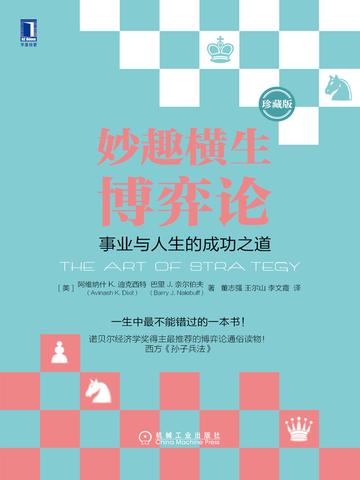
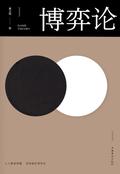
This book by Yale University professor Nairboff and Princeton University professor Dixit uses many living examples to demonstrate the principles of game theory strategic thinking to readers without a foundation in economics. Life is a never-ending decision-making process. What kind of job to take, how to run a business, who to marry, how to raise children, whether to compete for the position of CEO, are all examples of this type of decision-making. You are not making decisions in a vacuum. Instead, you're surrounded by decision-makers just like you. Although there are many elements of conflict, there are also many elements of cooperation. This book will help you learn to think strategically and expand your chances of winning in the game of life.
Reader comments
The branch of social science that studies strategic decision-making behavior is called game theory. Present complex game theory in a simple way. Analyze life scenarios, from daily decision-making to workplace competition and international confrontation. It uses interesting examples to reveal the mysteries of the game, analyze motivations, gain insight into human nature, seize opportunities, and make wise choices in the interaction between all parties. It can be called a teaching case for strategic thinking.
The solution to the prisoner's dilemma is to use rules, maximize overall interests, balance multiple values, cooperate, unite, differentiate, persist, intensify, transfer conflicts, attack weaknesses... How to conduct game analysis of costs and benefits when faced with decisions. A lot of strategic thinking is an art. The main difference between science and art is that the content of science can be learned in a systematic and logical way, while the practice of strategy art only relies on cases, experience and practice, which is natural.
How to solve the repeated prisoner's dilemma:
1. Don't be the first to betray,
2. Respond to another participant's behavior
3. Don't always try to beat others
4. Overly complex strategies should be avoided
If you only think about applying game theory to interpersonal struggles, that is just the art of game; only rational integration into society is the way of game. The game of "skills" is just a small game embedded in the game of "Tao". Focusing on "skills" and forgetting "Tao" is tantamount to missing the forest for the trees. You may gain temporarily, but it may have a very bad impact on your long-term interests and greater success.
This book is very interesting! It explains game theory with simple and easy-to-understand examples, making it easy for me, who has no foundation in economics, to understand. The relationship between competition and cooperation mentioned in the book also resonated with me. Just like in marriage, you must not only have your own position, but also understand the other person's thoughts, so that you can get along better. And from "strategic thinking" to "the art of strategy", this cognitive progress also made me realize that when making decisions in life, we must not only consider ourselves, but also consider others. This is true wisdom.
Rational people will underestimate game theory. Game theory has jumped out of this assumption. Society and disciplines are developing.
A very good book on game theory, which provides insights into a lot of game theory and can be used as a main reference book.



The branch of social science that studies strategic decision-making behavior is called game theory. Present complex game theory in a simple way. Analyze life scenarios, from daily decision-making to workplace competition and international confrontation. It uses interesting examples to reveal the mysteries of the game, analyze motivations, gain insight into human nature, seize opportunities, and make wise choices in the interaction between all parties. It can be called a teaching case for strategic thinking. The solution to the prisoner's dilemma is to use rules, maximize overall interests, balance multiple values, cooperate, unite, differentiate, persist, intensify, transfer conflicts, attack weaknesses... How to conduct game analysis of costs and benefits when faced with decisions. A lot of strategic thinking is an art. The main difference between science and art is that the content of science can be learned in a systematic and logical way, while the practice of strategy art only relies on cases, experience and practice, which is natural. How to solve the repeated prisoner's dilemma: 1. Don't be the first to betray, 2. Respond to another participant's behavior 3. Don't always try to beat others 4. Overly complex strategies should be avoided If you only think about applying game theory to interpersonal struggles, that is just the art of game; only rational integration into society is the way of game. The game of "skills" is just a small game embedded in the game of "Tao". Focusing on "skills" and forgetting "Tao" is tantamount to missing the forest for the trees. You may gain temporarily, but it may have a very bad impact on your long-term interests and greater success.
This book is very interesting! It explains game theory with simple and easy-to-understand examples, making it easy for me, who has no foundation in economics, to understand. The relationship between competition and cooperation mentioned in the book also resonated with me. Just like in marriage, you must not only have your own position, but also understand the other person's thoughts, so that you can get along better. And from "strategic thinking" to "the art of strategy", this cognitive progress also made me realize that when making decisions in life, we must not only consider ourselves, but also consider others. This is true wisdom.
Rational people will underestimate game theory. Game theory has jumped out of this assumption. Society and disciplines are developing.
A very good book on game theory, which provides insights into a lot of game theory and can be used as a main reference book.