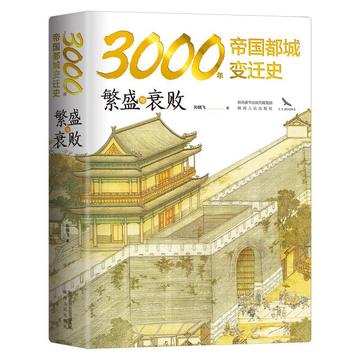
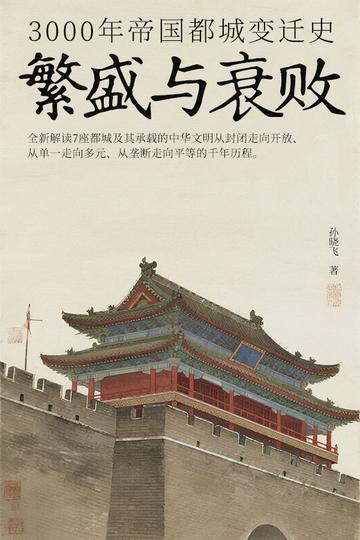
Space creates history. From Xianyang, the city of the Emperor, to Beijing, a modern international metropolis, we break away from the old path of linear interpretation of history, and from the perspective of space creation, we give a new interpretation of the seven capitals and the thousand-year history of Chinese civilization from closed to open, from single to pluralistic, and from monopoly to equality. "Prosperity and Decline" uses the space production theory created and developed by Lefebvre, the important founder of urban sociology theory, and Foucault, the master of modern French thought, to break away from the stereotype of linear description of history and interpret the development process of Xianyang, Xi'an, Luoyang, Kaifeng, Hangzhou, Nanjing, and Beijing in 3000 years in terms of geographical location selection, urban layout, urban management, urban architecture, and urban culture of seven ancient capitals in the past 3,000 years from the perspective of space creation. It clearly outlines how the capital city has transformed from closed space to open space, from singleness to pluralism, from monopoly to equality. It also enumerates the unique cultural customs of each capital city, as well as the rise and fall, inheritance and changes of Chinese civilization it carries.