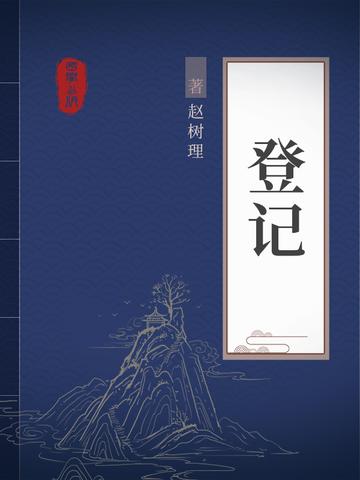
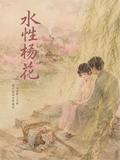
Short story. Zhao Shuli said. First published in "Rap and Rap", Issue 6, 1950. The novel tells the story of young men and women in rural areas fighting for independence in marriage. Ai Ai and Xiao Wan, and Yan Yan and Xiao Jin are two young couples in free love. Their marriages are opposed by the Civil Affairs Director of the Village Office, Assistant Wang of the District Government, and the older generation of farmers. They bravely fought against the selfish remnants of feudalism, the bureaucracy of the new regime, and the arranged marriages of their parents. With the support of the new marriage law, these two young couples finally gained the freedom to marry. Through the comparison of the marriage between Ai Ai and her mother Xiao Fei'e, the work clearly shows the different fates of women of the two generations on marriage and love issues, and praises the spiritual outlook of women in the new society. The work uses storytelling techniques and uses Luohan Qian as the plot development clue. It is closely linked and fascinating. The ending is full of comedy and has a strong flavor of national life. It has been adapted into various operas under the name "Luohan Qian".
Reader comments
The language is humorous and witty. It talks about the so-called independent marriage in the village at that time and whether there are resources. It also shows that the director refused to write a letter of introduction to his nephew in order to let Ai Ai tell her. It also shows the obstacles encountered in order to emancipate the mind, free love and free marriage at that time.
The characters in this book are all very vivid. Ai Ai is really a filial child. In order to find money from Luohan, he sweeps the floor and sweeps the floor for his mother. Carpenter Zhang is also a very interesting person. Although he knows that Xiao Moth doesn't love him, he still follows him to his mother-in-law's house habitually. The characters in the story are so real, just like the people around us. I really like this down-to-earth feeling, which makes me understand the emotions in the book better.
This style is very Zhao Shuli, a bit like marrying Xiao Erhei [Thinking]
The little moth also took great pains to prevent her daughter from following her path again, and there was a foreshadowing in hiding Arhat's money.
This book is quite good to me. It is indeed a work by an old artist.
The language is humorous and witty. It talks about the so-called independent marriage in the village at that time and whether there are resources. It also shows that the director refused to write a letter of introduction to his nephew in order to let Ai Ai tell her. It also shows the obstacles encountered in order to emancipate the mind, free love and free marriage at that time.
The characters in this book are all very vivid. Ai Ai is really a filial child. In order to find money from Luohan, he sweeps the floor and sweeps the floor for his mother. Carpenter Zhang is also a very interesting person. Although he knows that Xiao Moth doesn't love him, he still follows him to his mother-in-law's house habitually. The characters in the story are so real, just like the people around us. I really like this down-to-earth feeling, which makes me understand the emotions in the book better.
This style is very Zhao Shuli, a bit like marrying Xiao Erhei [Thinking]
The little moth also took great pains to prevent her daughter from following her path again, and there was a foreshadowing in hiding Arhat's money.
This book is quite good to me. It is indeed a work by an old artist.