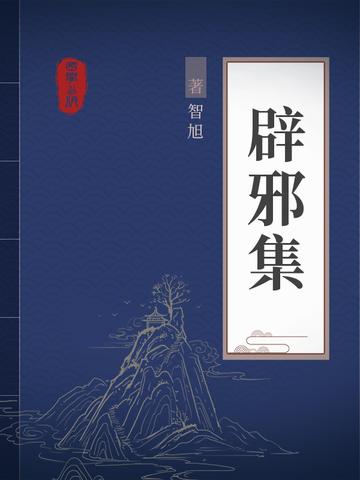
The short-lived spread of Catholicism in China during the Tang and Yuan Dynasties only had a superficial and short-lived relationship with Chinese society. In the late Ming Dynasty, Jesuit missionaries represented by Matteo Ricci came to China and adopted the strategy of approaching Confucianism, interpreting Christianity through Confucianism, and writing books to preach, which promoted the spread of Catholicism and the expansion of its influence. However, Li's attachment to Confucianism was regarded by some scholars as stealing Confucianism and harming Confucianism. While adhering to Confucianism, he severely criticized Buddhism, which also caused Buddhist monks to enlist the support of anti-Catholic Confucian scholars to jointly oppose Catholicism. The ideological circle of the late Ming Dynasty emphasized the unity of Confucianism, Buddhism and Taoism, believing that "one is like three, and three is like one, like the three legs of a tripod." Therefore, Buddhism has an advantage in adhering to Confucianism. With the increasing influence of Matteo Ricci's "The True Meaning of God" and the fruitful preaching of Ajulius in Fujian and Zhejiang after Matteo Ricci, the anti-Catholic ideological trend also developed accordingly, and some anti-Catholic articles or works also appeared one after another. In the context of "recently, there are many disciples of using AI, and the evil trend is getting stronger", Ou Yi Zhixu, one of the four eminent monks in the late Ming Dynasty, also wrote the "Collection of Fighting Evils" in the name of Confucian scholar Zhong Shisheng, including two main texts, "The First Expedition of Tianxue" and "The Second Expedition of Tianxue", several letters, prefaces and postscripts.
Reader comments
The writing style of this book is easy to understand and the writing style is concise. Through conversations with guests, the author clearly expressed his views on Catholicism and pointed out its errors. The characters' actions and perspectives are also distinct, making it easier to understand the author's point of view. All in all, this is a very enlightening book and worth reading.
The writing style of this book is easy to understand and the writing style is concise. Through conversations with guests, the author clearly expressed his views on Catholicism and pointed out its errors. The characters' actions and perspectives are also distinct, making it easier to understand the author's point of view. All in all, this is a very enlightening book and worth reading.