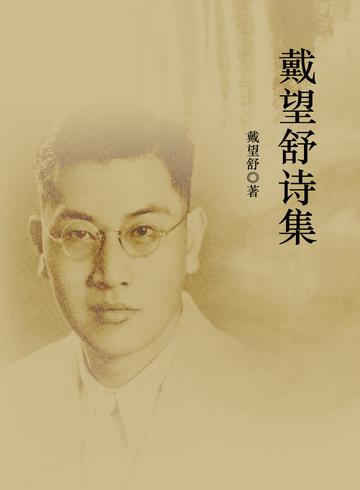
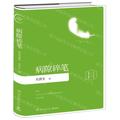
This book is a growth book for teenagers and is a collection of personal works. This book selects articles suitable for teenagers to read from Dai Wangshu's classic works and collects them into a volume. By reading this book, readers can truly feel the charm of the famous masters, understand the rich philosophies of life, and appreciate the colorful world and life in the eyes of the famous masters.
Reader comments
Reading "Collected Poems of Dai Wangshu"
Chinese new poetry originated from the May Fourth New Literature, but its achievements have been mediocre. For example, the poems of Guo Moruo, who became famous, are almost unreadable from today's perspective. Only after the introduction of French aestheticism and symbolism poetry did poets such as Dai Wangshu, He Qifang, and Bian Zhilin produce dazzling works. Most people in later generations know "Rain Alley", the poem goes: "Holding an oil-paper umbrella, alone / wandering in the long, long / lonely rain lane / I hope to meet / a lilac-like / sad and resentful girl / she has / the same color / the same fragrance / the same sadness as the lilac / sad in the rain / sad and hesitant / she seems. Wandering in this lonely rain alley/holding an oil paper umbrella/like me/like me/walking silently/indifferent, desolate, and melancholy. "Dai Wangshu's "Rain Alley" was highly recommended by Mr. Ye Shengtao, who praised him for "creating a new era for new poetry" and became a famous work that was widely circulated. Therefore, he was also known as the "Rain Alley Poet." Musicality is another outstanding artistic feature of "Rain Lane". The poem uses repetition, refrain, chorus and other techniques to create a looping melody and a melodious sense of music. The writing of "Rain Lane" confirms the pursuit and hesitation of modern Chinese poets. Its free and casual syntax embodies a new sense of rhythm and rhythm. But it is obvious that "Rain Alley" borrowed the artistic conception of "Blue birds do not convey foreign messages from the clouds, and lilacs bear sorrow in the rain" by Li Jing, the central figure of the Southern Tang Dynasty, that is, "the form of the Symbolist school and the content of the Classical school." Look at "My Memory" by Dai Wangshu again: "My memory is loyal to me/more loyal than my best friend/it exists on the burning cigarette/it exists on the penholder painted with lilies/it exists on the worn powder box/it exists on the decayed raspberry/it exists on the half-drunk wine bottle/on the torn poems of the past, on the pressed dried flowers/on the dim lamp, on On the calm water/On all things with souls and no souls/It lives everywhere, just like me in this world." This is the true modern new poetry. Whether it is its object of expression, form of expression, subject matter, connotation, language, or imagery, it is not only the most decisive and complete break and resistance to classical poetry, but also a bold and strange experiment for the new poetry revolution at that time. Dai Wangshu's poetry creation largely benefited from his poetry translation, and he translated most of his works from French and Spanish. As far as French works are concerned, the focus is on Symbolism and Post-Symbolism, but it also includes fourteen poems by Eluard. When Dai Wangshu translated the works of Spanish poets such as Lorca, he took us into a new world of color and music: the colors are strong and vivid. The sunshine in Spain seems stronger than anywhere else, and its shadows are also particularly thick. There is always a kind of "sadness under strength". Dai Wangshu's poetic style has changed several times, each with its own background. One of the important factors is that he gained a new understanding of the subject matter and art of poetry in the process of translating poetry. Because translating poetry is a two-way communication, the translator not only applies his own poetry writing experience to translated poetry, but also gets inspiration from the translated poetry. The early "Thoughts on an Autumn Night" obviously have traces of classical poetry. The poem goes: "Whoever uses the sword/The heart also needs autumn clothes/Listen to the call of the sharks/Listen to the breath of the wooden leaves/The wind comes in from every vein/Eavesdropping on the crackling sound of the heart/The poet said: The heart is the piano/Who has heard of the ancient white snow in spring/ For the comfort of the dead who have true knowledge/someone has hung it on the treetops/as a support for the sound of nature/but for the passing sound that I once listened to/the broken Wushutong/only makes people think about the past between the string pillars." Later works, such as "Passing the Old Residence": "But this terrace, this window/There is this. Quiet, no sound/No cute shadows, petite shouts/Just loneliness, loneliness, accompanied by the sun/And why are my steps so tired/Is it the years of suffering that are weighing on my shoulders/A heavy sorrow that penetrates into my bones, making my eyes dim and the brightness in my heart disappearing? "Also like "Xiao? "Kouzhan by the Red Tomb": "Walking a lonely long distance of six hours/putting a bouquet of red camellia by your head/I waited for the long night/but you lay listening to the gossip of the waves." The strong sense of modernity and modern consciousness allowed Dai Wangshu to completely step out of the world of classical poetry and become a truly modern poet.
I especially like his description of the rainy streets in "Rain Lane". The quiet and misty atmosphere is simply beautiful. However, I don't like some of the too sad poems in the collection, which feel a bit depressing. Overall, this book is worth reading and can make people feel the charm of poetry.
Representative of hazy poetry. In the past, I only knew Dai Wangshu's Yuxiang, but it turns out there are so many poems that are not inferior to Yuxiang.
Reading "Collected Poems of Dai Wangshu" Chinese new poetry originated from the May Fourth New Literature, but its achievements have been mediocre. For example, the poems of Guo Moruo, who became famous, are almost unreadable from today's perspective. Only after the introduction of French aestheticism and symbolism poetry did poets such as Dai Wangshu, He Qifang, and Bian Zhilin produce dazzling works. Most people in later generations know "Rain Alley", the poem goes: "Holding an oil-paper umbrella, alone / wandering in the long, long / lonely rain lane / I hope to meet / a lilac-like / sad and resentful girl / she has / the same color / the same fragrance / the same sadness as the lilac / sad in the rain / sad and hesitant / she seems. Wandering in this lonely rain alley/holding an oil paper umbrella/like me/like me/walking silently/indifferent, desolate, and melancholy. "Dai Wangshu's "Rain Alley" was highly recommended by Mr. Ye Shengtao, who praised him for "creating a new era for new poetry" and became a famous work that was widely circulated. Therefore, he was also known as the "Rain Alley Poet." Musicality is another outstanding artistic feature of "Rain Lane". The poem uses repetition, refrain, chorus and other techniques to create a looping melody and a melodious sense of music. The writing of "Rain Lane" confirms the pursuit and hesitation of modern Chinese poets. Its free and casual syntax embodies a new sense of rhythm and rhythm. But it is obvious that "Rain Alley" borrowed the artistic conception of "Blue birds do not convey foreign messages from the clouds, and lilacs bear sorrow in the rain" by Li Jing, the central figure of the Southern Tang Dynasty, that is, "the form of the Symbolist school and the content of the Classical school." Look at "My Memory" by Dai Wangshu again: "My memory is loyal to me/more loyal than my best friend/it exists on the burning cigarette/it exists on the penholder painted with lilies/it exists on the worn powder box/it exists on the decayed raspberry/it exists on the half-drunk wine bottle/on the torn poems of the past, on the pressed dried flowers/on the dim lamp, on On the calm water/On all things with souls and no souls/It lives everywhere, just like me in this world." This is the true modern new poetry. Whether it is its object of expression, form of expression, subject matter, connotation, language, or imagery, it is not only the most decisive and complete break and resistance to classical poetry, but also a bold and strange experiment for the new poetry revolution at that time. Dai Wangshu's poetry creation largely benefited from his poetry translation, and he translated most of his works from French and Spanish. As far as French works are concerned, the focus is on Symbolism and Post-Symbolism, but it also includes fourteen poems by Eluard. When Dai Wangshu translated the works of Spanish poets such as Lorca, he took us into a new world of color and music: the colors are strong and vivid. The sunshine in Spain seems stronger than anywhere else, and its shadows are also particularly thick. There is always a kind of "sadness under strength". Dai Wangshu's poetic style has changed several times, each with its own background. One of the important factors is that he gained a new understanding of the subject matter and art of poetry in the process of translating poetry. Because translating poetry is a two-way communication, the translator not only applies his own poetry writing experience to translated poetry, but also gets inspiration from the translated poetry. The early "Thoughts on an Autumn Night" obviously have traces of classical poetry. The poem goes: "Whoever uses the sword/The heart also needs autumn clothes/Listen to the call of the sharks/Listen to the breath of the wooden leaves/The wind comes in from every vein/Eavesdropping on the crackling sound of the heart/The poet said: The heart is the piano/Who has heard of the ancient white snow in spring/ For the comfort of the dead who have true knowledge/someone has hung it on the treetops/as a support for the sound of nature/but for the passing sound that I once listened to/the broken Wushutong/only makes people think about the past between the string pillars." Later works, such as "Passing the Old Residence": "But this terrace, this window/There is this. Quiet, no sound/No cute shadows, petite shouts/Just loneliness, loneliness, accompanied by the sun/And why are my steps so tired/Is it the years of suffering that are weighing on my shoulders/A heavy sorrow that penetrates into my bones, making my eyes dim and the brightness in my heart disappearing? "Also like "Xiao? "Kouzhan by the Red Tomb": "Walking a lonely long distance of six hours/putting a bouquet of red camellia by your head/I waited for the long night/but you lay listening to the gossip of the waves." The strong sense of modernity and modern consciousness allowed Dai Wangshu to completely step out of the world of classical poetry and become a truly modern poet.
I especially like his description of the rainy streets in "Rain Lane". The quiet and misty atmosphere is simply beautiful. However, I don't like some of the too sad poems in the collection, which feel a bit depressing. Overall, this book is worth reading and can make people feel the charm of poetry.
Representative of hazy poetry. In the past, I only knew Dai Wangshu's Yuxiang, but it turns out there are so many poems that are not inferior to Yuxiang.