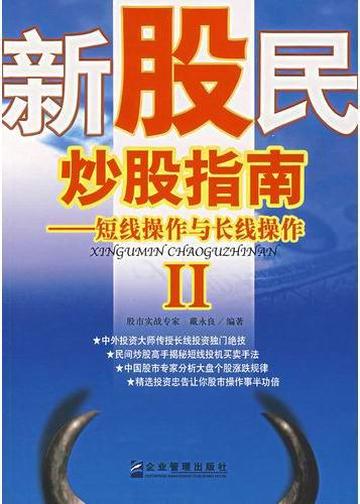
Since 2005, China's stock market has entered a rapid development channel: the stock index has continued to rise, the number of investors has continued to increase, and various policies conducive to the development of the stock market have been gradually introduced. At the same time, most investors have also gained a lot of real money from the stock market. Some people lamented that in 2006, China's capital market created the world's largest increase in market value, doubled the stock index, and created another Chinese miracle in the capital market. According to the "2006 Online Prize-winning Survey on Investor Income" jointly organized by China Securities Journal and Great Wisdom Information Technology Co., Ltd., Approximately 70% of investors made profits in 2006. Most of the respondents' profits were concentrated between 20% and 50%, 21% of investors made profits around 10%, and 14% of the respondents made profits between 50% and 100%. This group accounted for 65% of the respondents. So, in the face of a stock market that continues to strengthen and risks are gradually increasing, what operating strategies should investors adopt? Is it short-term or long-term? How to operate short-term, how to operate long-term? It is in order to answer these questions that the author has compiled this "Stock Trading Guide for New Investors 2 - Short-term and Long-term Operations" following the "Guide to Stock Trading for New Investors - A New Complete Book of Stock Market Operations". I believe that by reading "Guide to Stock Trading for New Investors 2", stock investors will have a good understanding of it. Have a clear understanding of the concepts of short-term and long-term operations, be familiar with basic technical analysis, market reading, stock selection, following the banker, stop loss, trading and other skills required for short-term operations, and master key skills such as company analysis, stock selection, stock valuation and holding principles involved in long-term operations.