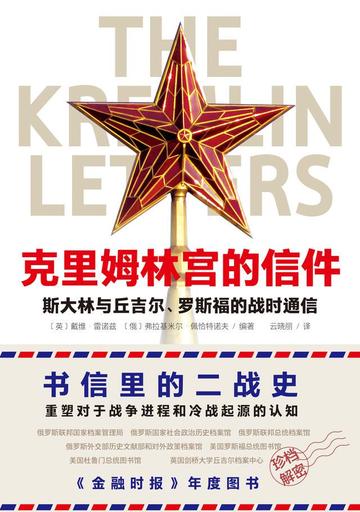
Drawing on the correspondence between Stalin, Roosevelt, and Churchill during World War II, "The Kremlin Letters" opens a window into the thoughts and personalities of the three leaders. They met only twice during World War II, and their relationship was largely established through letters, and their correspondence formed an important part of the strategic landscape of World War II.
"The Kremlin Letters" provides a new perspective for the study of the history of World War II, and provides high-level and original material for future generations to understand the complex political, military and diplomatic relations between the anti-fascist allies, allowing answers or clues to be found for several important historical events:
◎ Why didn't Stalin believe that Germany would attack the Soviet Union?
◎ Who initiated the diplomatic model of correspondence exchanges between the leaders of the three countries?
◎ Britain and the United States were originally scheduled to open a second battlefield in Western Europe in 1942. Why was it delayed until 1944?
◎ Why did the United States and Britain adopt a vague attitude toward the Soviet Union regarding the Katyn incident?
◎ Why did Roosevelt stay at the Soviet Embassy in Iran during the Tehran Conference, but Churchill did not?
◎ Did Roosevelt try to achieve cooperation with Stalin by snubbing and overruling Churchill?
◎ Did Churchill and Stalin really discuss the Balkan "percentage agreement" in private?
…