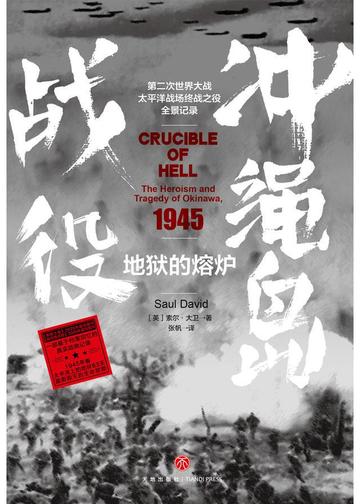
On April 1, 1945, the Battle of Okinawa officially began. On June 22, 83 days later, the Japanese defenders ceased all organized resistance and the battle came to an end. Nearly 50,000 U. S. Troops and more than 100,000 Japanese troops suffered casualties. In addition, 125,000 Okinawan civilians died in the war. One veteran struggled to explain what he witnessed, calling the battle "the furnace of hell." Beyond Okinawa, in less than three months, the world had also changed irreversibly: President Roosevelt was dead; the war in Europe was over; American interest in fighting the Japanese homeland had waned, and President Truman wanted to use other means to end the war—unquestionably, the atomic bomb.
The Battle of Okinawa lasted 83 bloody days, and the brutality of the battle gradually reached an unprecedented level. Churchill therefore called it "one of the most intense and famous battles in the history of war." To tell this history thoroughly requires a multi-perspective approach—from the perspective of the pilots who roared to death in their tiny cabins in suicide planes, from the perspective of the sailors who remained at their posts in the suffocatingly burning ship turrets, from the perspective of the soldiers who hid from enemy fire in foxholes half-filled with sewage, surrounded by filth and corpses. The descriptions from different positions and perspectives overlap with each other, and together they present the real Okinawa battlefield. Based on the memories of these eyewitnesses, survivors and related archival research, award-winning historian Saul David panoramically recreates this bloody, cruel and heartbreaking history, taking people back to the hellish furnace of gunfire.
This book describes the severe suffering and tragic conditions that the expansion of Japanese militarism has brought to the Asian people, recalls the bloody battles of Allied soldiers on the battlefields of Asia and the Pacific, leads the world to reopen that unforgettable historical chapter, and arouses the collective memory of the contemporary people's history of World War II to remember the great anti-fascist victory and the hard-won peaceful environment today.