Stats
9.4Score
38Chapters
Tags
Synopsis
Reader comments
In booklists 2
Books That Provide Exposure to Different Professional Knowledge
Not only reading novels, but also wanting to learn a lot about daily medicine, sleep life, agricultural planting, technological transformation, and literary creation are also the best choices for entertainment.
4.6MViews1.1kBooks1dUpdated


I'm Looking for Some Other Articles That Book Friends After the Invasion of Cat Game Can Still Read.
I want to see something similar to "Game Invasion". A grand world view, rich and three-dimensional characters, extremely high moral aesthetics, elegant dialogues and narration. After reading this novel, I can no longer follow any of the other novels. It is difficult to switch from luxury to frugality. It must be equal to this one
3.3MViews253Books2dUpdated
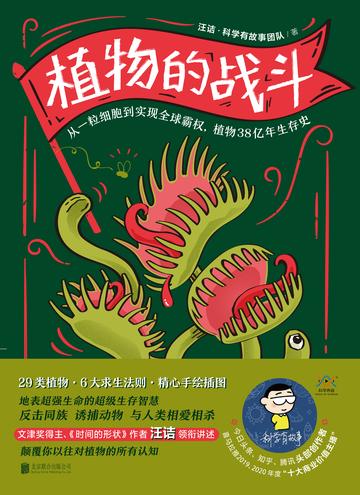
It's very interesting. For example, there is no organic matter on the Cambrian land, it is a completely barren land. The cyanobacteria that come one after another are preparing for a big drama to land in the new world. Their hard work with their lives has gradually changed the entire beach environment. On the beach that repeatedly experiences high and low tides, the corpses of cyanobacteria gradually accumulate into a large amount of organic matter, and the beach is no longer a barren land. As a saying often said by entrepreneurs, countless start-up companies have collapsed, but the market they continue to cultivate has become increasingly mature. Some aerobic bacteria have become today's mitochondria, cyanobacteria have become today's chloroplasts, and some spirochete bacteria that are good at movement have become cilia that can move on cells today. Bacteria are like functional modules of life. They first realize a complex life function through rapid mutation, and then combine into other life forms through endosymbiosis. This greatly speeds up the process of evolution. We can use a familiar metaphor to describe Margulis's point of view, that is - bacteria are like living plug-ins that can be plugged in and out to bring new functions to different organisms. In the first few hundred million years, bacteria tried almost every possible way to survive. There was no oxygen on the early Earth, and bacteria developed ways to survive in an oxygen-free environment. There are sulfur bacteria that specifically utilize sulfide, iron bacteria that specifically rely on iron oxidation to survive, and there are also many strange bacteria such as nitrifying bacteria, nitrogen-fixing bacteria, and hydrogen bacteria. Each type of bacteria brings a unique way of survival to the extreme. Next to the remains of a fallen tree, a coconut sprouts its new leaves. Like all living things, a coconut's chances of survival depend on two things - the genes it inherits from its parents and luck. A coral polyp equipped with zooxanthellae is like a living calcium carbonate 3D printer. Every zooxanthellae in their bodies is constantly synthesizing limestone. This limestone is eventually used by coral polyps to build their own exoskeletons. As billions of coral polyps replace each other from generation to generation, these exoskeletons gradually grow in size, until they finally emerge from the sea and turn into islands. .
Beautiful and interesting! ! ! Everything in the world has a root and a law, just waiting for us to discover it! In addition, I hope that the biology books in school can be so interesting, with causes and consequences, and connections between each other. I feel like studying biology for two years in school is almost the same as studying nothing at all. Talking about an obscure concept without talking about its origin The style of this book is really good! It traces the origin of many things and puts forward many conjectures, which is very complete.
This is a book that led me into another magical world. It is so interesting and makes people feel that we coexist in this universe with countless invisible creatures that cannot be seen by the naked eye, and they are changing the world so magically and slowly.
This is a very good popular science work. The author uses a lot of easy-to-understand language and metaphors, and also tells many fascinating stories. It can be easily understood by readers who have no basic knowledge of botany. I feel that I understand a lot of aspects that were confusing before. I like it very much!
Plants have given up moving, but have managed to reproduce for billions of years through rich and diverse survival strategies. In "A Brief History of Humankind", Harari first put forward a very interesting point: humans think they have domesticated plants, but in fact they have vegetated humans. But is this really the case? The theory of evolution tells us: If a species is born like this, it means that it must have gained some kind of survival because of what it is now. So what is the survival advantage of plants that cannot move? Lichen: environmental adaptation and pioneering ability; Orchid: mimicry, camouflage; Wheat: forms a symbiotic relationship with humans; Cuscuta: parasitism and resource plundering, stealing nutrients from host plants; ... Summary Under evolutionary pressure, the fittest survive. Plants have simply evolved to become more fit, more precisely adapted, and more efficient at capturing and conserving energy. Plants on the earth have experienced hundreds of millions of years of environmental changes and species competition; Every plant that can survive to this day has been a winner for hundreds of millions of years. (Of course, so do we~)
I especially loved the part about the orchids, masters of disguise, and their tricks of deception were a real eye-opener for me. This reminds me of "Fabre's Insects", which also tells the mysteries of nature through interesting stories. Moreover, the language of this book is easy to understand, just like chatting with friends, and people learn a lot of knowledge without knowing it. Recommended to friends who are interested in plants!
As a learner of life sciences, this kind of book is still worth reading and collecting.
This book taught me a lot about plants and gave me more feelings about plants. During the hundreds of thousands of years of evolution, plants have continuously adapted to the environment and even transformed it. Compared with the survival of animals preying on and avoiding natural enemies, the survival of plants seems so "simple". For most plants, as long as the root system still exists, they can come back to life when the environment is suitable. Even a seed can sprout new life after falling into the soil. But what is hidden in it is constant genetic recombination, mutation and evolution. People always say that animals are spiritual and intelligent, but so are plants. In order to survive, they can give up everything except death. In order to reproduce and produce "food", animals help unknowingly. The battle of plants, moisturizing things silently, has become easy
It is a very good popular science work about the "Interesting World of Plants". If you are interested in plants, I believe you will not be disappointed after reading it. Moreover, plants are actually very intelligent, and they have a lot to learn from us humans. No matter what, we are all members of the Earth family, and it would be good to get to know each other.
It is a good popular science book on plants. After reading the full text, you can have a general concept of plants that is different from common sense. It is very simple and popular. It is worth reading as an introductory book or if you want to expand your knowledge.
So I feel like vomiting after taking medicine because my body thinks bitter things are poisonous and strongly resists bitter medicines.
A popular plant science book with lots of useful information, but I feel it has nothing to do with fighting, and more about how plants develop and survive.
A popular plant science book with a broad perspective. I like it very much.
Good book, really beautiful (♥∀♥)
Interesting, informative
Simple, interesting and easy to understand.
Good is good, no need to say more
Discovered a different world
Looks good and can learn knowledge
This book is very interesting
If you want to be rich, you must first build your road! You must also build your mind first. Reading more is to build your mind...
Gain knowledge. Only when you grow up can you understand that everything in the world is desperately trying to survive. It requires great wisdom.
It turns out that kelp is not a plant, and moss and lichen are not a kind of organism, but a composite symbiotic organism.
Plants cannot speak, but they have the same dream as humans - to dominate the earth until they dominate the universe. The difference is that plants are for the sake of the population, and humans are for themselves.
It's a good read. The knowledge in the book is interesting and easy to understand.
The traceability of some common foods is very interesting and broadens the boundaries of knowledge. Recommended
Very good as a popular science book I have the desire to read on
A good book to read quietly, worth reading [love] [love] [love]
Interesting, thought-provoking, engaging, and stimulating a desire to learn
It is an easy-to-read popular science book. Plants have all kinds of strange survival strategies.