Over the three million years of human evolution, whoever first mastered advanced technology gained a temporary lead, and could even wipe out their competitors.
That is why writing a history of humanity from a geopolitical perspective is about more than retracing human evolution, showcasing civilizations with their different strengths, and comparing the successes and failures of East and West. It is also about uncovering the rules hidden behind geography and time, and identifying the key technological turning points, to help us better understand ourselves and see where the world is headed.
The map holds humanity's past, present, and future. Every story on it will recur in a different form. Only by understanding maps can we grasp the turbulent course of history; only by understanding geopolitics can we see the new direction of the world to come.
Open this book, and you'll discover:
◎ How did humans leave the animal kingdom behind and become the most intelligent beings on Earth?
◎ Why did human civilization originate in the tropics but flourish in the temperate zones?
◎ Why did the Nile hinder Egypt from spreading civilization into the African interior, yet instead spur the emergence of an entirely new kind of maritime civilization?
◎ What enabled humans to break free of blood ties, expand their communities, and unite with more people? The result was not only the unification of inner and outer belief, but also a mature system for running society.
◎ Why did other peoples fragment in the face of foreign invasion, while China could reunify even after being driven south?
◎ How did the Chinese form their family-and-country collectivism? Why could this top-down distribution of resources not be achieved elsewhere?
◎ What kind of god a god can become is not for the god to decide. The ultimate purpose of deities is to serve the humans who created them.
◎ Why did science and the Industrial Revolution emerge in the West? What unique advantages does the East, represented by China, have in the information revolution humanity is experiencing today?
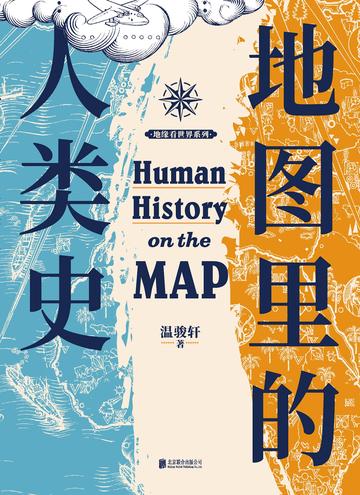




















I especially like the part about the development of civilizations in the book. It allows me to understand the characteristics of different civilizations and the reasons for their success or failure. Moreover, the maps in the book are also very interesting, allowing me to intuitively understand the changes in history. All in all, this is a great book worth reading!
It is an excellent fictional logical reasoning novel with rich geographical knowledge, knowledge of most historical events, and a touch of Western centralism.