The Tang Dynasty went from prosperity to decline in just eight years!
How did the Anshi Rebellion drag the Tang Dynasty into the abyss and cause devastating consequences?
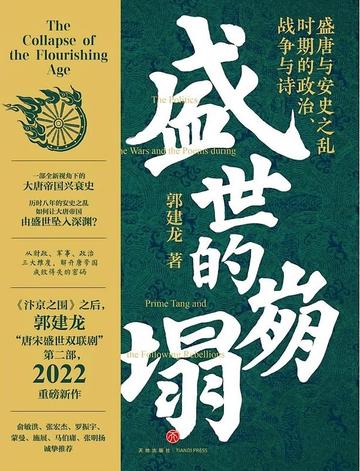
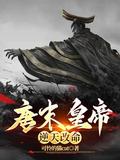
The Anshi Rebellion was a key historical node in the Tang Dynasty's transition from prosperity to decline. The author starts from a series of flaws in the Tang Dynasty's institutional design, and then analyzes the complex social and economic crises within the Tang Empire before and after the Anshi Rebellion, the relationship between the central and local governments, and the changes in the external military regime of the Tang Dynasty. Through in-depth investigation, we try to trace how the great prosperity of the Tang Dynasty was established step by step and how it quickly collapsed, and explore the different choices and endings of emperors, wise ministers, generals, gathering groups, and the literati who were struggling in the torrent against the historical background of the collapse of the building. They jointly witnessed and created this prosperous age, and also tried to save it with their own efforts when it collapsed, but they were unable to save it...
This book is divided into two parts: "The Prosperity" and "The Collapse". It is based on the two Tang Dynasties and the original text of "Zizhi Tongjian", combined with relevant historical notes, poems and other materials, and uses popular and smooth narrative techniques to meticulously restore the historical events of the Anshi Rebellion and explore the deep causes behind the rise and fall of the Tang Empire, as well as the significance of the mirror that transcends the times.
Reader comments
The book describes in detail the historical context and underlying logic of the Tang Dynasty's transition from prosperity to decline. I can't help but plant the seeds for Tang Taizong's Xuanwu Gate Incident. The core of everyone's self-insecurity, lack of trust, and political persecution without a bottom line ran through the entire dynasty, and ultimately bore bitter fruits. Without institutional restrictions, there is no guarantee of safety. The poets experienced the prosperous Tang Dynasty, and were involved in wars and political chaos, and subsequently achieved the pinnacle of Tang poetry. The prosperous age collapsed in just a moment, and the Jingkang incident was no exception. History seems to be a similar reincarnation, but it will never repeat itself!
In the Tang Dynasty, the system prospered and the system declined. Li Longji preemptively took control of the imperial city by force, cut off the enemy's news, hanged Princess Taiping, and held supreme power. Then in the early stage, he made good use of wise ministers, restrained force, and rested with the people, creating the rule of Kaiyuan. As the drunken people fought for power and wealth, no one solved the crisis caused by the flaws in the system, causing this prosperous dynasty to collapse. This is not only the personal fault of the emperor and prime minister, but also the cause of the shortcomings of the dynastic system. The emperor learned from the lessons of the previous dynasty and did not require strict household registration checks. This led to officials flattering and blindly making false reports, which resulted in excessive taxes on the people. However, failure to sort out the household registration will lead to inability to make ends meet. If one cannot make ends meet, one can only appoint ministers who can collect money and set up Jiedushi to make their own arrangements, thus concentrating power. Whether officials were protected or not was not as safe as in the Song Dynasty, where the powerful emperor could live or die at the drop of a hat, and it was a zero-sum game between political opponents. The prime minister Li Linfu defeated the virtuous prime minister in a fight and replaced the Han generals with Fan generals (because the Han officials fought with each other, and the Yi people shed tears of gratitude for their little favor), and was later replaced by Yang Guozhong. An Lushan served as a governor to cater to the emperor Yaowu and was promoted repeatedly. He had a grudge against Yang Guozhong. His great achievements shocked the emperor and he was impeached by powerful ministers. He did not want to resume the path of Wang Zhonghe, so it was inevitable that he could only raise troops to rebel. There were conflicts between the ethnic minorities in the frontiers and the Han people. The territory of the Tang Dynasty was too large and the frontiers were far away from each other so that the professional army could not provide timely support. The rebels were all professional soldiers who had fought many times, which gave An Lushan the capital to fight against the central government. Among them, the author did not write about why An Lushan was not as easy to pacify as other rebellions. There are reasons mentioned, but there are also other reasons: the people in Hebei have long been grudged, and the tax burden is heaviest. Emperor Xuanzong of the Tang Dynasty would use the people to govern, but resorted to militarism. The finances could not be solved, and officials who decentralized power fought among themselves. Those who had great achievements and shocked the master were afraid of being persecuted and rebelled. Why is it that the master with high achievements is because he has rights? If he has rights, he should perform meritorious service and gain a sense of security. Why he can perform meritorious service, because the emperor likes to open up new territories and expand his territory. Why should he always use a small group of people to add credit, because those small groups have been proven to be powerful and can win. He keeps adding more and more until he gets tired of it. In the end, he rebels or his fate is in the hands of his political opponents. Political opponents are usually deadly, and the loop is closed. If you delegate power to powerful people, you will continue to win. If you don't delegate power, it will be like the Song Dynasty. Also, the author should not write about counties at once and prefectures at the same time. During the reign of Emperor Xuanzong of the Tang Dynasty, the prefectures were changed to prefectures, and then during the reign of Suzong, they were changed back to prefectures. This made me confused.
Comprehensive, systematic, profound, detailed, and three-dimensional, it shows the entire process of the Tang Dynasty from the prosperous Kaiyuan Dynasty to the Anshi Rebellion. Taking history as a mirror, looking back at history, interpreting history is to better understand the present and the future. The Anshi Rebellion is the most important turning point in the history of the Tang Dynasty and even the whole of China, and it happened just after the greatest Kaiyuan Dynasty in ancient China. The ups and downs are so great that the occurrence of the Anshi Rebellion is complicated, and it is by no means "people who are not my race must have different hearts." , Simply attribute it to foreign unrest to explain, the occurrence of one thing is often caused by multiple reasons, and among the multiple complex reasons, one of the most important reasons often plays a dominant role. There are many reasons for the Anshi Rebellion, but the main reason is--the solidification of classes hidden in the prosperous age. It is difficult for children from poor families to achieve class jumps. Many Han people who have no hope of promotion in the imperial examination have defected to Anlu Mountain, so that the core generals and soldiers of the Anshi Rebels are almost all Han. The Anshi Rebellion was essentially a class struggle. It was the total outbreak of class solidification and the contradiction between the rich and the poor, and the contradiction between the poor and the nobility for more than a hundred years in the Tang Dynasty. A talented person like Li Bai was depressed all his life because of his origin. He had no family resources and connections and had no abilities. The Anshi Rebellion tells us: No matter how powerful a country is, when the country's class transition channel is completely blocked for the majority of students from poor families and people in poor areas, the country has already laid the foundation for serious troubles.
After reading the postscript, I found that the author was a science and engineering student one year younger than me, and I felt ashamed that I had wasted half my life studying it. The article is informative and informative. Trust is an extremely precious thing in politics. However, the bloody suspicion and internal strife that began with the Xuanwu Gate Incident became the original DNA of the Tang Dynasty, and it did not find a way to balance it until its demise.
Global vision, a rare good book! The timeline and characters are clear. There are many books on the history of the Ming and Qing dynasties, but there are not many that are historically accurate and readable about the heyday of the Han and Tang dynasties. Those who love history or chronological history should read it!
This book is detailed and easy to understand, which gave me a deeper understanding of the history of the Anshi Rebellion. Through the detailed portrayal of historical figures, the author shows their struggle and helplessness in the great changes of the times. It also reminded me of similar experiences of relatives and friends in life. History is always similar and we can learn many lessons from it. Recommended to friends who like history!
It's helpful to open the book, if you continue, that's good~
It is well written, the macro situation and the micro life coexist, and it has a sense of historical vicissitudes.
After understanding the bloody and brutal political mutual harm in the Tang Dynasty, Pugu Huai'en, brave and resourceful, was forced to rebel. Li Guangbi's tactics in Ha Yang are very exciting.
It uses literary language to express historical events, but it is by no means a joke. It is an absolute good book for non-professional enthusiasts!
Detailed and well written
Easy to understand, catch the key points
Good book, worth reading
Interesting, pretty good looking
The chaos in the United States cannot escape the Anshi Rebellion [face covering]
The story is eloquent and fascinating. The entry point is very strange, and the narrative style is biased toward foreign historiography.
The description is detailed, especially the description of the poets of the Tang Dynasty, which is worthy of reference.
For documentary books, you need to read slowly and calmly to get the taste of the book!
Three-dimensional and multi-level display of the prosperous period of the Tang Dynasty and the Anshi Rebellion
It's really beautiful. I can read more than a hundred pages without feeling tired at all.
The book describes in detail the historical context and underlying logic of the Tang Dynasty's transition from prosperity to decline. I can't help but plant the seeds for Tang Taizong's Xuanwu Gate Incident. The core of everyone's self-insecurity, lack of trust, and political persecution without a bottom line ran through the entire dynasty, and ultimately bore bitter fruits. Without institutional restrictions, there is no guarantee of safety. The poets experienced the prosperous Tang Dynasty, and were involved in wars and political chaos, and subsequently achieved the pinnacle of Tang poetry. The prosperous age collapsed in just a moment, and the Jingkang incident was no exception. History seems to be a similar reincarnation, but it will never repeat itself!
In the Tang Dynasty, the system prospered and the system declined. Li Longji preemptively took control of the imperial city by force, cut off the enemy's news, hanged Princess Taiping, and held supreme power. Then in the early stage, he made good use of wise ministers, restrained force, and rested with the people, creating the rule of Kaiyuan. As the drunken people fought for power and wealth, no one solved the crisis caused by the flaws in the system, causing this prosperous dynasty to collapse. This is not only the personal fault of the emperor and prime minister, but also the cause of the shortcomings of the dynastic system. The emperor learned from the lessons of the previous dynasty and did not require strict household registration checks. This led to officials flattering and blindly making false reports, which resulted in excessive taxes on the people. However, failure to sort out the household registration will lead to inability to make ends meet. If one cannot make ends meet, one can only appoint ministers who can collect money and set up Jiedushi to make their own arrangements, thus concentrating power. Whether officials were protected or not was not as safe as in the Song Dynasty, where the powerful emperor could live or die at the drop of a hat, and it was a zero-sum game between political opponents. The prime minister Li Linfu defeated the virtuous prime minister in a fight and replaced the Han generals with Fan generals (because the Han officials fought with each other, and the Yi people shed tears of gratitude for their little favor), and was later replaced by Yang Guozhong. An Lushan served as a governor to cater to the emperor Yaowu and was promoted repeatedly. He had a grudge against Yang Guozhong. His great achievements shocked the emperor and he was impeached by powerful ministers. He did not want to resume the path of Wang Zhonghe, so it was inevitable that he could only raise troops to rebel. There were conflicts between the ethnic minorities in the frontiers and the Han people. The territory of the Tang Dynasty was too large and the frontiers were far away from each other so that the professional army could not provide timely support. The rebels were all professional soldiers who had fought many times, which gave An Lushan the capital to fight against the central government. Among them, the author did not write about why An Lushan was not as easy to pacify as other rebellions. There are reasons mentioned, but there are also other reasons: the people in Hebei have long been grudged, and the tax burden is heaviest. Emperor Xuanzong of the Tang Dynasty would use the people to govern, but resorted to militarism. The finances could not be solved, and officials who decentralized power fought among themselves. Those who had great achievements and shocked the master were afraid of being persecuted and rebelled. Why is it that the master with high achievements is because he has rights? If he has rights, he should perform meritorious service and gain a sense of security. Why he can perform meritorious service, because the emperor likes to open up new territories and expand his territory. Why should he always use a small group of people to add credit, because those small groups have been proven to be powerful and can win. He keeps adding more and more until he gets tired of it. In the end, he rebels or his fate is in the hands of his political opponents. Political opponents are usually deadly, and the loop is closed. If you delegate power to powerful people, you will continue to win. If you don't delegate power, it will be like the Song Dynasty. Also, the author should not write about counties at once and prefectures at the same time. During the reign of Emperor Xuanzong of the Tang Dynasty, the prefectures were changed to prefectures, and then during the reign of Suzong, they were changed back to prefectures. This made me confused.
Comprehensive, systematic, profound, detailed, and three-dimensional, it shows the entire process of the Tang Dynasty from the prosperous Kaiyuan Dynasty to the Anshi Rebellion. Taking history as a mirror, looking back at history, interpreting history is to better understand the present and the future. The Anshi Rebellion is the most important turning point in the history of the Tang Dynasty and even the whole of China, and it happened just after the greatest Kaiyuan Dynasty in ancient China. The ups and downs are so great that the occurrence of the Anshi Rebellion is complicated, and it is by no means "people who are not my race must have different hearts." , Simply attribute it to foreign unrest to explain, the occurrence of one thing is often caused by multiple reasons, and among the multiple complex reasons, one of the most important reasons often plays a dominant role. There are many reasons for the Anshi Rebellion, but the main reason is--the solidification of classes hidden in the prosperous age. It is difficult for children from poor families to achieve class jumps. Many Han people who have no hope of promotion in the imperial examination have defected to Anlu Mountain, so that the core generals and soldiers of the Anshi Rebels are almost all Han. The Anshi Rebellion was essentially a class struggle. It was the total outbreak of class solidification and the contradiction between the rich and the poor, and the contradiction between the poor and the nobility for more than a hundred years in the Tang Dynasty. A talented person like Li Bai was depressed all his life because of his origin. He had no family resources and connections and had no abilities. The Anshi Rebellion tells us: No matter how powerful a country is, when the country's class transition channel is completely blocked for the majority of students from poor families and people in poor areas, the country has already laid the foundation for serious troubles.
After reading the postscript, I found that the author was a science and engineering student one year younger than me, and I felt ashamed that I had wasted half my life studying it. The article is informative and informative. Trust is an extremely precious thing in politics. However, the bloody suspicion and internal strife that began with the Xuanwu Gate Incident became the original DNA of the Tang Dynasty, and it did not find a way to balance it until its demise.
Global vision, a rare good book! The timeline and characters are clear. There are many books on the history of the Ming and Qing dynasties, but there are not many that are historically accurate and readable about the heyday of the Han and Tang dynasties. Those who love history or chronological history should read it!
This book is detailed and easy to understand, which gave me a deeper understanding of the history of the Anshi Rebellion. Through the detailed portrayal of historical figures, the author shows their struggle and helplessness in the great changes of the times. It also reminded me of similar experiences of relatives and friends in life. History is always similar and we can learn many lessons from it. Recommended to friends who like history!
It's helpful to open the book, if you continue, that's good~
It is well written, the macro situation and the micro life coexist, and it has a sense of historical vicissitudes.
After understanding the bloody and brutal political mutual harm in the Tang Dynasty, Pugu Huai'en, brave and resourceful, was forced to rebel. Li Guangbi's tactics in Ha Yang are very exciting.
It uses literary language to express historical events, but it is by no means a joke. It is an absolute good book for non-professional enthusiasts!
Detailed and well written
Easy to understand, catch the key points
Good book, worth reading
Interesting, pretty good looking
The chaos in the United States cannot escape the Anshi Rebellion [face covering]
The story is eloquent and fascinating. The entry point is very strange, and the narrative style is biased toward foreign historiography.
The description is detailed, especially the description of the poets of the Tang Dynasty, which is worthy of reference.
For documentary books, you need to read slowly and calmly to get the taste of the book!
Three-dimensional and multi-level display of the prosperous period of the Tang Dynasty and the Anshi Rebellion
It's really beautiful. I can read more than a hundred pages without feeling tired at all.