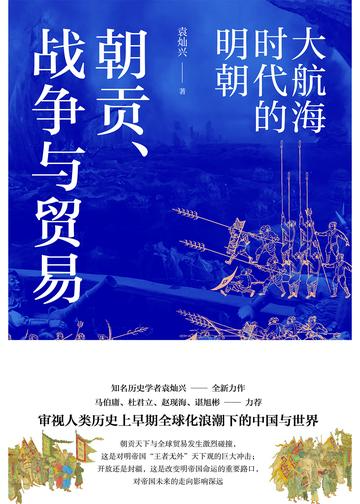
This book discusses the collision and competition between the Ming Dynasty's tribute system and global trade. It details the reasons and formation process of the establishment of the Ming Dynasty's tribute system, as well as the challenges this system encountered during its operation. It examines the historical details of the huge conflict between the Ming Dynasty and the world under the background of the Age of Discovery.
The book comprehensively examines the process of the Ming Dynasty gradually lagging behind the modern world from internal and external aspects such as geographical structure, ruling ideology and political system, private overseas trade, currency system, Chinese and Western ideological enlightenment, weapons and technology, and pirates.
The author points out that the process of creating a new international order based on global maritime trade since the 16th century has been dominated by European countries. In the East, the idea of paying tribute to the world was still adhered to by the Qing Dynasty after the Ming and Qing Dynasties. It was not until the 19th century that the British used strong ships and cannons to blast away the dream of the Celestial Dynasty, and China was passively included in the new global system.
Reader comments
I especially like the part about the tribute system of the Ming Dynasty in the book, which I find very novel. Moreover, the author's writing style is concise, clear and easy to understand, just like chatting with friends. The characters in the book are also very vivid, making me feel like I have traveled to the Ming Dynasty in the Age of Discovery, and saw the choices and fate of those historical figures. All in all, I think this is a good book worth reading!
The insights are indeed unique, refreshing and enlightening. Especially after the ban was lifted in the late Ming Dynasty, the sprouts of capitalism that emerged along the southeast coast were deeply explored, which serves as a warning to future generations.
It is truthful, objective and covers a wide range of topics.
I especially like the part about the tribute system of the Ming Dynasty in the book, which I find very novel. Moreover, the author's writing style is concise, clear and easy to understand, just like chatting with friends. The characters in the book are also very vivid, making me feel like I have traveled to the Ming Dynasty in the Age of Discovery, and saw the choices and fate of those historical figures. All in all, I think this is a good book worth reading!
The insights are indeed unique, refreshing and enlightening. Especially after the ban was lifted in the late Ming Dynasty, the sprouts of capitalism that emerged along the southeast coast were deeply explored, which serves as a warning to future generations.
It is truthful, objective and covers a wide range of topics.