Qu Limin's Essay on the Yellow Emperor's Internal Classic (Five Volumes)
曲黎敏精讲黄帝内经(全五册)
by Qu Limin (曲黎敏)
Request a translationStats
Synopsis
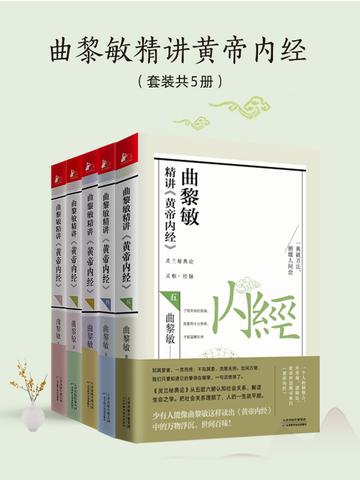
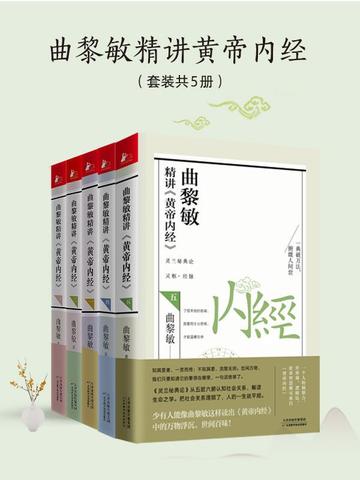
Qu Limin talks about the Emperor's Internal Classics 1 "Huangdi Neijing" is the first of the four classics of traditional Chinese medical books. In 2006, Qu Limin's TV lecture "The Yellow Emperor's Internal Classic: Wisdom of Health Care" created a miracle in the ratings of the health care column. After 12 years of accumulation, Qu Limin interpreted this traditional Chinese medical classic word for word for the first time from a new perspective. This book involves two major chapters, "Ancient Innocence Theory" and "Four Qi Regulating the Spirit" in the "Huangdi Neijing". It digs into the secrets contained in the five internal organs of the human body and the qi and blood meridians, and deciphers how people get along with the world. From specific health-preserving methods to analysis of the road to life, it provides multi-angle and interdisciplinary explanations, involving rich knowledge such as philosophy, sociology, and psychology, and is closely integrated with modern life. It uses poetic and humorous language to simplify the profound ancient books, so that every reader can not only appreciate the wisdom and mystery of the "Huangdi Neijing", learn health knowledge, but also find a good way to get rid of their own confusion. Qu Limin talks about the Yellow Emperor's Internal Classic II "Qu Li Min Jing Lectures on Huang Di Nei Jing" 1 analyzes the opening chapters of "Huang Di Nei Jing", "Ancient Innocence" and "Four Qi Regulating Spirit". This book continues the previous work and tells the last two chapters of "Huang Di Nei Jing", "The Theory of Qi Tong Tian" and "Jin Kui Zhen Speech". It further extends the content of the previous work and also implements the specific applications in daily life, diet and five flavors. For the first time, it reveals the secrets of the operation of the internal organs and leads you to find the way of harmony between man and heaven and earth. It cites the essence of hundreds of medical classics such as "Treatise on Febrile Diseases", "Compendium of Materia Medica", "Shen Nong's Materia Medica", "Medicinal Methods Yuantong", "Tang Ye Jing", etc., And combines it with modern people's life and health problems to elucidate it. It is quite practical. It uses vivid and interesting language to explain the essence of the original text of "Huangdi Neijing" word for word, so that every reader can not only learn health care knowledge, but also discover a new perspective on the world. Qu Limin talks about the Yellow Emperor's Internal Classic III "Qu Limin's Essence on the Yellow Emperor's Internal Classic III" is the third volume in the series of Qu Limin's detailed exegesis of the Yellow Emperor's Internal Classic. It focuses on the article "The Theory of Yin and Yang's Corresponding Symbols" in "The Yellow Emperor's Internal Classic: Su Wen". Qu Limin combined her profound literary heritage and unique insights into life to interpret it word for word. It uses the theory of Yin and Yang and the Five Elements to dig deep into the health-preserving secrets of the five internal organs, and reveals the life wisdom contained in the "Huangdi Neijing" to readers from a new perspective. The book uses vivid and interesting language to simplify the profound ancient books, and combines the essence of the content with the actual life of modern people. It is extremely practical, so that every reader can not only learn health care knowledge, but also appreciate the profound connotation of Chinese culture, and gain the most pragmatic maxims for life. Qu Limin talks about Huangdi Neijing IV This book is the fourth book in the series of "Qu Li Min Jing Lectures on the Yellow Emperor's Internal Classic". It focuses on the two chapters of the "Huang Emperor's Internal Classic": "The Theory of the Separation and Reunion of Yin and Yang" and "The Theory of Yin and Yang's Differentiation". The author combines her profound literary heritage and unique insights into life, quotes from many sources, collects the essence of hundreds of classics, analyzes the "Huangdi Neijing" word for word, explains in depth the theory of three yin and three yang and the various representations of yin and yang on human pulse, and thoroughly explains the Tao of yin and yang to the readers. The whole book continues the lively and interesting language style of the first three volumes, simplifying the profound ancient books and blending ancient Chinese wisdom with modern life.