Introduction
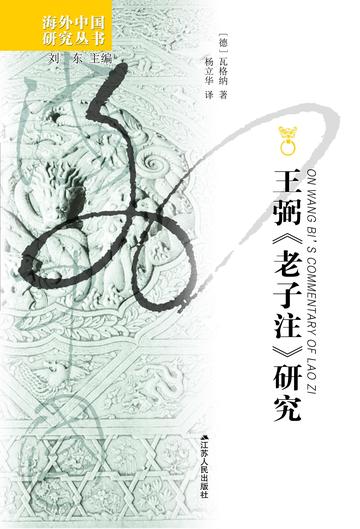
This book is composed of three relatively independent works. The content mainly includes the analysis of Wang Bi's hermeneutic method in his commentary, the critical version and "inferential" translation of Wang Bi's "Laozi" and his commentary (that is, the interpretation of the text of "Laozi" through Wang Bi's commentary), and the analysis of the philosophical issues at the core of Wang Bi's "Laozi Commentary". By carefully reconstructing Wang Bi's version of Laozi and his Commentary on Laozi, this book explores Wang Bi's exegetical skills as a profoundly learned commentator. In the process of situating Wang Bi's Notes on Laozi in the context of competing commentaries and extracting ways in which these competing commentaries have been interpreted, this book presents many ways to understand Laozi: from a fundamental philosophical creation to a specific political theory to a guide to immortality.
Reader comments
This book is very interesting! It allowed me to see Wang Bi's unique way of annotating "Laozi" and also gave me a better understanding of "Laozi". The author's research is very in-depth, and through reconstruction and translation, he demonstrates Wang Bi's exegetical skills and the philosophical possibilities of Laozi. This made me understand that on the road to finding love, I also need to be like Wang Bi and explore more possibilities while accepting constraints. Moreover, the translation in the book is wonderful, reducing ambiguity and making it easier to understand. It feels like exploring the mysteries of "Laozi" with the author, which is very interesting!


This book is very interesting! It allowed me to see Wang Bi's unique way of annotating "Laozi" and also gave me a better understanding of "Laozi". The author's research is very in-depth, and through reconstruction and translation, he demonstrates Wang Bi's exegetical skills and the philosophical possibilities of Laozi. This made me understand that on the road to finding love, I also need to be like Wang Bi and explore more possibilities while accepting constraints. Moreover, the translation in the book is wonderful, reducing ambiguity and making it easier to understand. It feels like exploring the mysteries of "Laozi" with the author, which is very interesting!