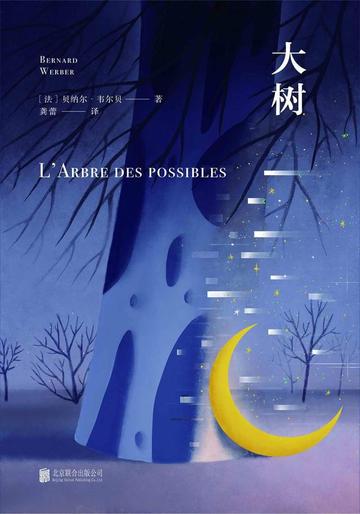
"Big Tree" includes 20 short stories, which can be roughly divided into three categories. The first type observes human beings from the perspective of the universe, making human beings who regard themselves as the masters of all things become the playthings of advanced creatures or gods; the second type comes from myths, legends and fantasies, and the third type comes from common social phenomena in daily life. But as Bernard himself said, no matter what kind of story it is, it is created inspired by trivial things and fragments of words.
For example, "Flying Stones from the Sky" was obviously inspired by the cultivation of clams to obtain pearls. It tells the story of human beings who have gone to great lengths to wrap meteorites with glass to prevent their odor from leaking out. It was not until the end that we discovered that aliens were using us to make pearls. This short story makes us feel the vastness of the universe and the insignificance of human beings. It also mocks the self-righteousness and blind optimism of some people. Another example is that the intelligence of people in "The City of Numbers" is only that of a first-grade primary school student, but the novel deduces extraordinary meanings from commonly used numbers, reveals the ruler's control of knowledge, and points out the truth that sparks of knowledge must be passed down from generation to generation. Others such as "Journey Through Time" in which you have to buy return insurance when traveling through a time tunnel, "Dream Lover" in which even the Egyptian goddess wants to find a rich man, and "Perfect World" in which everything is automated and become annoying, are all the same. To describe this kind of story from childhood to adulthood, what the writer needs most is extraordinary observation and imagination.