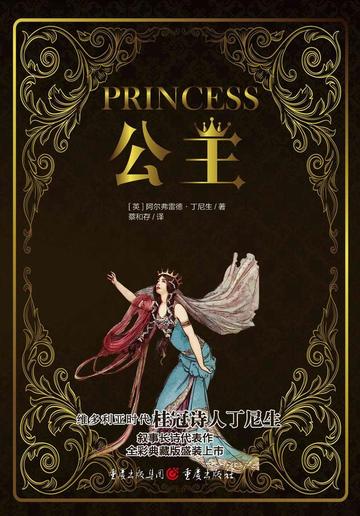
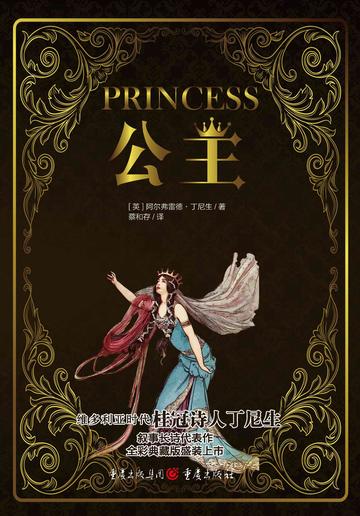
"The Princess" is a famous long blank verse narrative poem written by Alfred Tennyson, the British poet laureate, and published in 1847. This poem tells the story of Ada, a heroine and princess. In order to realize the ideal of equality between men and women, she refused to marry the prince who was engaged to her when she was young. She founded a women's university in a world far away from men. Men were prohibited from entering. Female students received the same higher education as men's universities. The prince fell in love with the princess, so he and two friends disguised themselves as female students and sneaked into the women's university. They were soon discovered and escaped, which almost triggered a war between the two countries, but in the end the prince and the princess's brother decided to decide the outcome in a small-scale duel. The prince was seriously injured and all his soldiers were defeated. The princess changed her mind at a critical moment and turned the palace into a temporary hospital to receive and care for all injured soldiers. The prince gradually recovered under the careful care of the princess, and finally won the princess's love. The princess finally realized that only through the joint efforts of both sexes can the issue of women's rights be truly solved. "The Princess" describes the social issues of women's higher education and their happiness in life, reflecting the traditional view of women in the Victorian era.
This poem has a strong sense of the times, the characters are vividly depicted, and the language is concise and beautiful, which fully reflects Tennyson's poetic talent and distinctive personal characteristics: the poetry has distinctive characteristics of the era, a wide range of themes, and rich imagination, ranging from medieval legends to Nordic mythology and ancient Greek and Roman mythology, from family life to various forms of nature. His poems are exquisite in word selection, smooth in rhythm, and rich in emotion. Many of the views in his poems are worthy of readers' chewing and endless aftertaste.