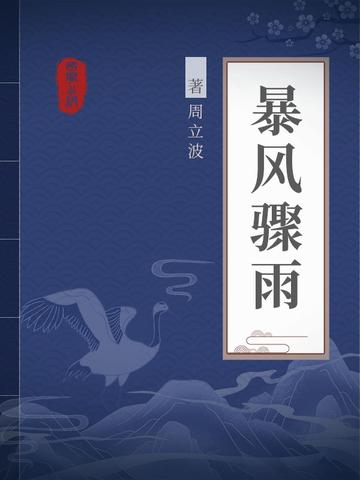
Long novel. By Zhou Libo. Some chapters were first published in Harbin's "Northeast Daily" from December 1947 to January 1948. First edition in Northeast Bookstore from April to May 1948. The work reflects the entire process of the rural land reform movement in the Northeast Liberated Areas based on the great changes in a village named Yuanmaotun in Northeast China. The central character throughout the book is Xiao Xiang, captain of the land reform team. Under his inspiration and organization, the bitter and resentful farmers in Yuanmao Village, led by Zhao Yulin and Guo Quanhai, overthrew the bully landlord Han Laoliu. The work successfully created a group of vivid images of poor farmers. Zhao Yulin is the protagonist of the first volume. He is a tough guy, but he is so poor that he is called "Zhao Guangxu". The work focuses on expressing his hard-working and simple, clear-cut love and hate, revolutionary spirit of standing firmly on the front line of struggle, as well as his noble character of being selfless, caring about the overall situation, and full of sacrifice. Guo Quanhai is the protagonist of the second volume. The works endow him with a certain ideal color, highlighting his organizational talents, rich struggle experience and noble qualities of putting revolutionary interests first. The handlebar-style old sun head is a brilliant artistic image in the whole book. With a comic style full of life, the work depicts this farmer who is eager to stand up and have an independent personality, but is also timid, has bad habits and carries a lot of ideological baggage. This image not only shows that the majority of farmers are the basic force of the revolution, but also shows the long-term and arduous nature of educating and transforming farmers. The plot of the work is concentrated and simple, from the four fights with Han Laoliu to the liquidation of Du Shanren, from clearing the land, digging up floating wealth, raising guns to setting off the craze for joining the army, the context is clear, showing a historical picture of the land reform movement. The novel's precise description of Northeastern customs and customs and the use of dialects are permeated with a strong local flavor. It is the first successful novel in the history of modern literature to describe the land reform movement. It won the third prize of the 1951 Stalin Literary Award.
Reader comments
"The Storm" is a very excellent novel. By telling the story of the land reform in Yuanmaotun, it vividly shows the entire process of the rural land reform movement in the Northeast Liberated Areas. The author Zhou Libo made me immersed in it with his exquisite writing. The characters he created were lifelike and the plot was fascinating. This work is full of life, making me feel as if I was in that era and feeling the joys, sorrows and joys of the people at that time. At the same time, the novel's precise description of Northeastern customs and customs and the use of dialects also gave me a deeper understanding of the culture of that region. In short, this is a classic that is worth reading again and again. I highly recommend it to all friends who like literature.
I studied excerpts from this book in my primary school textbook, and now I am re-reading it. Compare the Chinese who were bullied in the old China and the Chinese in the new China:
In old China, the Japanese invaded China as a small country for 14 years.
During the New China, to resist U. S. Aggression and aid Korea, it took us three years to fight back the invaders from 17 countries from the Yalu River to the 38th parallel.
There was an interval of five years between the end of the Anti-Japanese War and the beginning of the War to Resist U. S. Aggression and Aid Korea. It can be said that the Chinese who ended the War of Resistance Against Japan and started the War to Resist U. S. Aggression and Aid Korea are of the same generation. The strength they have accumulated in five years to defeat powerful enemies and change the world is admirable. How this kind of power is condensed can be understood by reading "The Storm".
A good book for your age
Why do many novels with local dialects clearly have the word (note) but no annotation, which makes people unable to understand many times? This is also the shortcoming of this novel. I have watched the movie adapted from this novel. The novel is more detailed and exciting. The life and psychological changes of the peasants before and after the liberation before and after the land reform are well written.
A red classic that you will never tire of reading.
The writing style of the older generation is really solid!
This is a true portrayal of the landlord struggle after the liberation of Northeast China. It basically restores history. I learned a paragraph from this original book when I was in junior high school. I felt it was written very realistically. Especially in terms of characterization, the writing is lifelike and vivid on the page.
I couldn't get enough of the junior high school textbook and I always wanted to read the full text. Very well written
Classic engraved historical mark!
Tomato novel is very good
Old writers go deep into life and produce fine works. This writing skill is unmatched by today's writers
The description is full of fireworks, a microcosm of an era.
The new era is as majestic and bright as the sunrise.
"The Storm" is a very excellent novel. By telling the story of the land reform in Yuanmaotun, it vividly shows the entire process of the rural land reform movement in the Northeast Liberated Areas. The author Zhou Libo made me immersed in it with his exquisite writing. The characters he created were lifelike and the plot was fascinating. This work is full of life, making me feel as if I was in that era and feeling the joys, sorrows and joys of the people at that time. At the same time, the novel's precise description of Northeastern customs and customs and the use of dialects also gave me a deeper understanding of the culture of that region. In short, this is a classic that is worth reading again and again. I highly recommend it to all friends who like literature.
I studied excerpts from this book in my primary school textbook, and now I am re-reading it. Compare the Chinese who were bullied in the old China and the Chinese in the new China: In old China, the Japanese invaded China as a small country for 14 years. During the New China, to resist U. S. Aggression and aid Korea, it took us three years to fight back the invaders from 17 countries from the Yalu River to the 38th parallel. There was an interval of five years between the end of the Anti-Japanese War and the beginning of the War to Resist U. S. Aggression and Aid Korea. It can be said that the Chinese who ended the War of Resistance Against Japan and started the War to Resist U. S. Aggression and Aid Korea are of the same generation. The strength they have accumulated in five years to defeat powerful enemies and change the world is admirable. How this kind of power is condensed can be understood by reading "The Storm".
A good book for your age
Why do many novels with local dialects clearly have the word (note) but no annotation, which makes people unable to understand many times? This is also the shortcoming of this novel. I have watched the movie adapted from this novel. The novel is more detailed and exciting. The life and psychological changes of the peasants before and after the liberation before and after the land reform are well written.
A red classic that you will never tire of reading.
The writing style of the older generation is really solid!
This is a true portrayal of the landlord struggle after the liberation of Northeast China. It basically restores history. I learned a paragraph from this original book when I was in junior high school. I felt it was written very realistically. Especially in terms of characterization, the writing is lifelike and vivid on the page.
I couldn't get enough of the junior high school textbook and I always wanted to read the full text. Very well written
Classic engraved historical mark!
Tomato novel is very good
Old writers go deep into life and produce fine works. This writing skill is unmatched by today's writers
The description is full of fireworks, a microcosm of an era. The new era is as majestic and bright as the sunrise.