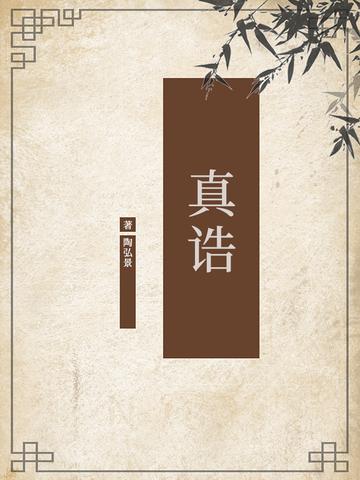
"Zhen Gao" is a religious book of the Shangqing sect, written by Tao Hongjing, a Taoist priest of the Southern Dynasties. Tao Hongjing, whose courtesy name was Tongming and whose nickname was Huayang Seclusion and Mr. Zhenbai, was born in Moling, Danyang (now Nanjing, Jiangsu Province). He was the inheritor of the Shangqing Sect, an important sect of Taoism.
"Zhengao" means "the edict dictated by the real person". "Zhenzhen" is the honorific title given to immortal figures in Taoism, and "zhengao" is a kind of admonition from superiors to subordinates. "Zhen Gao" is a "spiritual" record written by Yang Xi, Xu Mi, Xu Hui and others in the Eastern Jin Dynasty. Before Tao Hongjing, Gu Huan had collected and compiled them into the book "Authentic Works". Tao Hongjing diligently searched and added annotations, and compiled "Zhen Gao". The content of the book is complex, introducing the history, biography and alchemy of the Shangqing sect of Taoism, and also touches on other sects of Taoism. "Zhen Gao" believes that "the Taoist is in a state of confusion and generates vitality. When the vitality is completed, there is Tai Chi. Tai Chi is the parent of heaven and earth and the secret of Tao." "Zhen Gao" attaches great importance to the golden elixir and Shouyi of "Baopuzi", but believes that "if one obtains the "Dadong Zhenjing", there is no need for the golden elixir."
"Zhen Gao" enshrines the Qing Dharma as the "Supreme Way" and considers the "Tai Qing Family" to be higher than the old Celestial Master Way. We advocate chanting sutras, keeping spirits, observing oneness, and fasting. The "Shangqing Zhenren" in the book "is Laojun's teacher", which reflects that the belief characteristics of the Shangqing sect are different from the old Tianshi way. This book describes the Buddha as being like an immortal, reflecting people's views on Buddhism when Buddhism first entered China. He also introduced the Buddhist theories of sin, happiness and hell into Taoism, thus establishing the Ghost Official Yin Division in Fengdu. He also absorbed a large number of Buddhist terminology and ideas, such as: "If you want to cultivate the roots of annihilation, you should pull out the seeds of life and death." "Sow sin in the heavenly net, and you will be poisoned in the hell." "A mustard seed suddenly spreads across thousands of hectares, and there is Mount Sumeru in it. There is no difference between the small and the big, and the distance is the same." Etc. These are of considerable reference value for studying the formation of the Shangqing Sect and the history of the exchanges between Buddhism and Taoism in the Eastern Jin and Southern Dynasties.
Reader comments
The book "Zhen Gao" is rich in content. It not only introduces the history, biography and alchemy of the Shangqing sect of Taoism, but also covers other sects. Moreover, some of the ideas in the book are of great reference value for studying the history of exchanges between Buddhism and Taoism. It feels somewhat similar to "Baopuzi", both of which explore Taoist golden elixirs and the method of keeping one. However, "Zhen Gao" also mentions some concepts of Buddhism, which is quite interesting. The stories in it are also very attractive, just like this plot of the goddess descending to earth, which reminds people of some stories in "Strange Stories from a Chinese Studio".
The book "Zhen Gao" is rich in content. It not only introduces the history, biography and alchemy of the Shangqing sect of Taoism, but also covers other sects. Moreover, some of the ideas in the book are of great reference value for studying the history of exchanges between Buddhism and Taoism. It feels somewhat similar to "Baopuzi", both of which explore Taoist golden elixirs and the method of keeping one. However, "Zhen Gao" also mentions some concepts of Buddhism, which is quite interesting. The stories in it are also very attractive, just like this plot of the goddess descending to earth, which reminds people of some stories in "Strange Stories from a Chinese Studio".