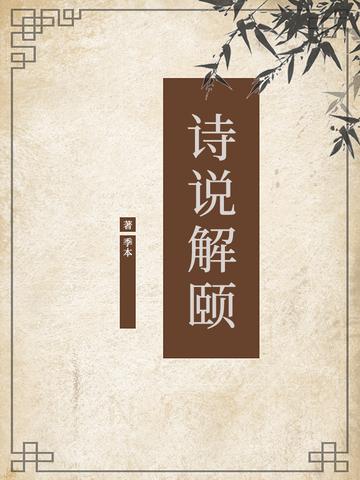
Written by Ming Jiben (1485-1563). Ji Ben, whose courtesy name was Mingde and whose name was Pengshan, was from Kuaiji (now Shaoxing, Zhejiang). In the twelfth year of Zhengde (1517), he became a Jinshi, was promoted to an official in Jianning, recruited as a censor, and moved to the prefecture of Changsha. He studied under Wang Shouren and was able to pass on his knowledge. He studied the classics and biographies throughout his life and wrote "Four Common Questions of the Book of Changes" and "Reading Rites and Questions", etc. This book is Ji Ben's interpretation of "Poetry". The first two volumes of "General Theory" serve as an outline, and then you will know the original meaning of "Poetry" and the key to reading "Poetry". The third "Zhengshi" is in thirty volumes, explaining the main text of "The Book of Songs". The eight volumes of the second "Ziyi" are dedicated to the interpretation of famous things. Ji Ben's interpretation of "Poetry" contains many new ideas and refuses to follow the predecessors. Citing extensive information and holding it with evidence. Whatever you see in the book, you must repeatedly provide evidence and explain why. For example, it is said that the sentence "must tell parents" in the chapter "Nanshan" refers to the temple where Lu Huan informed his parents; in the chapter "Nine Chapters", the name "gongguibuyi" is due to the north direction of Hong, so it is no longer prosperous;
Reader comments
Just like his explanation of "Must tell parents" in "Nanshan", it reminded me of the relationship between myself and my parents, which was very enlightening. His views were unique and he was in a class of his own in the study of Poetry in the Ming Dynasty. I think this book is a valuable reference for those who like to study the Book of Songs.
Just like his explanation of "Must tell parents" in "Nanshan", it reminded me of the relationship between myself and my parents, which was very enlightening. His views were unique and he was in a class of his own in the study of Poetry in the Ming Dynasty. I think this book is a valuable reference for those who like to study the Book of Songs.