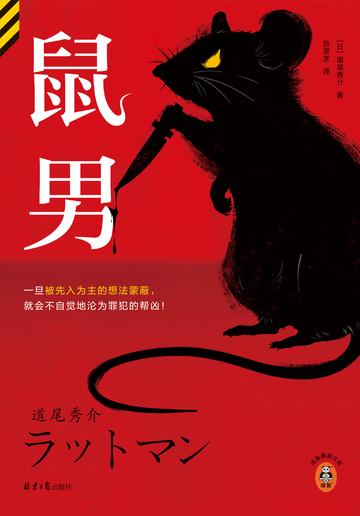
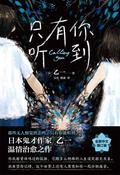
Once you are blinded by preconceived ideas, you will unconsciously become an accomplice of criminals!
The master of reversal in the mystery world, winner of the Japan Mystery Writers Association Award and the True Mystery Award, Michio Shusuke, a classic!
It has appeared on three major reasoning lists including the Best 10 of Honesty Reasoning and the Best 10 Reasoning of "Weekly Weekly"!
…
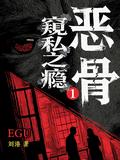
My father's unusual obstructive behavior, the suspicious blood stains on my mother's sleeves, my sister's weird nightmare late at night...
The terrible suspicion about the cause of my sister's death is gradually distorting the truth of the case!
…
There are rats, there are rats, don't look at your feet.
It's useless to look at it, it's in your heart.
Only I know that my sister's death was not an accident.
On Christmas Day 23 years ago, my sister fell from the second floor of her home and died with her underwear exposed. My father was the only one at home at the time. The police ruled it an accidental fall. However, I was the only one who noticed something strange - my father unusually blocked the nurse who came to check, my mother's sleeves were stained with blood when she returned home from the hospital, and my sister's body had strange marks hidden under her underwear.
23 Years later, it was my girlfriend's turn, and she also died due to an "accident." And I think I did the right thing just like my father did back then...
Reader comments
The plot is very twisty and I couldn't figure it out at first. At first, I thought it was the father who planned to kill his biological daughter. The rabbit 🐰 was the way Tazi saw his father wearing a mask, and it was Tazi who was abused by his father. Later, I got a bright idea and guessed that my mother might have killed Tazi and went to buy Christmas gifts to create an alibi. But in fact, the mother bought the gifts because she wanted to make peace with Tazi. Neither mother nor father wanted to kill Tazi. In other words, Tazi's fall from the second floor was not man-made. If someone could have seen it at that time, or if Liang and a nurse were at the window to watch the surprise Tazi had prepared, Tazi might not have died. The plot is really twisting and turning. Thinking from different standpoints and perspectives, one sentence will lead to different conclusions. The innocent person can be speculated as the criminal. The same words can be understood as gratitude or doubt (what Gui asked Liang, did you do it? Was it for me, right?). Yeji is the real murderer of Guang, we only know it in the last chapter. Everything is because we have received the hints of established thinking, bright psychological speculations, and the guidance of environmental words. At the end of the story, "Everyone sees a rat man." It is enlightening. It turns out that all of us are affected by the established thinking. We feel that it makes sense to follow the established logical thinking. We also verify over and over again the answers that we think are correct but are actually incorrect. We rarely find new ways to think from multiple angles. Maybe it's not because of the rat man, but because we listed it as an animal.
What you see and think is actually what you think and what you expect. Evaluation: The logic is stable, the story is engaging, and the plot avoids twists and turns without deviating from the definition of the central rat man. The creativity of Killing Light is average, but the advantage is that the plot of the story is reversed many times. The protagonist's preconceptions can lead readers astray every time, but it is also consistent with common sense. The healing plot is just right, without deliberately sublimating the theme. Living with regrets is the main theme of life.
I don't think there are any words that can explain a person's life. No, I guess the rosebud is just one piece of the puzzle, the missing piece. ————Citizen Kane
The multiple reversals are impressive, the clues are handled very carefully, and the reading is smooth and not obtrusive. It is easy to be preconceived when reading, and if you are not careful, you will fall into the trap set by the author.
There are too many reversals at the end, which is a bit deliberate. It feels like it can be explained in any way, and it is not very convincing.
This is a story about injury and cover-up. Distrust of justice and lack of communication with relatives and friends have led to a series of suspicions and misunderstandings. These two cases were obviously very simple to investigate, but due to the complexity and entanglement of human nature, they became complicated and confusing, with constant reversals.
I didn't watch the first part intermittently, but the second part was very exciting.
When Hikaru died, Himekawa thought that Katsura had killed Hikari, Katsura thought that Himekawa was the real murderer, and Noji thought that someone had concealed the crime for him.
When his sister died, his father thought that his mother had killed his sister, his mother thought that he was the real murderer, and Himekawa thought that his father had concealed the crime for his mother.
If right and wrong have the same face, who can tell them apart?
A masterpiece, an absolute masterpiece! A book can have so many reversals, an event that affects a life can be so wrong, and the misunderstandings caused by people's experience and judgment can have such a profound impact. This book really shocked me. I give it five stars. This book is definitely worth it!
Guang is such a strange character. He is smart and beautiful, but he is in a very strange environment and speaks very strange words. So the author treats Guang as an NPC, right? A person who only exists to advance the plot.
The reversal of the plot made me feel that the writing was pretending to be the Riddler when I was deciding on the original story line. But after reading it, I realized that all the places where I felt this way were narrative tricks to make people confirm their initial thoughts and ignore the truth. The final truth was also foreshadowed, reasonable and not abrupt.
Michio Shusuke is worthy of being the master of reversals. Whenever he feels close to the truth, a sudden reversal makes people say it is wonderful. After reading this, I feel deeply that no one can live without regrets. The most important thing is self-salvation and how to cherish the present.
How should I put it? I don't talk about the story, and I don't know if it's because of the translation. This guy's writing style is very good. Various montages, various wordings, very literary.
Speaking of the story, there are twists and turns, but not too bizarre. It is not as good as the original character, but it has a lot of philosophical thoughts. As time goes by, there are insights, reflections, philosophies, desperate attempts, or misunderstandings. There are various situations in the world, but this is the case. No one has ever been ridiculous or misunderstood, that's probably the case.
Maybe I drank two glasses too much. Looking back, I had some knots. Is this the solution? Are you confused? Maybe it was just after drinking two glasses too much.
How do people pray and what price do they pay in order to live without fault? Just before you make a mistake, how do you pray to stop yourself from the brink? If right and wrong have the same face, who can tell them apart?
Is it irreversible? Is there really nothing a person can redeem?
The most pity is Himekawa's stepfather and sister, both of whom are very kind.
I was originally curious, but the author had already clearly written down the murderer's methods and motives, and was still nagging on. It wasn't until the final moment when the mystery was revealed that people suddenly realized that this was the case.
The author has already set a trap so that what you see may not necessarily be the whole truth of the incident.
The concentration of reversals is a headache. Do you think what you see is the truth? The story progressed layer by layer, and I had a few ideas in the middle, but they were quickly overturned. The whole logic has come full circle, but I still laughed at the real cause of death of the male protagonist's sister [smile] It's not long and reads smoothly.
It has a dual story line structure. One is that the sister died in an accident. The mother mistakenly believed that her abuse caused the sister to commit suicide. The father mistakenly believed that the mother killed the sister and deliberately concealed it. The other is that Noji killed Hikaru, Katsura mistakenly thought it was Himekawa because he murdered his sister, and Himekawa thought it was Katsura who killed Hikari and deliberately concealed it for her.
Rat Man runs through the whole story, and his preconceptions and misunderstandings make the story more tortuous and confusing than knowing nothing about it.
There are many reversals, and they are amazing every time. People always like to label others and think that what they think is right. At the same time, this reversal becomes amazing because of this.
Excellent plot, sad ending. Perhaps confusion is the norm.
Everyone sees rat men, because they are all self-righteous detectives who make self-righteous concealments and sacrifices.
After reading it once, I feel like I didn't understand a lot of things. After reading it twice, I should be pretty much the same.
So wonderful, unconventional and fascinating
A socialist classic with a perfect ending
A lot of reversals indeed! Although I thought the writing was too wordy at the beginning, I felt so good when I read at the end that "all people see is the rat man"!
There are various reversals, and the writing technique is also good~~~ Finally, let's give it to the mysterious 333 [smile][smile][smile]
The reversal has an unexpected feeling, I watched it all night, it was so cool! [Top post][top post]
The twists and turns in the last two chapters came one after another, which shocked me so much that I couldn't close my mouth after staying up late to read. I don't want to use the word wonderful. I always feel that such a story is really full of ups and downs, but the various guesses about each event have a certain theoretical basis. When I was reading, the author arranged the same scenes and conversations that had happened so cleverly that the words in different scenes gave people completely different feelings.
The Man Who Killed the Light, I didn't begin to understand until I saw that part. I felt really empty in my heart. When I read it in the afternoon, I still had a kind of anger in my heart. I thought how could people be so bad. The more I read, the more I started to feel relieved. Anyway, it's worth reading.
It's worth watching. It has many twists and turns and is shocking.
The Master of Reversal is well-deserved and has become a huge fan. I want to read the author's other books [Adoration][Adoration][Adoration] When reading this kind of suspense work, I actually want to watch a magic show. As long as you don't try to expose the tricks by being too clever, you can get the most abundant reading experience in a limited time. Overall, it's great!
This book has many twists and turns, with a slight melancholy. It is a very good novel if you read it patiently.
The plot of this book is so exciting! My father's abnormal behavior, my mother's blood stains, my sister's death... All kinds of suspense kept me wondering what the truth was. Moreover, the author's description is very delicate, making me feel like the protagonist, looking for answers in the fog. I think of Keigo Higashino's "White Night Journey", which is also full of suspense. I really like this type of book and recommend it to you!
The plot is very twisty and I couldn't figure it out at first. At first, I thought it was the father who planned to kill his biological daughter. The rabbit 🐰 was the way Tazi saw his father wearing a mask, and it was Tazi who was abused by his father. Later, I got a bright idea and guessed that my mother might have killed Tazi and went to buy Christmas gifts to create an alibi. But in fact, the mother bought the gifts because she wanted to make peace with Tazi. Neither mother nor father wanted to kill Tazi. In other words, Tazi's fall from the second floor was not man-made. If someone could have seen it at that time, or if Liang and a nurse were at the window to watch the surprise Tazi had prepared, Tazi might not have died. The plot is really twisting and turning. Thinking from different standpoints and perspectives, one sentence will lead to different conclusions. The innocent person can be speculated as the criminal. The same words can be understood as gratitude or doubt (what Gui asked Liang, did you do it? Was it for me, right?). Yeji is the real murderer of Guang, we only know it in the last chapter. Everything is because we have received the hints of established thinking, bright psychological speculations, and the guidance of environmental words. At the end of the story, "Everyone sees a rat man." It is enlightening. It turns out that all of us are affected by the established thinking. We feel that it makes sense to follow the established logical thinking. We also verify over and over again the answers that we think are correct but are actually incorrect. We rarely find new ways to think from multiple angles. Maybe it's not because of the rat man, but because we listed it as an animal.
What you see and think is actually what you think and what you expect. Evaluation: The logic is stable, the story is engaging, and the plot avoids twists and turns without deviating from the definition of the central rat man. The creativity of Killing Light is average, but the advantage is that the plot of the story is reversed many times. The protagonist's preconceptions can lead readers astray every time, but it is also consistent with common sense. The healing plot is just right, without deliberately sublimating the theme. Living with regrets is the main theme of life. I don't think there are any words that can explain a person's life. No, I guess the rosebud is just one piece of the puzzle, the missing piece. ————Citizen Kane
The multiple reversals are impressive, the clues are handled very carefully, and the reading is smooth and not obtrusive. It is easy to be preconceived when reading, and if you are not careful, you will fall into the trap set by the author. There are too many reversals at the end, which is a bit deliberate. It feels like it can be explained in any way, and it is not very convincing. This is a story about injury and cover-up. Distrust of justice and lack of communication with relatives and friends have led to a series of suspicions and misunderstandings. These two cases were obviously very simple to investigate, but due to the complexity and entanglement of human nature, they became complicated and confusing, with constant reversals.
I didn't watch the first part intermittently, but the second part was very exciting. When Hikaru died, Himekawa thought that Katsura had killed Hikari, Katsura thought that Himekawa was the real murderer, and Noji thought that someone had concealed the crime for him. When his sister died, his father thought that his mother had killed his sister, his mother thought that he was the real murderer, and Himekawa thought that his father had concealed the crime for his mother. If right and wrong have the same face, who can tell them apart?
A masterpiece, an absolute masterpiece! A book can have so many reversals, an event that affects a life can be so wrong, and the misunderstandings caused by people's experience and judgment can have such a profound impact. This book really shocked me. I give it five stars. This book is definitely worth it!
Guang is such a strange character. He is smart and beautiful, but he is in a very strange environment and speaks very strange words. So the author treats Guang as an NPC, right? A person who only exists to advance the plot.
The reversal of the plot made me feel that the writing was pretending to be the Riddler when I was deciding on the original story line. But after reading it, I realized that all the places where I felt this way were narrative tricks to make people confirm their initial thoughts and ignore the truth. The final truth was also foreshadowed, reasonable and not abrupt.
Michio Shusuke is worthy of being the master of reversals. Whenever he feels close to the truth, a sudden reversal makes people say it is wonderful. After reading this, I feel deeply that no one can live without regrets. The most important thing is self-salvation and how to cherish the present.
How should I put it? I don't talk about the story, and I don't know if it's because of the translation. This guy's writing style is very good. Various montages, various wordings, very literary. Speaking of the story, there are twists and turns, but not too bizarre. It is not as good as the original character, but it has a lot of philosophical thoughts. As time goes by, there are insights, reflections, philosophies, desperate attempts, or misunderstandings. There are various situations in the world, but this is the case. No one has ever been ridiculous or misunderstood, that's probably the case. Maybe I drank two glasses too much. Looking back, I had some knots. Is this the solution? Are you confused? Maybe it was just after drinking two glasses too much.
How do people pray and what price do they pay in order to live without fault? Just before you make a mistake, how do you pray to stop yourself from the brink? If right and wrong have the same face, who can tell them apart? Is it irreversible? Is there really nothing a person can redeem?
The most pity is Himekawa's stepfather and sister, both of whom are very kind.
I was originally curious, but the author had already clearly written down the murderer's methods and motives, and was still nagging on. It wasn't until the final moment when the mystery was revealed that people suddenly realized that this was the case.
The author has already set a trap so that what you see may not necessarily be the whole truth of the incident.
The concentration of reversals is a headache. Do you think what you see is the truth? The story progressed layer by layer, and I had a few ideas in the middle, but they were quickly overturned. The whole logic has come full circle, but I still laughed at the real cause of death of the male protagonist's sister [smile] It's not long and reads smoothly.
It has a dual story line structure. One is that the sister died in an accident. The mother mistakenly believed that her abuse caused the sister to commit suicide. The father mistakenly believed that the mother killed the sister and deliberately concealed it. The other is that Noji killed Hikaru, Katsura mistakenly thought it was Himekawa because he murdered his sister, and Himekawa thought it was Katsura who killed Hikari and deliberately concealed it for her. Rat Man runs through the whole story, and his preconceptions and misunderstandings make the story more tortuous and confusing than knowing nothing about it.
There are many reversals, and they are amazing every time. People always like to label others and think that what they think is right. At the same time, this reversal becomes amazing because of this.
Excellent plot, sad ending. Perhaps confusion is the norm.
Everyone sees rat men, because they are all self-righteous detectives who make self-righteous concealments and sacrifices.
After reading it once, I feel like I didn't understand a lot of things. After reading it twice, I should be pretty much the same.
So wonderful, unconventional and fascinating
A socialist classic with a perfect ending
A lot of reversals indeed! Although I thought the writing was too wordy at the beginning, I felt so good when I read at the end that "all people see is the rat man"!
There are various reversals, and the writing technique is also good~~~ Finally, let's give it to the mysterious 333 [smile][smile][smile]
The reversal has an unexpected feeling, I watched it all night, it was so cool! [Top post][top post]
The twists and turns in the last two chapters came one after another, which shocked me so much that I couldn't close my mouth after staying up late to read. I don't want to use the word wonderful. I always feel that such a story is really full of ups and downs, but the various guesses about each event have a certain theoretical basis. When I was reading, the author arranged the same scenes and conversations that had happened so cleverly that the words in different scenes gave people completely different feelings. The Man Who Killed the Light, I didn't begin to understand until I saw that part. I felt really empty in my heart. When I read it in the afternoon, I still had a kind of anger in my heart. I thought how could people be so bad. The more I read, the more I started to feel relieved. Anyway, it's worth reading.
It's worth watching. It has many twists and turns and is shocking.
The Master of Reversal is well-deserved and has become a huge fan. I want to read the author's other books [Adoration][Adoration][Adoration] When reading this kind of suspense work, I actually want to watch a magic show. As long as you don't try to expose the tricks by being too clever, you can get the most abundant reading experience in a limited time. Overall, it's great!
This book has many twists and turns, with a slight melancholy. It is a very good novel if you read it patiently.
The plot of this book is so exciting! My father's abnormal behavior, my mother's blood stains, my sister's death... All kinds of suspense kept me wondering what the truth was. Moreover, the author's description is very delicate, making me feel like the protagonist, looking for answers in the fog. I think of Keigo Higashino's "White Night Journey", which is also full of suspense. I really like this type of book and recommend it to you!
Not bad, suitable for making movies.