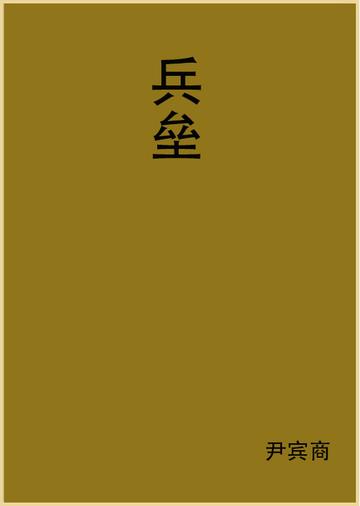
It means The Hundred Bags of the Art of War, and the book has seven volumes in total. The ancient art of war is abstractly summarized into thirty-six characters, each character has an independent meaning, and examples of warfare are explained under each character, with a total of three hundred and thirty-seven examples of warfare. This book has the distinctive characteristics of the military books of the Ming and Qing Dynasties, with detailed analysis and a combination of facts. Many of the fine expositions have become famous military sayings. Although they were not written by famous experts, they still contain true insights. As Fang Yinan pointed out in the preface to the engraving, "The words must be analyzed accurately and the facts must be factual. They are suitable for the teaching of the army school. Alas! The value of Hu Wenzhonggong's "Reading History and Military Strategy" has been reduced." Although this book was written in the Ming Dynasty, the only copy hand-collated by the author was handed down to the 33rd year of the reign of Emperor Guangxu of the Qing Dynasty (1907). It was printed with typefaces by the Hubei Industrial Institute and published by the Hubei Chinese Studies Editorial Press. It is now stored in the Military Library of the Academy of Military Sciences and the Hubei Provincial Library. This is compiled according to the printed version of Hubei Institute of Industrial Transmission.
Reader comments
This book "Fortress" is really interesting! It summarizes the ancient art of war into thirty-six words and cites more than three hundred battle examples to explain it, making it simple and easy to understand. I particularly like the strategies of "sound", "first" and "attack", which I feel are very practical. But I hate the one named Cui Yue, and his story in the book is too confusing. Overall, this book is also helpful for people like me who run around the city, and it taught me some strategies and wisdom.
This book "Fortress" is really interesting! It summarizes the ancient art of war into thirty-six words and cites more than three hundred battle examples to explain it, making it simple and easy to understand. I particularly like the strategies of "sound", "first" and "attack", which I feel are very practical. But I hate the one named Cui Yue, and his story in the book is too confusing. Overall, this book is also helpful for people like me who run around the city, and it taught me some strategies and wisdom.