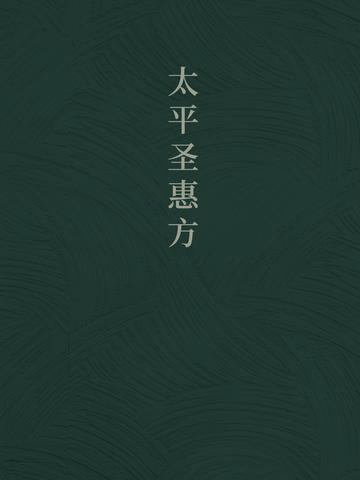
"Taiping Shenghui Prescriptions", prescription book, referred to as "Shenghui Prescriptions", 100 volumes. It was compiled by Wang Huaiyin, Wang You and others of the Northern Song Dynasty. It took 14 years to compile from the third year of Taiping and Xingguo (978) to the third year of Chunhua (992). This book is the largest extant official prescription book in my country before the 10th century AD. It compiles 16,834 famous prescriptions from all dynasties from the Han Dynasty to the early Song Dynasty, including more than a thousand medical prescriptions collected by Zhao Guangyi, Emperor Taizong of the Song Dynasty, when he was in his residence, and more than 10,000 empirical prescriptions presented by the imperial medical official hospital in the third year of Taiping and Xingguo. It was collated and compiled. There are 1670 doors in total. The pulse method and prescribed medicines are first described, and the causes, syndromes, and treatments of diseases and syndromes of the five internal organs, typhoid, seasonal qi, febrile diseases, internal and external diseases, bone injuries, metal trauma, gynecology, and pediatrics are described in detail below, as well as the content of gods, elixirs, medicinal wines, food treatments, tonics, acupuncture, etc. Each door is preceded by a description of the causes of disease in Sui Dynasty Chao Yuanfang's Treatise on the Causes and Symptoms of Diseases, followed by prescriptions and various treatments. Each prescription lists the indications, medicines and preparations, dosage, dosage, contraindications, etc. This book records Fang Hongfu, which can be called "the source of Jing Fang" (Supplement to "Jing Ji Visiting Ancient Records"). Its parts on typhoid fever and miscellaneous diseases still preserve the original appearance of the two books "Treatise on Febrile Diseases" and "Synopsis of the Golden Chamber" before the revision by the government medical bookstore of the Song Dynasty, which is the so-called "Chunhua version of "Treatise on Febrile Diseases", which is a sufficient reference for researchers. There are also many analyzes in other clinical disciplines, such as the surgical identification of the five virtues and seven evils of carbuncle, which set standards for later generations; the pediatrics' discussion of acute and chronic convulsions, which was the first to be seen in pediatric works; the whole process and precautions of needle removal of cataracts recorded in ophthalmology are more accurate and detailed than "Waitai Mi Yao". This book also contains the contents of various ancient lost medical books, such as "Dianlao Thirty-Six Huangjing" and so on. However, this book has no source and is not as good as the style of "Waitai Mi Yao", which is its shortcoming.
Reader comments
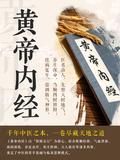
This book is so rich in content that it covers almost every field of medicine! From Shen Nong's taste of herbs to Hua Tuo and Bian Que's medical skills, to various pathological and diagnostic methods, everything is available. Moreover, the writing is smooth and simple, so even a layman like me can understand it. I especially like its discussion on the pathology of traditional Chinese medicine, and I feel that I have benefited a lot from it. In short, this is a very practical medical book, recommended to friends who are interested in traditional Chinese medicine!
This book is so rich in content that it covers almost every field of medicine! From Shen Nong's taste of herbs to Hua Tuo and Bian Que's medical skills, to various pathological and diagnostic methods, everything is available. Moreover, the writing is smooth and simple, so even a layman like me can understand it. I especially like its discussion on the pathology of traditional Chinese medicine, and I feel that I have benefited a lot from it. In short, this is a very practical medical book, recommended to friends who are interested in traditional Chinese medicine!