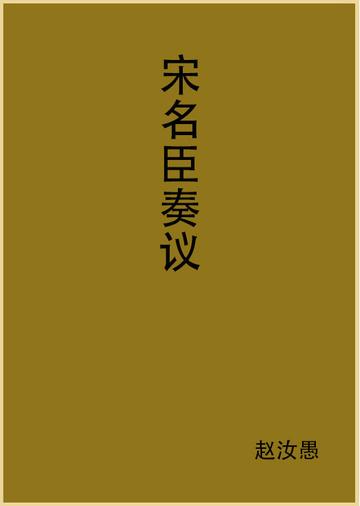
One hundred and fifty volumes. Compiled by Zhao Ruyu. Zhao Ruyu (1140-1196) was born in Yugan, Raozhou, Southern Song Dynasty (now northwest of Yugan, Jiangxi). His courtesy name was Zizhi. In the Song Dynasty, Qian Dao (1165-1173) was a Jinshi. In addition to being the secretary of Sheng Zhengzi, he was appointed as the editor-in-chief of Jiying Palace in Fujian. Shaoxi (1190-1194) was first called to be the Minister of the Ministry of Personnel, except to know the affairs of the Privy Council. In the fifth year of Shaoxi (1194), he co-founded Ningzong with Han Zhouzhou and was appointed prime minister of the right. He quoted Zhu Xi and Peng Guinian, but failed to depose Zhouzhou. Instead, Zhouzhou's clan deposed Fuzhou on the grounds that it was detrimental to the country. There are "Reports of the Ministers of the State", "Reports of Zhao Zhongdinggong", "Collection of Poems", and "Summary of Taizu's Records". At the front of the book "Zhuchenzouyi" is a letter written by Zhazi from the 13th year of Chunxi (1186), which was recorded in three halls and collected in the four treasury of Guanmi Mansion, as well as the seven chapters of the loyal ministers recorded in the historical records of the past dynasties, compiled and edited. There were almost more than a thousand volumes, and the text was complicated and complicated, and I was tired of reviewing them. Later, when I went to Fuzhou, I had some time off from political affairs and organized them into categories, eliminating the duplications and inconsistencies. I ended up with hundreds of volumes, divided into more than a hundred volumes. It started from Jianlong (960-963) and ended at Jingkang (1126-1127). Looking through the years, we can get a rough idea of the origin. It is divided into twelve sects: monarchy, imperial lineage, heavenly way, hundreds of officials, Confucianism, rituals and music, rewards and punishments, wealth, military system, area, border defense, and general discussion, with one hundred and fourteen sub-headings. At the end of each chapter, each person is appended with the official position he or she lives in, and the year and month of the memorial, which are also checked in detail. This book is divided into events, so you can refer to ancient and modern times to learn about the pros and cons of the events.
Reader comments
This book is rich in content and classified according to events, allowing people to understand the evolution, pros and cons of ancient and modern events. The author Zhao Ruyu must have put a lot of thought into compiling it, and he quoted many famous officials in history to give us a deeper understanding of the political and social conditions at that time. I especially liked his introduction to ancient wise officials, which gave me a new understanding of history. All in all, this is a valuable book and worth reading.

This book is rich in content and classified according to events, allowing people to understand the evolution, pros and cons of ancient and modern events. The author Zhao Ruyu must have put a lot of thought into compiling it, and he quoted many famous officials in history to give us a deeper understanding of the political and social conditions at that time. I especially liked his introduction to ancient wise officials, which gave me a new understanding of history. All in all, this is a valuable book and worth reading.