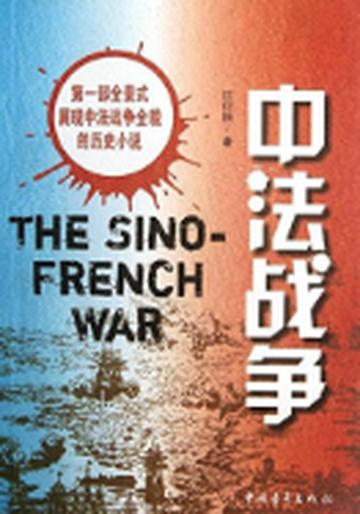
The narrative of "The Sino-French War" unfolds in chronological order, beginning in the 19th century when France used political and military means to take advantage of the internal contradictions of the Vietnamese authorities to sign the unequal treaty "France-Vietnam Peace Alliance Treaty" (1874), forcing the Vietnamese authorities to beg for peace. As France's aggression in Vietnam deepened, France wanted to use the treaty to achieve the purpose of canceling the vassal relationship between China and Vietnam, so as to achieve the purpose of completely occupying Vietnam. On the Vietnam issue, although the Chinese government has righteously refuted France's invasion of Vietnam and our country's Yunnan activities through the implementation of the treaty, it cannot curb France's ambitions. In view of the special relationship between China and Vietnam and the serious threat posed by France's invasion of Vietnam to China, the militant faction within the Qing ruling group, represented by Zuo Zongtang, Zeng Jize, and Zhang Zhidong, urged the court to adopt an anti-French policy; but Li Hongzhang, who controlled the diplomatic and military power of the Qing government, insisted on peace. The highest decision-making body of the Qing Dynasty was hesitant. Militarily, it sent troops out to assist Vietnam, while repeatedly instructing the Qing army not to take the initiative to attack the French army. Diplomatically, on the one hand, it protested against France's invasion of Vietnam, and on the other hand, it attempted to reach a compromise through negotiation or mediation by a third country. This book is rich in information and has a well-chosen topic, giving the author ample room to develop. This book combines the international situation, changes in French political situation and China's domestic political struggle, integrates diplomatic history and political history, and describes the Sino-French War by tracing the relations between China, France and Vietnam. The novel has created a number of vivid characters, such as (China) Empress Dowager Cixi, Prince Gong, Prince Chun, Li Hongzhang, Tang Jingsong, Zuo Zongtang, Zhang Zhidong, Zhang Peilun, Feng Zicai, Liu Mingchuan...; (France) Cabinet Prime Minister Juffelli, Admiral Guba, Lieutenant General Risby, Army Lieutenant General Nigri, and Navy Lieutenant Colonel Froneau, etc. Throughout the Sino-French war, Vietnam's weakness and polarity, the Qing government's inconsistencies and internal struggles, and France's arrogance and ambition were all vividly revealed. The dialogues between the characters in the book are consistent with their identities and scenes, and contain humor, making the novel highly readable.