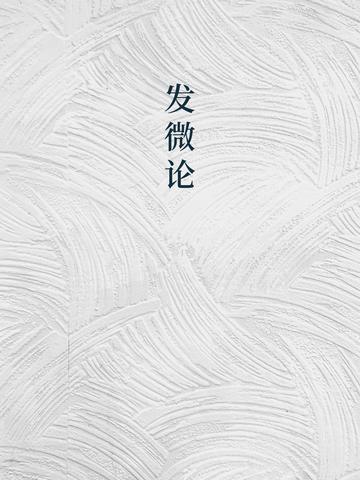
"Fa Wei Lun" Volume 1 [Tongxing Edition] was written by Cai Yuanding of the Song Dynasty. Yuan Ding's courtesy name was Jitong, a native of Jianyang. Wandering through Zhuzi's Gate. In the Qingyuan period, the puppet school was banned, he took party membership, and fled to Daozhou. Died in exile. Later, when Han Zhou was defeated, he posthumously awarded Di Gonglang and the posthumous title Wenjie. The deeds are recorded in "History of the Song Dynasty: Biographies of Scholars".
The study of Yuanding was concerned with arithmetic, but was especially focused on geography. This is a book that compiles its relative places. The main purpose is to understand the hardness and softness of the earth, to understand the movement and stillness, observe gathering and dispersion, examine the direction and back, observe the male and female, distinguish the strong and the weak, distinguish the obedience and the inverse, recognize life and death, observe the subtle and subtle, study the separation and union, distinguish the ups and downs, determine the shallow and deep, correct, increase and decrease, detail the tendency and avoidance, and know and judge the result.
Gai Shu only discusses the number, while Yuan Ding bases his reasoning on Confucianism, so his explanation can not go against Taoism. For example, clouds and water are originally moving, and you want them to be still. Mountains are originally quiet, and you want them to be moving. Gathering and dispersing speak of its general trend, and its face and back speak of its temperament. Knowing the general trend of mountains and rivers, it is tacitly determined outside of mathematics and theory, and then it can be pushed forward and reversed in the small and vast distance. A good observer uses the visible to detect the invisible, and a poor observer uses the invisible to conceal the visible. All can pick out the essence, and those who are not skilled in the art will be confused.
This book is also included in "Encyclopedia of Geography", titled "Cai Mutang". It is unknown whether the father of Yuan Ding named himself the old man of Mutang, so his book must have been written by himself, or whether later generations mistakenly attributed it to Yuan Ding. However, after reviewing all the books, many of them were written by Yuan Ding, so Yuan Ding's famous works are still recorded here.
Reader comments
The content of this book is very interesting! It explains the hardness and softness in geography with vivid examples, giving me a deeper understanding of the mysteries of nature. The author's writing style is concise and clear, and his prose flows smoothly, making complex theories easy to understand. I especially like his description of mountains and water bodies, which vividly demonstrates the characteristics of hardness and softness. All in all, this is a great book worth reading!
The content of this book is very interesting! It explains the hardness and softness in geography with vivid examples, giving me a deeper understanding of the mysteries of nature. The author's writing style is concise and clear, and his prose flows smoothly, making complex theories easy to understand. I especially like his description of mountains and water bodies, which vividly demonstrates the characteristics of hardness and softness. All in all, this is a great book worth reading!