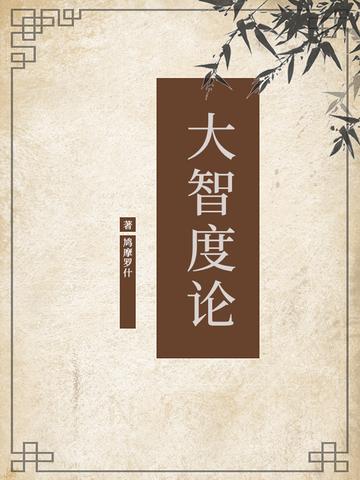
"The Theory of Great Wisdom" mainly talks about the reality of the middle way, uses the two truths to explain the principles of reality, uses Prajna thought, and makes a systematic explanation and demonstration of the "Maha Prajna Paramita Sutra". The treatise cites many scriptures and preserves a large number of folk stories and legends that were circulated in North India at that time. It is an important material for the study of Mahayana Buddhism and ancient Indian culture. At the same time, because the "Dapin Prajna Sutra" explained by this theory was the largest sutra at that time, and the author also developed the thoughts of "nature is empty and illusionary" in the sutra, he was called "the king of the theory". This theory first cites various explanations of the dharma, which is the best; and finally boils it down to the formless reality and the emptiness of the dharma nature, which is the best. However, this theory is based on the scriptures, and the explanation cannot completely exhaust the meaning. Therefore, Nagarjuna also wrote "Middle Theory" and "Twelve Doors Theory" as supplements.
Preface
Reader comments
This is the best version of Mahasophika I have ever read.
This is the best version of Mahasophika I have ever read.