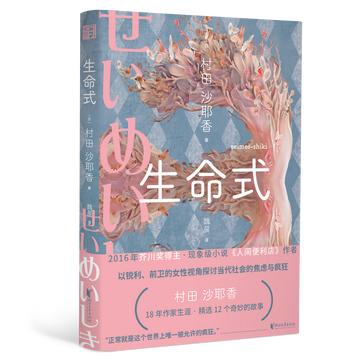
"Life Style" contains 12 masterpieces of different themes and styles written by Akutagawa Prize writer Sayaka Murata since her debut: Due to the influence of "aging and low birthrate", Japan has transformed the "funeral" to mourn the dead into a "life style" to enjoy and create life; in the absurd future, human skeletons , hair, etc. Are made into high-end products, and yesterday's "crazy" has become today's "natural"; "Let's live together before we get married when we turn 30!" There must be many people who made such an agreement with their friends when they were young. Yoshiko and Kikuchi are the few who have fulfilled this agreement; what exactly is "maturity"? When growing up, whose language and values do we use to express our bodies and desires... The stories written by Murata are bizarre, and some seem completely beyond the scope of "common sense", but the charm of her stories lies in this: by showing the ultimate absurdity in reality, she explores the true nature of human beings.
Reader comments
It's amazing... As the title says, it's a book about life.
The author's attitude towards cannibalism, death, and sex, which he does not shy away from and even regards as sacred, gives the book an absurd magic. This naked appreciation and examination of human nature and always maintaining an objective and calm attitude make all the absurd plots more real.
Some people will sneer and disdain the cannibalistic plot from a scientific perspective, but the author believes that literature can sometimes tolerate misalignment with science. It is this misalignment that will bring shock and lead to reflection on reality.
And this is the case with this book. The author limits the background to an era when human beings are reduced to reproduction and doing everything. Human beings are just a corner of the era. Human beings are like a flock of sheep that are overwhelmed, easy to accept and take it for granted. It is not strange to do anything under the collective unconscious, not to mention that some people have lived in a "corrected" world since childhood - an era in which life forms are regarded as good deeds and promoted vigorously.
What impressed me most about this article was the description of the food inside... Maybe it was because I was having dinner at the time? (Laughs) However, regardless of the source of the food ingredients, the author's descriptions are really appetizing.
Yes, miso soup, meatballs - the main ingredient is human flesh.
The specialness of the ingredients makes the people sitting around and admiring the article even more creepy. According to our understanding, "like cannibalism" should be instinct, but the article quotes a female employee as saying: "I understand! It is indeed human instinct to want to eat human flesh!"
This leads to another question: What is "instinct"?
If "instinct" is something that humans are born with, then it seems that nothing is born with it: temperament will change, good and evil will be reversed, "the only thing that remains unchanged is change itself", and there is no such thing as "instinct".
What we usually call instinct is often just a common characteristic of human beings - convergence, rejection, greed, love of lust, and so on.
So when the wind direction of the entire society changes, is "instinct" still "instinct"? In other words, "instinct" has changed with society?
How do you know that instinct changes with society? Rather than society just following its instincts?
How much has each of us been assimilated in this huge transformation?
——Therefore, the author was really touched when the female employee said the word "instinct" because she was happy.
When society generally regards absurdity as the norm and immorality as ethics, it is not unreasonable for the human nature of the entire society to collapse.
Looking at the article again, it is actually a question of social ethics and a discussion about the existence and continuation of life.
In the article, "people" are treated as a sacred object. When alive, they participate in life rituals with a pious heart. After death, they become food materials as life rituals. Everyone sincerely hopes that others will eat their own body after death with admiration. At the same time, they are not stingy in praising the delicious flesh of their dead relatives and friends.
Ridiculous, right?
It is naturally difficult for us with modern values to understand, but maybe future generations five hundred years from now will also have difficulty understanding us today.
The bottom line of human ethics is just a piece of paper that can be broken at once. As a member of the general public, there is no need to try to raise or lower this line on your own. You just need to stick to it, at least you have to.
That's enough.
A very smooth short story. It's like discussing what happens when personal ideas conflict with social norms. On this basis, issues such as the meaning of life, cultural conflicts, connection with nature, and ways to integrate into society are derived.
Some protagonists will deal with the world, some will insist on themselves and fight out of place, and some will give up their own personalities, endure discomfort, and instead integrate into a different environment. It's amazing to watch the protagonist make different choices.
I like the beginning and the end the most. The author's setting is novel and interesting, yet very convincing.
Counter-common sense, counter-experience, and counter-intuitive, it breaks the inertial thinking in daily life, creates a sense of absurdity and fear, and then causes readers to think about whether the life and value standards they are accustomed to are really impeccable and natural.
The unabashed and bitter satire of human nature goes straight to the soul. Behind the absurd and bizarre stories, there may be a deeper understanding of desire, instinct, death, self, value, and even some current or future social issues, which are worth recalling.
The story of this book is very novel and rich in imagination. Sayaka Murata is really a very talented writer. Her writing is very contagious, and her seemingly absurd stories can make people think deeply. It reminds me of Yiyi's works, the style is somewhat similar, they all explore human nature and social phenomena. I really like the article about funerals in "Life Style". It's very interesting and enlightening. Recommended to friends who like this style.
I feel that these are excellent stream-of-consciousness novels among Japanese writers, revealing the distortion and dark side of society and human nature. Unfortunately, too many people have long been accustomed to just staying at the level of plot, so... I won't talk about it anymore, and it will be blocked if I talk about it...
The whole book is full of bitter metaphors and irony. Few men can write in this way of thinking, let alone female writers. I admire it very much.
It is a completely genius expression. Is the reality we are used to in our eyes the reality, and is the panic caused by slight changes just anxiety caused by cognition? Several short stories are very imaginative and not difficult to read.
Using countless metaphors to dissect social phenomena, behind the sharp posture is precisely the author's soft heart. Social standards/people who have lost power in life can still find their own order and dignity, which is very beautiful...
What a strange book. The first few stories amplify the animality of humans, put humans and animals on the same footing, and build a strange world. "Life Style" mentioned that no concept is static. Thirty years ago, cannibalism made people panic, but thirty years later, cannibalism has become a trend. There is also a mention in "The Beautiful Table" that it is fashionable to make furniture from human parts. These short stories are scary at first glance. People claim to be the primates of all things, but in the author's writing, people are just animals, no different from chickens, ducks, geese and other animals.
The first few stories are very weird, so they leave a deeper impression, while the later stories are more ordinary, but they still highlight the inhumanity of the protagonist, such as "The Magical Body" and "Tasting the Streets".
A very interesting book with a rich story. There is a different feeling hidden in the ordinary story.
12 Literary short articles, the contents are strange and the settings are a bit difficult to understand, but you can indeed see the shadow of real life between the lines. If you read it carefully, you will find that there are also profound meanings...
The combination of everyday-style text and absurd and curious settings creates a calm cruelty.
It's amazing... As the title says, it's a book about life. The author's attitude towards cannibalism, death, and sex, which he does not shy away from and even regards as sacred, gives the book an absurd magic. This naked appreciation and examination of human nature and always maintaining an objective and calm attitude make all the absurd plots more real. Some people will sneer and disdain the cannibalistic plot from a scientific perspective, but the author believes that literature can sometimes tolerate misalignment with science. It is this misalignment that will bring shock and lead to reflection on reality. And this is the case with this book. The author limits the background to an era when human beings are reduced to reproduction and doing everything. Human beings are just a corner of the era. Human beings are like a flock of sheep that are overwhelmed, easy to accept and take it for granted. It is not strange to do anything under the collective unconscious, not to mention that some people have lived in a "corrected" world since childhood - an era in which life forms are regarded as good deeds and promoted vigorously. What impressed me most about this article was the description of the food inside... Maybe it was because I was having dinner at the time? (Laughs) However, regardless of the source of the food ingredients, the author's descriptions are really appetizing. Yes, miso soup, meatballs - the main ingredient is human flesh. The specialness of the ingredients makes the people sitting around and admiring the article even more creepy. According to our understanding, "like cannibalism" should be instinct, but the article quotes a female employee as saying: "I understand! It is indeed human instinct to want to eat human flesh!" This leads to another question: What is "instinct"? If "instinct" is something that humans are born with, then it seems that nothing is born with it: temperament will change, good and evil will be reversed, "the only thing that remains unchanged is change itself", and there is no such thing as "instinct". What we usually call instinct is often just a common characteristic of human beings - convergence, rejection, greed, love of lust, and so on. So when the wind direction of the entire society changes, is "instinct" still "instinct"? In other words, "instinct" has changed with society? How do you know that instinct changes with society? Rather than society just following its instincts? How much has each of us been assimilated in this huge transformation? ——Therefore, the author was really touched when the female employee said the word "instinct" because she was happy. When society generally regards absurdity as the norm and immorality as ethics, it is not unreasonable for the human nature of the entire society to collapse. Looking at the article again, it is actually a question of social ethics and a discussion about the existence and continuation of life. In the article, "people" are treated as a sacred object. When alive, they participate in life rituals with a pious heart. After death, they become food materials as life rituals. Everyone sincerely hopes that others will eat their own body after death with admiration. At the same time, they are not stingy in praising the delicious flesh of their dead relatives and friends. Ridiculous, right? It is naturally difficult for us with modern values to understand, but maybe future generations five hundred years from now will also have difficulty understanding us today. The bottom line of human ethics is just a piece of paper that can be broken at once. As a member of the general public, there is no need to try to raise or lower this line on your own. You just need to stick to it, at least you have to. That's enough.
A very smooth short story. It's like discussing what happens when personal ideas conflict with social norms. On this basis, issues such as the meaning of life, cultural conflicts, connection with nature, and ways to integrate into society are derived. Some protagonists will deal with the world, some will insist on themselves and fight out of place, and some will give up their own personalities, endure discomfort, and instead integrate into a different environment. It's amazing to watch the protagonist make different choices. I like the beginning and the end the most. The author's setting is novel and interesting, yet very convincing.
Counter-common sense, counter-experience, and counter-intuitive, it breaks the inertial thinking in daily life, creates a sense of absurdity and fear, and then causes readers to think about whether the life and value standards they are accustomed to are really impeccable and natural.
The unabashed and bitter satire of human nature goes straight to the soul. Behind the absurd and bizarre stories, there may be a deeper understanding of desire, instinct, death, self, value, and even some current or future social issues, which are worth recalling.
The story of this book is very novel and rich in imagination. Sayaka Murata is really a very talented writer. Her writing is very contagious, and her seemingly absurd stories can make people think deeply. It reminds me of Yiyi's works, the style is somewhat similar, they all explore human nature and social phenomena. I really like the article about funerals in "Life Style". It's very interesting and enlightening. Recommended to friends who like this style.
I feel that these are excellent stream-of-consciousness novels among Japanese writers, revealing the distortion and dark side of society and human nature. Unfortunately, too many people have long been accustomed to just staying at the level of plot, so... I won't talk about it anymore, and it will be blocked if I talk about it... The whole book is full of bitter metaphors and irony. Few men can write in this way of thinking, let alone female writers. I admire it very much.
It is a completely genius expression. Is the reality we are used to in our eyes the reality, and is the panic caused by slight changes just anxiety caused by cognition? Several short stories are very imaginative and not difficult to read.
Using countless metaphors to dissect social phenomena, behind the sharp posture is precisely the author's soft heart. Social standards/people who have lost power in life can still find their own order and dignity, which is very beautiful...
What a strange book. The first few stories amplify the animality of humans, put humans and animals on the same footing, and build a strange world. "Life Style" mentioned that no concept is static. Thirty years ago, cannibalism made people panic, but thirty years later, cannibalism has become a trend. There is also a mention in "The Beautiful Table" that it is fashionable to make furniture from human parts. These short stories are scary at first glance. People claim to be the primates of all things, but in the author's writing, people are just animals, no different from chickens, ducks, geese and other animals. The first few stories are very weird, so they leave a deeper impression, while the later stories are more ordinary, but they still highlight the inhumanity of the protagonist, such as "The Magical Body" and "Tasting the Streets".
A very interesting book with a rich story. There is a different feeling hidden in the ordinary story.
12 Literary short articles, the contents are strange and the settings are a bit difficult to understand, but you can indeed see the shadow of real life between the lines. If you read it carefully, you will find that there are also profound meanings...
The combination of everyday-style text and absurd and curious settings creates a calm cruelty.