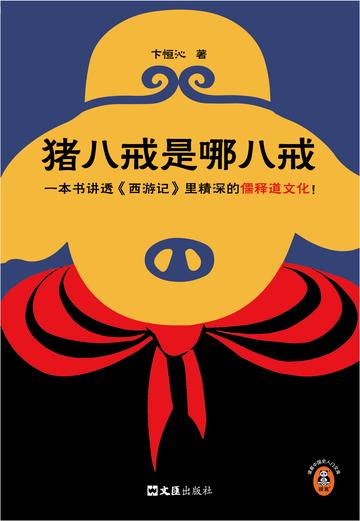
What does "Bajie" in Zhu Bajie mean?
Zhu Bajie in "Journey to the West" received the precepts from Guanyin Bodhisattva when he was still called Zhu Ganghe, and gave up the five kinds of meat and three kinds of disgust. "Five meat" is related to Buddhist precepts and refers to five vegetables with pungent odors, including garlic, garlic, xingqu, scallion, and green onion. Their common feature is that eating them will make people's breath become turbid. Most of the purposes of Buddhist precepts are to keep people awake and not to delay their practice, so they are not allowed to eat. The "three disgusts" are related to Taoist rules, and refer to the meat of wild geese, dogs and mullet. It is said that these three animals are familiar with human rules. If they eat them, the gods of heaven and earth will be unhappy, so they cannot eat them.
What are the five elements corresponding to Tang Monk's master and his disciples?
There are many details in the original work of "Journey to the West" that coincide with the Five Elements. In fact, Tang Monk and his disciples also correspond to the Five Elements. Take Sun Wukong as an example. The five elements of Sun Wukong belong to gold. In "Journey to the West", "Jin Gong" is used many times to describe Wukong. "Gold" and "Gong" together are "", which is the ancient word for "lead". In alchemy, it is said that "true lead produces Geng". Geng (the five elements belong to gold) is one of the ten heavenly stems, and the corresponding earthly branch is Shen (the five elements belong to gold). The corresponding zodiac sign of Shen is the monkey. Moreover, the five elements say that gold is born from earth, and Sun Wukong jumped out of the stone. Gold also represents punishment and killing. Sun Wukong has a bad temper and a strong murderous spirit. His racial characteristics correspond to gold in the five elements.
Why is the last difficulty of the Eighty-one Dilemma again in Tongtian River?
The 81st difficulty in "Journey to the West" is called "Tongtian River Encounters a Turtle Wetting the Scriptures". It means that the Tang Monk and his disciples returned to the Tongtian River and met the old turtle that carried them across the river. As a result, the Tang Monk and his disciples forgot the old turtle's previous instructions. The old turtle was angry and threw them and the scriptures into the Tongtian River. Guanyin Bodhisattva wants to add this difficulty in order to "nine-nine return to true nature". Nine and nine overlap, reach the extreme, and return to the original point, that is, return to the true nature, which means that a person's cultivation has reached the purest state. The old lady in Tongtian River represents the origin. The last difficulty before Tang Monk's merits are perfected is to return to his origin and authenticity. Only then can he achieve the return to unity.
Open this book and understand the profound Confucian, Buddhist and Taoist culture in "Journey to the West"!
Reader comments
I agree with most of the statements in the book, but I also have doubts about Tathagata's evaluation of Nanbu Continent and Dapeng's part. Not only Tathagata has said about Nanbu Continent, but Wukong also has a similar evaluation in Chapter 1. I have doubts about Dapeng's knowledge.
Personally, I love reading books related to Journey to the West. The author analyzed the connotations of "Journey to the West" one by one from various familiar plots. Confucianism, Buddhism, Taoism, class, and life-related knowledge were all involved. It was very detailed. I had to sigh again for the charm of Journey to the West.
This book has a novel perspective, from the meaning of "Eight Precepts", to the correspondence of the Five Elements between Master and Disciple, to the profound meaning of the Eighty-one Difficulties, which gave me a deeper understanding of "Journey to the West". Just like Sun Wukong's mentor, Patriarch Bodhi, the interpretation of him in the book is also very interesting. This reminds me of "Water Margin". Do the 108 generals in it have a similar correspondence? The author's interpretation is very enlightening and makes me want to dig out more details in the famous book.
It's so well written. Before I read "Journey to the West", I only looked at the surface and didn't study the inside in detail. Now it seems that the knowledge contained in "Journey to the West" is one of the four great classics.
Not bad, explore some doubtful points with reason
A rare good book
Some of the texts are from good sources. You still have to think about your analysis
The summary is relatively strong, and a lot of reasonable understandings are written based on the author's thoughts and feelings. It's good.

I agree with most of the statements in the book, but I also have doubts about Tathagata's evaluation of Nanbu Continent and Dapeng's part. Not only Tathagata has said about Nanbu Continent, but Wukong also has a similar evaluation in Chapter 1. I have doubts about Dapeng's knowledge.
Personally, I love reading books related to Journey to the West. The author analyzed the connotations of "Journey to the West" one by one from various familiar plots. Confucianism, Buddhism, Taoism, class, and life-related knowledge were all involved. It was very detailed. I had to sigh again for the charm of Journey to the West.
This book has a novel perspective, from the meaning of "Eight Precepts", to the correspondence of the Five Elements between Master and Disciple, to the profound meaning of the Eighty-one Difficulties, which gave me a deeper understanding of "Journey to the West". Just like Sun Wukong's mentor, Patriarch Bodhi, the interpretation of him in the book is also very interesting. This reminds me of "Water Margin". Do the 108 generals in it have a similar correspondence? The author's interpretation is very enlightening and makes me want to dig out more details in the famous book.
It's so well written. Before I read "Journey to the West", I only looked at the surface and didn't study the inside in detail. Now it seems that the knowledge contained in "Journey to the West" is one of the four great classics.
Not bad, explore some doubtful points with reason
A rare good book
Some of the texts are from good sources. You still have to think about your analysis
The summary is relatively strong, and a lot of reasonable understandings are written based on the author's thoughts and feelings. It's good.
Worth watching, honest and humorous
Very good, well-founded and logical