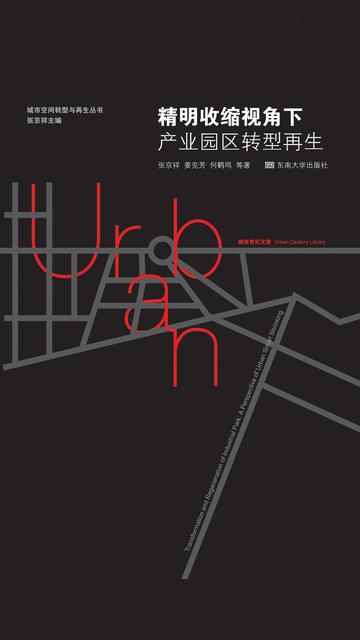
The 2008 global financial crisis reshaped the world economic system and the geographical division of labor. With the huge changes in the international and domestic development environment, a large number of industrial parks that once supported China as the "world factory" are facing tremendous pressure from space shrinkage and functional transformation, becoming a real challenge restricting the sustainable development of China's urban industries and space. Funded by the National Natural Science Foundation of China, this book explores the overall background and types of urban shrinkage in China and the internal and external dynamic mechanisms of industrial park transformation through international comparative research and a combination of theory and empirical evidence. It constructs an overall path for smart transformation of urban industrial parks. Based on the perspective of game theory, it analyzes the key role of property rights system innovation in promoting the transformation of industrial parks, and takes the transformation and renewal of Changzhou High-tech Zone as a typical empirical case. This book is suitable for people engaged in urban economics, urban research, urban planning, etc., And can also be used as a reference for graduate students.
Reader comments
The content of this book is very professional! It explores important issues in the transformation of industrial parks, with a unique research perspective and rigorous writing style. The case studies in the book are also very interesting and gave me a deeper understanding of industrial parks. I think this is a very valuable reference book for people who are engaged in related work. However, some background knowledge may be required for better understanding. All in all, recommended!





The content of this book is very professional! It explores important issues in the transformation of industrial parks, with a unique research perspective and rigorous writing style. The case studies in the book are also very interesting and gave me a deeper understanding of industrial parks. I think this is a very valuable reference book for people who are engaged in related work. However, some background knowledge may be required for better understanding. All in all, recommended!