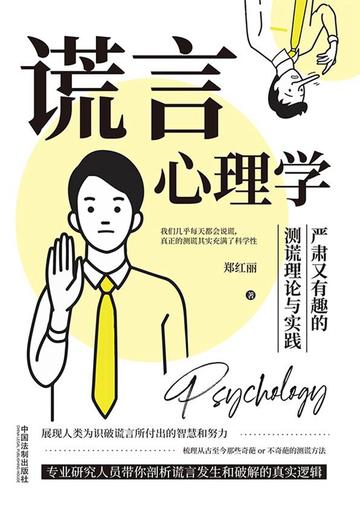
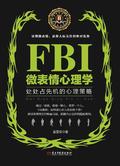
We lie every day. In fact, real lie detection is full of science. This book shows the wisdom and efforts that humans have put into detecting lies, sorting out the classic methods of identifying lies, and analyzing the true logic of how lies occur and be cracked from the perspective of a professional researcher.
From a professional perspective, this book first outlines the occurrence of lies and the history of lie detection. Secondly, some basic theoretical issues about lying and lie recognition are briefly described, such as what persuasion is, why people lie, different types of lies, and individual differences in lying. Then it explains the effectiveness and accuracy of non-verbal behavior and verbal characteristics in revealing lies, and introduces the basic methods and classic research of scientific lie detection. Finally, the practical application of polygraph detection in the judicial field and personnel screening is introduced, as well as the prospects for its future scientific development.
This book strives to use easy-to-understand language on the premise of clearly introducing the basic theories of polygraph detection, so that ordinary readers who are interested in polygraph detection besides professionals can also understand it.
Zheng Hongli, female, born in January 1977, native of Yichang, Hubei Province, Ph. D., Visiting scholar at the University of North Carolina at Chapel Hill, USA, member of Jiusan Society. Currently, he is an associate professor at the School of Sociology of China University of Political Science and Law, a master's tutor, a director of the 10th Legal Psychology Professional Committee, and a director of the 7th Juvenile Crime Prevention Research Association. China's first master of criminal psychology testing (polygraph) technology. He has used polygraph technology to participate in more than 50 criminal case investigations (investigations), including 15 difficult homicide cases. Since 2002, he has taught in the School of Criminal Justice and School of Social Sciences of China University of Political Science and Law, mainly teaching courses on lie detection technology, criminal psychology, psychological correction of criminals, and psychological statistics. The main academic fields include lie detection technology, basic theories and methods of criminal psychology, juvenile delinquency, criminal psychological correction, big data analysis and other research. He is the author of "Essential Manual for Criminal Assessment and Treatment" (translation), "The Psychology of Lying" (translation), "Tutorial on Lie Detection Technology" and "Criminal Psychology". He has published more than 20 papers and hosted and participated in more than 10 scientific research projects at national, provincial, ministerial and school levels.
Reader comments
This book is really interesting! As a new mother, I can not only understand the scientific knowledge of lie detection, but also apply it in my life. I especially like the analysis of lies in the book, which reminds me of my friends and relatives around me. Sometimes their little lies are really OUND. Moreover, I admire the author's experience. He is able to explain such professional knowledge in an easy-to-understand manner. It's amazing! I think this book is not only suitable for professionals, but also for ordinary readers like me who are interested in lie detection.

This book is really interesting! As a new mother, I can not only understand the scientific knowledge of lie detection, but also apply it in my life. I especially like the analysis of lies in the book, which reminds me of my friends and relatives around me. Sometimes their little lies are really OUND. Moreover, I admire the author's experience. He is able to explain such professional knowledge in an easy-to-understand manner. It's amazing! I think this book is not only suitable for professionals, but also for ordinary readers like me who are interested in lie detection.