Editor's recommendation
Psychological testing technology (polygraph detection) is a job that pursues zero error rate, is a means to achieve fairness and justice, and is the cause of psychology's involvement in justice. Those who are most qualified to lift the veil are front-line workers who have both theoretical foundation and practical experience, as well as a scientific attitude. This book introduces real cases, explains the principles, and explains the work of identifying lies in simple terms. Practice brings true knowledge, and success comes naturally. Thumbs up for the author! ——Ma Ai, professor at China University of Political Science and Law and director of the Legal Psychology Professional Committee of the Chinese Psychological Society. "Recognizing Lies: The Logic and Methods of Lie Detection and Case Handling" is Zhang Kun's third psychological testing technology (lie detection) book that I have read. When I first read this book, I was surprised by how interesting and readable it is. The author's thinking and love can be seen in this new book, whether it is this new book or the previous books "Anatomy of Lies: Notes of a Polygraph Examiner Handling Cases" and "Daily Encounters with Lies: 52 Practical Lessons for a Polygraph Detector Handling Cases". I hope this book can bring freshness and warmth to every reader who loves it, and I also wish that psychological testing technology will flourish. ——Cui Yanping, secretary-general of the Psychological Testing Professional Committee of the China Association of Criminal Science and Technology and one of the top 100 criminal police officers in the country. As an outstanding expert in psychological testing technology (polygraph) for prosecutorial agencies, the author of this book has a solid theoretical foundation, a keen sense of case handling and rich practical experience. Among the many works he published, one is more profound than the other, and one is closer to the actual case than the other. This book explores, excavates and refines the application of psychological testing technology in criminal cases from a more in-depth perspective. It's worth reading, and even more worth studying. ——Jin Yue, member of the first batch of expert database of the Supreme People's Procuratorate and former director of the Psychological Testing Laboratory of Dalian People's Procuratorate
Introduction
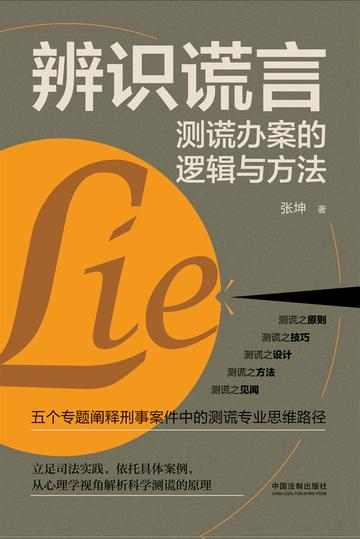
As the third book in the author's "Poly Detection Talk" series (the first two are "Anatomy of Lies: Notes of a Polygraph Examiner Handling Cases" and "Daily Encounters with Lies: 52 Practical Lessons on Case Handling by a Polygraph Detector"), this book summarizes and introduces the practical work of polygraph detection with a more in-depth analysis. The book is divided into five parts: the principles of polygraph detection, polygraph techniques, polygraph design, polygraph methods and polygraph insights. It is based on judicial practice and combined with classic cases to explore individual psychological information and discover individual psychological traces, thereby finding flaws in statements and making an effort to find the truth.
[About the author]
Zhang Kun is a national second-level psychological counselor and holds a master's degree in criminal psychology from China University of Political Science and Law. After graduation, he joined the Beijing Procuratorate and has been working ever since. His current workplace is the First Branch of the Beijing Municipal People's Procuratorate. He has the professional and technical qualification for psychological testing (polygraph detection) granted by the Supreme People's Procuratorate and is engaged in polygraph identification work. He is the author of "Anatomy of Lies: Notes of a Polygraph Examiner on Case Handling" and "Daily Encounters with Lies: 52 Practical Lessons on Case Handling by a Polygraph Detector".
Reader comments
This book is very good! It introduces lie detection technology in a simple and easy-to-understand manner, and also combines some classic cases to make it easier for people to understand. As the author, Zhang Kun not only has a solid theoretical foundation, but also has rich practical experience. The content in the book is very practical. I particularly enjoyed his analysis of the characters' personalities and experiences, which gave me a deeper understanding of the work of polygraph detection. However, I kind of hate people who intentionally lie on polygraph tests, it's so dishonest! Overall, this book is worth reading and is very helpful for judicial practice.

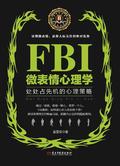
This book is very good! It introduces lie detection technology in a simple and easy-to-understand manner, and also combines some classic cases to make it easier for people to understand. As the author, Zhang Kun not only has a solid theoretical foundation, but also has rich practical experience. The content in the book is very practical. I particularly enjoyed his analysis of the characters' personalities and experiences, which gave me a deeper understanding of the work of polygraph detection. However, I kind of hate people who intentionally lie on polygraph tests, it's so dishonest! Overall, this book is worth reading and is very helpful for judicial practice.